- 手のひらサイズのファミコン登場!内蔵ソフトを大公開!(1987~1989) ↗Nintendo · Accessed 2026-10-27
Nintendo’s Japanese history panel explicitly dates the Game Boy launch to 21 April 1989.
- Game Boy ↗Nintendo UK · Accessed 2026-10-27
Original screen resolution, four shades, RAM and battery count. The page’s CPU clock, audio terminology and Pocket date are not used; model-family sales are not assigned to the original unit.
- Game Boy – Nintendo Classics ↗Nintendo UK · Accessed 2026-10-27
Live UK catalogue: paid Nintendo Switch Online access on Switch and Switch 2, including Game Boy and Game Boy Color editions. Availability is time-sensitive.
- ゲームギア ↗Sega · Accessed 2026-10-27
Japanese launch, price, original model specifications and TV tuner. The display dot count is omitted because it should not be presented as the game framebuffer resolution.
- 【連載】セガハードストーリー第4回 誰もが待ち望んだ携帯型フルカラー液晶『ゲームギア』 ↗Sega · Accessed 2026-10-27
2017 manufacturer retrospective on Master System architecture, case layout, power consumption and the TV tuner. Promotional sales claims are not repeated.
- Lynx Portable Color Entertainment System Owner’s Manual ↗Atari Corporation; scan hosted by Old Crap Vintage Computing · Accessed 2026-10-27
Original 1989 manual, C301139-001 Rev. B. Printed pages 2–5 describe screen inversion, duplicated buttons, six AA batteries and ComLynx. No scan is republished.
- Atari Corporation Annual Report 1990 ↗Atari Corporation; scan hosted by Atarimania · Accessed 2026-10-27
Printed page 18 records the late-1989 launch. Printed page 3 attributes slow 1990 Lynx sales to launch price and the number of software releases. No country-specific launch day is established.
- Atari Corporation Annual Report 1992 ↗Atari Corporation; scan hosted by Atarimania · Accessed 2026-10-27
Form 10-K printed page 6 describes the 3½-inch LCD and up to eight linked players in supporting games. Describes the range as sold in 1992, not every detail of the original model.
- メガCD ↗Sega · Accessed 2026-10-27
Japanese launch, launch price, add-on classification, 68000 processor, graphics functions, PCM sound and Sega CD regional name.
- 新・メガドラミニ登場。2022年10月27日(木)『メガドライブミニ2』発売 ↗Sega · Accessed 2026-10-27
Manufacturer announcement documents built-in Mega-CD selections. It establishes the contents of the Japanese mini, not present stock or all regional models.
- ファミコンとは? ↗Nintendo · Accessed 2026-10-27
Official hardware retrospective based on the original manual: 15 July 1983 launch, controls, microphone and RF connection. The separate UK corporate history misplaces the Famicom under 1984; the Japanese hardware record is used here.
- The NES Launch Collection ↗Video Game History Foundation · Accessed 2026-10-27
Frank Cifaldi’s introduction to the Foundation’s original promotional material, trade coverage and demonstration scripts. Supports the October 1985 New York test market and a separate 1986 national campaign. No disputed exact US launch day is asserted.
- Annual Report 2006 ↗Nintendo · Accessed 2026-10-27
History of Nintendo, PDF page 12: US NES introduction in 1985, Europe in 1986, and Japanese Disk System in 1986. Europe is the beginning of a regional rollout, not one release date for every country.
- ファミリーコンピュータ ディスクシステムとは? ↗Nintendo · Accessed 2026-10-27
Official manual-based account: 21 February 1986, Disk Drive HVC-022, RAM Adapter HVC-023, connection through the Famicom cartridge slot, disk saving and the discontinued rewrite service.
- 4. The Grand Culmination of Cartridges ↗Nintendo / Iwata Asks · Accessed 2026-10-27
Participant recollections by Masayuki Uemura and Hiroshi Imanishi, with Satoru Iwata. Notes distinguish Zelda’s Japanese Disk System release from its later European NES edition; recollections about development workload are attributed.
- Nintendo Entertainment System ↗Nintendo UK · Accessed 2026-10-27
Official controller description. Promotional claims that the console saved the entire industry are not repeated.
- Dedicated Video Game Sales Units ↗Nintendo · Accessed 2026-10-27
61.91 million Family Computer/NES hardware units. Nintendo defines these figures as worldwide consolidated sales in units life-to-date; not a country-level market-share measure.
- セガ・マークⅢ ↗Sega · Accessed 2026-10-27
Japanese Mark III launch day, price, RAM/VRAM, base display mode, PSG audio and card/cartridge slots. The nominal 4 MHz CPU entry is not used as an operating clock.
- マスターシステム ↗Sega · Accessed 2026-10-27
Separates the 1987 Japanese MK-2000 with FM audio from the 1986 overseas Power Base without it. Records different cartridge shapes and Japanese launch price.
- 【連載】セガハードストーリー第2回 本格的な家庭用ハード開発時代へ ↗Sega · Accessed 2026-10-27
Manufacturer retrospective on arcade conversion, Phantasy Star, Alex Kidd and the longer European/Brazilian life. Its approximate sales claim is omitted because its boundaries are insufficiently defined.
- A History Of Mastertronic ↗Anthony Guter / Mastertronic Collectors Archive · Accessed 2026-10-27
First-person account by a Mastertronic employee: UK distribution began in 1987, followed by French and German distribution. Retrospective claims are attributed; no precise launch day or market share is inferred.
- Sega Master System ↗European Society for Computer Preservation · Accessed 2026-10-27
Preservation collection catalogue corroborates US 1986 and European 1987 introduction years. Used with Sega’s record of the 1986 overseas model; regional day/month claims and estimated prices are omitted.
- NES / Famicom Architecture ↗Rodrigo Copetti · Accessed 2026-10-27
Author’s hardware analysis and demonstrations: CPU family, working RAM, frame construction, regional timing and cartridge expansion. Its simplified regional launch captions are not used.
- Sega Master System Architecture ↗Rodrigo Copetti · Accessed 2026-10-27
Author’s hardware analysis: model distinctions, cartridge interfaces, video timing and why CPU clock rates alone do not rank the two machines.
- Clock Rate ↗SMS Power! · Accessed 2026-10-27
Community hardware research gives the clock derivation for NTSC and PAL models. Values are rounded and qualified by video standard rather than copying the nominal 4 MHz in Sega’s historical table.
- 【連載】セガハードストーリー第5回 家庭用ゲーム機新時代の幕開け『セガサターン』 ↗Sega · Accessed 2026-10-27
Manufacturer retrospective: May 1995 North American launch, arcade conversions, expansion memory and differing regional fortunes. No single-cause account of commercial failure or loosely defined sales total is adopted.
- Sega Saturn Architecture ↗Rodrigo Copetti · Accessed 2026-10-27
Original hardware analysis of the two SH-2 processors, VDP1/VDP2, memory and video output. European introduction is retained at year precision; country-level retail evidence remains open.
- PlayStation Architecture ↗Rodrigo Copetti · Accessed 2026-10-27
Original hardware analysis, including memory, CD subsystem, graphics limitations, video standards and regional authentication.
- Technical Details ↗Nintendo UK · Accessed 2026-10-27
CPU and RCP clocks and graphics functions. The 36-Mbit memory figure includes extra bits; it is not silently converted into 4.5 MB of ordinary game memory.
- Nintendo 64 ↗Nintendo UK · Accessed 2026-10-27
Four controller ports and analogue Control Stick. Promotional claims of being the first analogue controller are omitted.
- Accessories ↗Nintendo UK · Accessed 2026-10-27
Separates Rumble Pak, Controller Pak, Transfer Pak and 4 MB Expansion Pak. Majora’s Mask requires Expansion Pak; Perfect Dark has restricted operation without it.
- Nintendo 64 Architecture ↗Rodrigo Copetti · Accessed 2026-10-27
Original analysis of cartridge access, memory, texture handling, regional video output and 64DD. Release summaries are not used to resolve disputed retail days.
- HISTORY 1960-2020 ↗Sega · Accessed 2026-10-27
Dates the arcade Virtua Fighter 2 to 1994, separately from the Saturn conversion. Broad technological-first claims are not repeated.
- ドリームキャスト ↗Sega · Accessed 2026-10-27
Japanese launch, SH-4, memory, removable modem, GD-ROM and January 2001 production decision. Japanese specifications are not universal modem specifications.
- 【連載】セガハードストーリー最終回 ゲームの未来を変えた先進的ハード 『ドリームキャスト』 ↗Sega · Accessed 2026-10-27
Manufacturer retrospective on development tools, cost targets, VMU, four controller ports and the practical demands of network services. Its promotional first-ever claims are not adopted.
- Dreamcast: The Games Begin ↗CBS News · Accessed 2026-10-27
Contemporary launch-day report, used only to establish US retail availability on 9 September 1999.
- Dominator's News and Views Oct 1999 ↗DVDfever / reproduced Sega Europe and Electronics Boutique releases · Accessed 2026-10-27
October archive reproduces launch announcements and retailer statements identifying 14 October 1999. This is a third-party transcription of primary publicity; sales superlatives are not adopted.
- PlayStation®2 Gets Stunning New Look ↗Sony Computer Entertainment · Accessed 2026-10-27
21 September 2004 announcement: November slim-model introduction, integrated Ethernet, regional modem differences and compatible CD/DVD formats. Announcement dates remain distinct from retail dates.
- This is the ニンテンドー ゲームキューブ ↗Nintendo · Accessed 2026-10-27
Original Japanese product specification: September 2001 introduction, Gekko/Flipper, separate memory pools, 8 cm optical discs and controller ports. The page contains a later price, which is not used as a launch price.
- 周辺機器 ↗Nintendo · Accessed 2026-10-27
Japanese accessories, separate modem and broadband adapters, GBA cable limitations and digital AV removal on later Japanese shipments.
- Nintendo GameCube ↗Nintendo UK · Accessed 2026-10-27
Disc capacity, controller and network examples. Historical online descriptions do not establish that those services still operate.
- Disc Channel Overview ↗Nintendo Support · Accessed 2026-10-27
GameCube disc compatibility is restricted to the RVL-001 Wii model, not the whole Wii family.
- Xbox Erupts on the Scene ↗Microsoft · Accessed 2026-10-27
Contemporary confirmation of 15 November 2001 North American retail launch. Marketing claims about superiority are omitted.
- Microsoft On Track forFebruary Launch of Xbox in Japan ↗Microsoft · Accessed 2026-10-27
Confirms the planned 22 February 2002 Japanese date. The launch-day US release is dated 21 February; this edition conservatively records February at month precision.
- Xbox Hits Stores in Japan ↗Microsoft · Accessed 2026-10-27
Confirms retail introduction and launch software. The US-published release has a 21 February dateline, so it is not silently substituted for the advertised Japanese 22 February date.
- Xbox Goes Global With European and Australian Launches ↗Microsoft · Accessed 2026-10-27
Contemporary 14 March 2002 launch in sixteen named European countries and Australia. Does not establish simultaneous release throughout geographical Europe.
- Xbox Brings Early Holiday Cheer With Free DVD Movie Playback Kit ↗Microsoft · Accessed 2026-10-27
Built-in hard disk and Ethernet; DVD film playback requires the receiver/remote accessory. The 2002 rebate is historical, not a current offer.
- Xbox Live Arrives in Stores, Sparking the Next Revolution in Video Games ↗Microsoft · Accessed 2026-10-27
US and Canadian service launch on 15 November 2002; broadband, subscription, headset and unified service. It is not a worldwide simultaneous launch.
- Xbox LIVE being discontinued for Original Xbox consoles and games ↗Xbox Wire · Accessed 2026-10-27
Microsoft names 15 April 2010 as the discontinuation date for original-Xbox Live, including original games played on Xbox 360.
- Celebrating 20 Years of Xbox ↗Xbox Wire · Accessed 2026-10-27
Manufacturer retrospective identifies the original system’s 64 MB memory and 8 GB storage.
- Iwata Asks - Wii Channels - Page 2 ↗Nintendo · Accessed 2026-10-27
Indexed interview extract: Iwata discusses development scale, packaged distribution costs and smaller downloadable work. Direct page fetch timed out; participant perspective, not a uniform cost estimate for all games.
- Happy Birthday Xbox LIVE ↗Xbox Wire · Accessed 2026-10-27
Manufacturer anniversary account, checked for the chapter’s discussion of the service alongside the contemporary launch announcement.
- ゲームボーイアドバンス ↗Nintendo · Accessed 2026-10-28
Japanese launch colours dated 21 March 2001; original reflective screen, controls, cartridge compatibility and cable multiplayer. The displayed later price is not treated as a launch price.
- Technical data ↗Nintendo UK · Accessed 2026-10-28
Original Game Boy Advance: 240 × 160 screen, two AA batteries and qualified backward compatibility.
- ゲームボーイアドバンスSP ↗Nintendo · Accessed 2026-10-28
Japanese AGS-001: 14 February 2003, frontlight, folding case, rechargeable battery and exceptions to backward compatibility. Does not describe all later SP displays.
- Game Boy micro Instruction Booklet ↗Nintendo of America · Accessed 2026-10-28
Compatibility section: GBA cartridges only; older Game Boy games and several GBA accessories are incompatible. Micro link accessories are distinct.
- Nintendo ships 100 millionth portable Nintendo DS system ↗Nintendo UK · Accessed 2026-10-28
2009 manufacturer chronology separates original DS, Lite and DSi regional introductions. Family shipment figures are not assigned to a single model.
- 「ニンテンドーDS」発売日と価格について ↗Nintendo · Accessed 2026-10-28
21 September 2004 announcement of Japanese launch: dual screens, touch and voice input, wireless communication, PictoChat and GBA support.
- ニンテンドーDS:スペック ↗Nintendo · Accessed 2026-10-28
Original model: 3-inch screens, rechargeable battery, DS card and GBA cartridge slots.
- Can the Nintendo DS or DS Lite Play Game Boy Games? ↗Nintendo Support · Accessed 2026-10-28
GBA single-player support only; no Game Boy/Color games or GBA link multiplayer.
- How to Use Game Cards ↗Nintendo Support · Accessed 2026-10-28
DSi and DSi XL omit support for GBA games and DS software/accessories requiring the GBA slot.
- Mario Party makes its debut on DS ↗Nintendo UK · Accessed 2026-10-28
Period example of DS Download Play: up to four players share one game card. Also documents touch, microphone and button inputs.
- Service Discontinuation: Nintendo Wi-Fi Connection Service ↗Nintendo Support · Accessed 2026-10-28
20 May 2014 closure affected online functions of games using Nintendo Wi-Fi Connection; offline play was not removed. Historical exceptions in this notice are not evidence of current shop availability.
- PSP™ Enters the Market on December 12, 2004 at 19,800 Yen in Japan ↗Sony Computer Entertainment · Accessed 2026-10-28
27 October 2004 announcement: Japanese launch and PSP-1000 specifications. Preferred over the later PlayStation history page’s conflicting 11 December date.
- 2000 PlayStation 2 - PSP PlayStation Portable | PlayStation History timeline (US) ↗PlayStation · Accessed 2026-10-28
Supports North American 24 March and European 1 September 2005 introductions. Its Japanese 11 December date conflicts with Sony’s contemporary announcement and is not used.
- PSP® Go PSP® (PlayStation®Portable) Evolves to Match the Digital Lifestyle ↗Sony Computer Entertainment · Accessed 2026-10-28
2009 PSP-N1000 announcement: no UMD drive, 16 GB flash storage and region-specific launches. Original storefront instructions are historical.
- Important notice ↗PlayStation Support · Accessed 2026-10-28
PSP store closure in 2016, search and in-game purchase removal on 6 July 2021, and the stated Download List route for prior purchases. Device/account access has not been tested.
- BG7520 Odyssey — Service Manual No. 6506 ↗The Magnavox Company; scan hosted by ConsoleMods · Accessed 2026-10-27
Original service manual, December 1976. Documents a later dedicated Odyssey machine, distinct from the original 1TL200.
- Finding Aid to the Gerald A. “Jerry” Lawson Papers ↗The Strong National Museum of Play · Accessed 2026-10-27
Finding aid lists original Channel F and Channel F System II instruction documents. Used to identify the later hardware name, not to infer an exact launch date.
- Atari 2600 ↗HomeComputerMuseum · Accessed 2026-10-27
Museum model history identifies the 5200 as a later system. Its inconsistent 1977 launch months are not adopted; the archive retains year precision.
- Coleco Industries, Inc. 1983 Annual Report ↗Coleco Industries; scan hosted by ADAM Archive · Accessed 2026-10-27
ADAM section, printed page 13, distinguishes a standalone computer with ColecoVision built in from the computer module for existing console owners. Forecast shipment totals are not treated as actual sales.
- Magnavox Odyssey Video Game Unit, 1972 ↗Smithsonian National Museum of American History · Accessed 2026-10-27
Museum object record: original Odyssey, screen overlays and physical play materials. Sales estimates are not adopted.
- 1TL200 Odyssey Game Simulator — Service Manual No. 6500 ↗The Magnavox Company; scan hosted by ConsoleMods · Accessed 2026-10-27
Original service manual, February 1974. Pages 1–2 document circuit modules and game-card functions. Used as evidence; no artwork is reproduced.
- Electronic Game, Telegames Super-Pong ↗Smithsonian National Museum of American History · Accessed 2026-10-27
The photographed object is the later Super Pong. The description separately dates the earlier Sears-distributed home Pong to late 1975.
- Atari Pong Game, circa 1975 ↗The Henry Ford · Accessed 2026-10-27
Museum record supports the Sears home introduction in 1975. Its Atari-branded object is dated approximately, not used to establish an exact C-100 retail day.
- The “F” Stands for “Fun”: Jerry Lawson & the Fairchild Channel F Video Entertainment System ↗The Henry Ford — Kristen Gallerneaux · Accessed 2026-10-27
Curator account, 15 February 2021. Supports Alpex and Fairchild team contributions and the 1976 introduction; its sales comparisons and simplified late chronology are not adopted.
- Fairchild Channel F Video Game System, 1976 ↗The Henry Ford · Accessed 2026-10-27
Collection record for the Fairchild Video Entertainment System and its cartridge packaging.
- The Fairchild Video Entertainment System: The Best of the Video Games, Explained. ↗Fairchild Consumer Products; Computer History Museum collection · Accessed 2026-10-27
Original 1976 manual. Printed pages 4–8 explain built-in Hockey and Tennis, controls, play options and additional Videocarts.
- 1977 — Timeline of Computer History ↗Computer History Museum · Accessed 2026-10-27
Atari VCS introduction and 6507 processor. The entry does not establish an exact regional retail day; broader sales and catalogue totals are not adopted.
- Video game console:Atari Video Computer System ↗The Strong National Museum of Play / Google Arts & Culture · Accessed 2026-10-27
Object dated 1977; description places the introduction in American homes and recognises the earlier Odyssey and home Pong.
- 2600/2600A VCS Domestic (M/N) Field Service Manual ↗Atari; scan hosted by GamingDoc · Accessed 2026-10-27
Revision 02, 1983. Sections 1 and 7 document processor, video/audio circuitry and the distinct joystick, paddle, driving and keyboard controllers. Domestic model reference, not a universal regional specification.
- Blue Sky Rangers Intellivision History ↗Blue Sky Rangers · Accessed 2026-10-27
Participant retrospective: Fresno testing in 1979, national introduction in 1980 and later INTV continuation. Its broad claim of an entire-industry collapse is not adopted.
- Master Component ↗Blue Sky Rangers / Mattel Electronics · Accessed 2026-10-27
Technical overview reproduces an internal document dated 31 October 1980 with corrections and commentary. Supports CP1610, STIC and controller details.
- Intellivision Master Component Owner's Manual ↗Mattel Electronics / INTV; transcription hosted by Digital Press · Accessed 2026-10-27
Manual transcription with later editorial notes and multiple-model annotations. Controller instructions are on PDF page 9. Current retail advice in the transcription is not adopted.
- Intellivoice ↗Blue Sky Rangers · Accessed 2026-10-27
Participant account of the separate speech module and its dedicated games. Development recollections are attributed; remembered sales figures are omitted.
- Coleco Industries, Inc. 1982 Annual Report ↗Coleco Industries; scan hosted by ADAM Archive · Accessed 2026-10-27
ColecoVision hardware and software section dates introduction to August 1982 and distinguishes Expansion Modules #1 and #2. Promotional superiority claims and plans for unreleased products are not treated as established performance or shipment evidence.
- ColecoVision Owner's Manual ↗Coleco; scan hosted by ColecoVision Zone · Accessed 2026-10-27
Original 1982 US manual. Printed pages 8–9 cover the eight-direction joystick, keypad, side buttons and overlays.
- What Video Game Crash? ↗The Strong National Museum of Play — Eric Wheeler · Accessed 2026-10-27
Curatorial retrospective, 26 April 2011. Distinguishes the North American console-industry downturn from continuing play and rejects a one-game explanation.
- Guide to the Joyce Worley Katz Video Game Slide Collection ↗Computer History Museum — Charlotte Chen · Accessed 2026-10-27
Finding aid, 2009. Appendix on PDF page 5 records Activision founding; page 2 discusses the contraction of the games press during 1983–1985. Image ownership does not supply permission to reproduce the collection.
- Corporate Information: Company History ↗Nintendo · Accessed 2026-10-27
Company chronology dates TV Game 6/15 to 1977 and Family Computer to 1983. These are Japanese introductions, separate from later NES markets.
- PlayStation history: PS2 and PSP ↗Sony Interactive Entertainment · Accessed 2026-10-27
DVD media, online expansion and early-2000s console context.
- PlayStation history: PS3 and PS Vita ↗Sony Interactive Entertainment · Accessed 2026-10-27
High-definition displays, network services and downloads.
- PlayStation history: PS5 and PS VR2 ↗Sony Interactive Entertainment · Accessed 2026-10-27
Solid-state storage, haptics and contemporary console design.
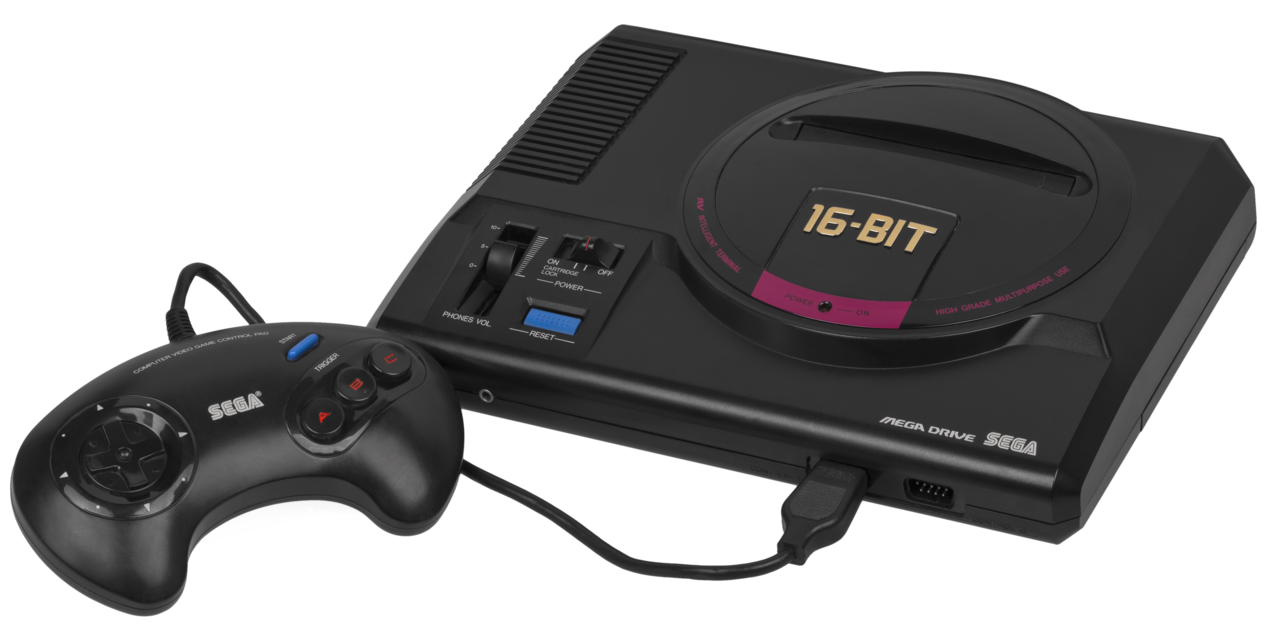
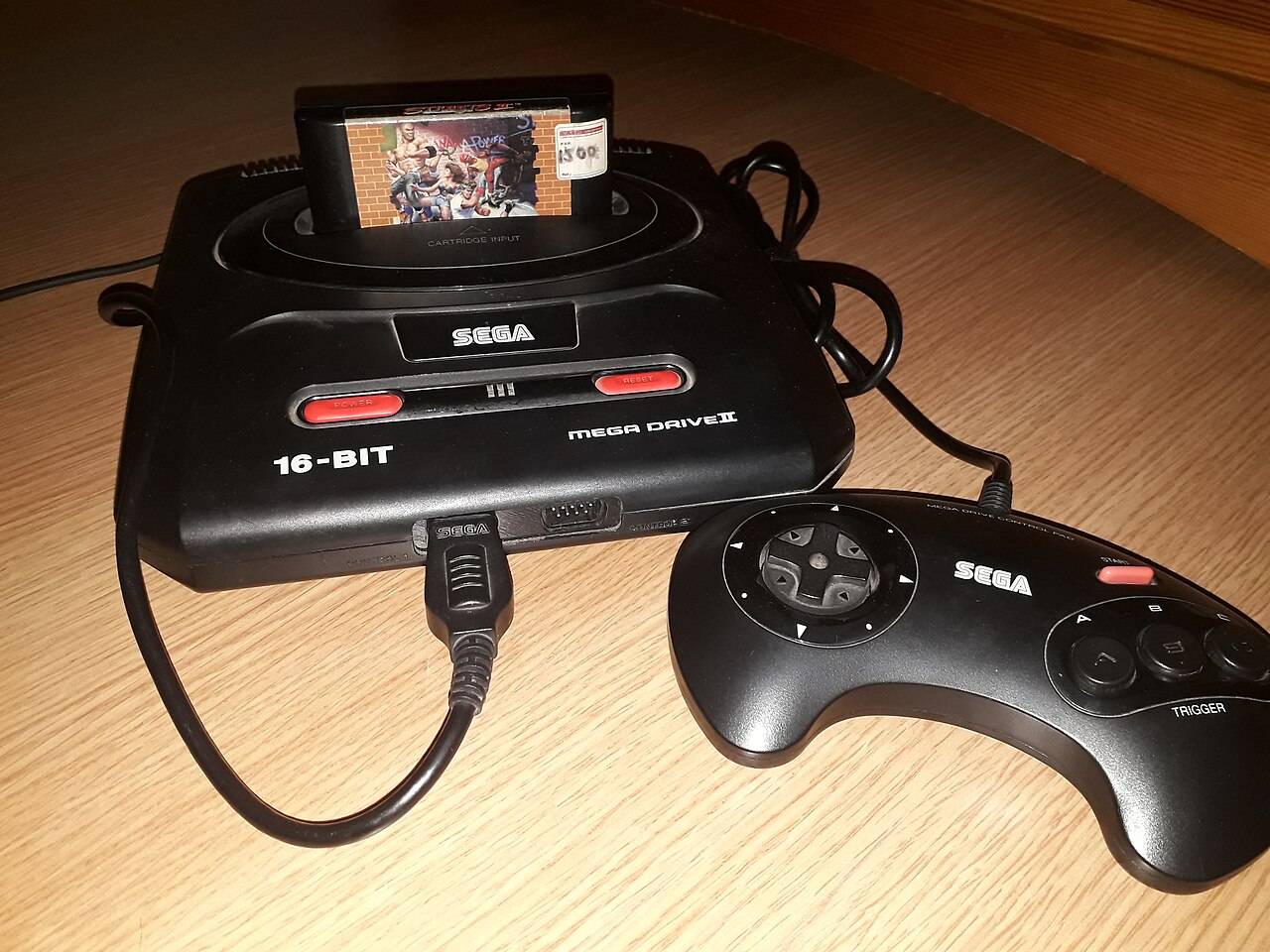
- Mega Drive — hardware encyclopedia ↗Sega · Accessed 2026-10-27
Japanese release date, launch price and original hardware specifications. Clock figures describe the Japanese NTSC model.
- Sega Hardware Story, part 3: Mega Drive ↗Sega · Accessed 2026-10-27
Manufacturer retrospective; used for development and regional context, not as a neutral measure of competitive success.
- Sega history: 1960–2020 ↗Sega · Accessed 2026-10-27
Regional introduction years and manufacturer-reported regional sales. These are not a harmonised global installed-base total.
- Tom Kalinske on the Genesis at 25 ↗GamesBeat · Accessed 2026-10-27
2014 first-person interview. Retrospective recollections are attributed; market-share claims are not repeated as audited data.
- Interview with Tom Kalinske ↗Luke Zapart · Accessed 2026-10-27
2011 interview on the Sonic bundle, price and regional strategy; remembered conversations are not treated as verbatim contemporary records.
- Nintendo company history ↗Nintendo · Accessed 2026-10-27
Japanese hardware introduction years; also used for later-era context.
- Nintendo History ↗Nintendo UK · Accessed 2026-10-27
European launches and Super FX / Super Game Boy context. Older sales prose on this page is superseded by Nintendo investor relations data.
- Best-selling fourth-generation videogame console ↗Guinness World Records · Accessed 2026-10-27
Japanese launch date and staggered European dates. North American sources disagree on exact August launch day; this archive uses month precision.
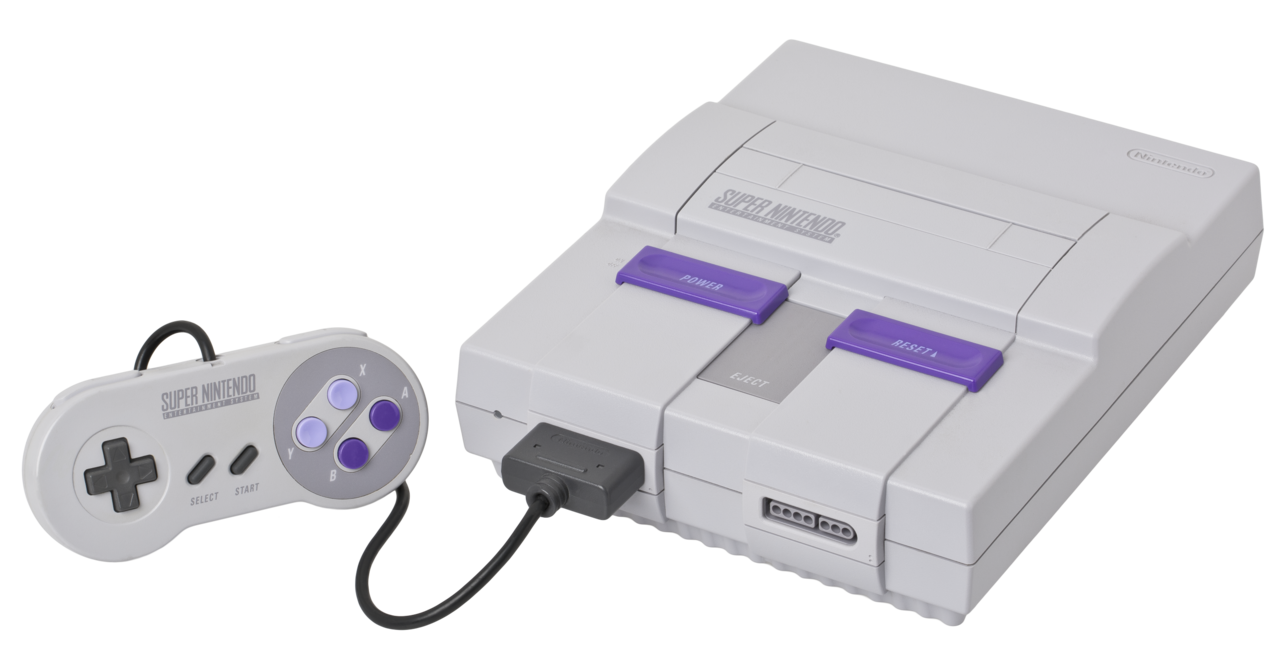
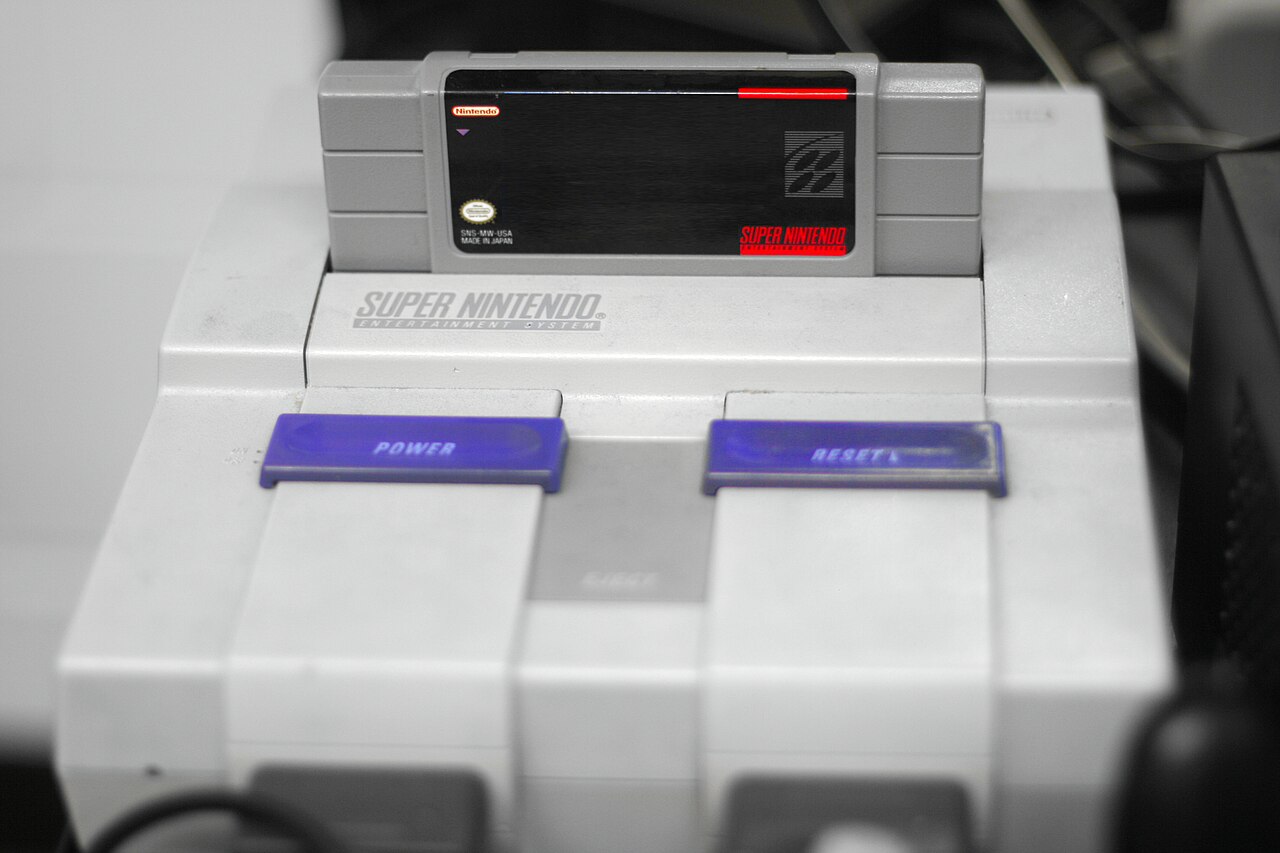
- Hardware and software sales units ↗Nintendo Investor Relations · Accessed 2026-10-27
49.10 million SNES / Super Famicom hardware units: worldwide consolidated sales life-to-date, as described by Nintendo.
- Super Nintendo / Famicom Architecture ↗Rodrigo Copetti · Accessed 2026-10-27
Independent technical research with board photographs and references. Used for architecture, not disputed regional launch dates.
- Super Mario World — 1990 developer interview ↗Shmuplations / original official guidebook · Accessed 2026-10-27
Translation of a contemporary developer interview. Used for the team’s approach to new hardware and sound samples.
- Developer interview: Super Mario World and Yoshi’s Island ↗Nintendo UK · Accessed 2026-10-27
2017 first-person retrospective with Takashi Tezuka, Shigefumi Hino and Hisashi Nogami.
- Nintendo Classic Mini: Super Famicom announcement ↗Nintendo · Accessed 2026-10-27
Includes original Japanese title release dates; these are not European or North American release dates.
- PC Engine / TurboGrafx-16 Architecture ↗Rodrigo Copetti · Accessed 2026-10-27
Independent technical research, board photographs, CPU / video distinction and media.
- The history of the PC Engine: 1987 / 2003 interviews ↗Shmuplations / BEEP and GSLA · Accessed 2026-10-27
Translated interviews with Hudson developers. Proposals for peripherals in the 1987 interview are not evidence those products shipped.
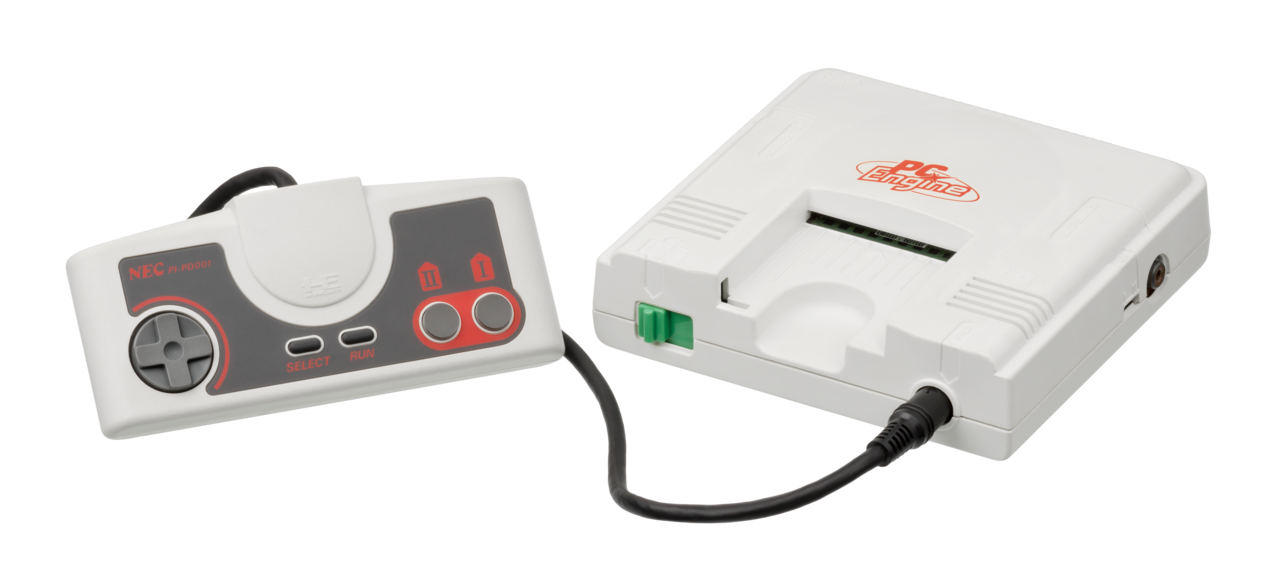
- TurboGrafx-16 ↗IT History Society · Accessed 2026-10-27
1987 Japanese and 1989 North American introductions; European import/distribution differences.
- PC Engine mini: original game list ↗Konami · Accessed 2026-10-27
Original titles and release years; distinguishes HuCard and CD-era library context. Not a claim that the discontinued mini remains in stock.
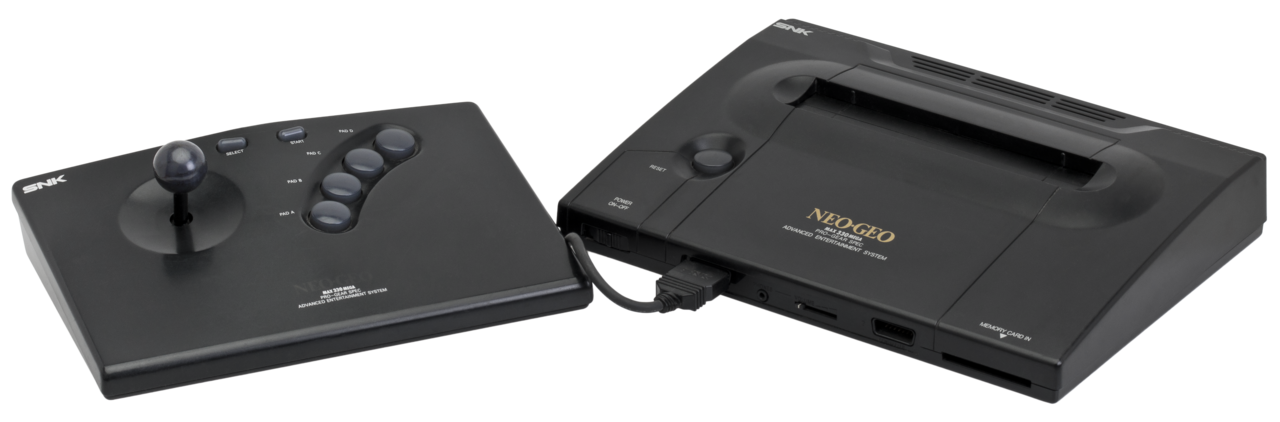
- What’s NEOGEO? ↗SNK NEOGEO Museum / Arcadia · Accessed 2026-10-27
SNK-hosted 2010 Arcadia retrospective distinguishes 1990 rental introduction from 1991 retail sales.
- SNK anniversary special: Hardcore Hardware ↗Retro Gamer, hosted by SNK · Accessed 2026-10-27
AES retail bundle pricing and specialist market context; bundle contents and regional prices are not directly comparable.
- Neo Geo Architecture ↗Rodrigo Copetti · Accessed 2026-10-27
Independent first-hand hardware analysis. Regional date claims require separate corroboration.
- Game Gear — hardware encyclopedia ↗Sega · Accessed 2026-10-27
6 October 1990 Japanese release and colour handheld display.
- Atari Lynx game console ↗Science Museum Group · Accessed 2026-10-27
Museum object dated 1989–1992. Timeline uses only the initial year, not an unsupported day.
- Mega-CD — hardware encyclopedia ↗Sega · Accessed 2026-10-27
12 December 1991 Japanese launch; expansion hardware and North American Sega CD naming.
- Sega Saturn — hardware encyclopedia ↗Sega · Accessed 2026-10-27
22 November 1994 Japanese launch and CD-ROM / polygonal hardware context.
- PlayStation history: 1994 ↗Sony Interactive Entertainment · Accessed 2026-10-27
3 December 1994 Japanese launch and the shift to CD-ROM and 3D.
- Magnavox Odyssey video game unit, 1972 ↗Smithsonian National Museum of American History · Accessed 2026-10-27
Collection record for the first commercial home videogame console.
- Advance WARS Guide: Field Training ↗Planet GameCube / Nintendo World Report staff · Accessed 2026-10-28
Contemporary November 2001 player-authored guide documents the original training missions and their terrain/capture lessons. Used for original mechanics, without reproducing walkthrough text.
- Game Boy Advance – Nintendo Classics ↗Nintendo · Accessed 2026-10-28
UK catalogue lists eight of these selections. Switch and Switch 2 require Nintendo Switch Online + Expansion Pack. Reproductions have presentation/performance differences; no device or account test was performed.
- Metroid Fusion ↗Nintendo · Accessed 2026-10-28
European GBA release in 2002, Nintendo developer credit and X/SA-X premise. The Wii U release is separate and its store no longer accepts purchases.
- Metroid Dread Report Vol. 4: Unravelling a saga 35 years in the making ↗Nintendo · Accessed 2026-10-28
Series account distinguishes the 2004 Zero Mission remake from the original Metroid and describes its added stealth section. Fusion’s directed progression and pursuit are discussed separately.
- Advance Wars ↗Nintendo · Accessed 2026-10-28
Original land, sea and air strategy description. The displayed 2014 date is the Wii U edition, not the GBA debut. The linked original manual exceeds the browser fetch limit and was not used as inspected evidence.
- Advance Wars Scores! ↗Planet GameCube / Nintendo World Report · Accessed 2026-10-28
22 September 2001 report includes staff accounts of playing the released North American game and identifies Intelligent Systems. Used for year-level release evidence; unattributed sales projections are not imported.
- Advance Wars 1+2: Re-Boot Camp ↗Nintendo · Accessed 2026-10-28
Live UK Switch listing for the 2023 remake of both GBA campaigns. Rebuilt presentation and added options are not attributed to the original cartridge.
- The Legend of Zelda: The Minish Cap ↗Nintendo · Accessed 2026-10-28
Capcom developer credit, shrinking and Kinstone mechanics. The page’s headline date is the 2014 Wii U edition; the GBA year comes from the Japanese catalogue.
- 2004年6月以前発売の任天堂ソフト ↗Nintendo · Accessed 2026-10-28
Historical Japanese catalogue includes Minish Cap (4 November 2004), Zero Mission (27 May 2004), Golden Sun and Mario Kart Advance. The page title understates the date range of its displayed contents. Japanese dates are not worldwide releases.
- Castlevania Aria of Sorrow ↗Konami · Accessed 2026-10-28
US history gives 6 May 2003, GBA platform, soul abilities, weapons and optional cable-based soul exchange. The story’s future setting is fiction, not a real-world astronomical claim.
- Castlevania Advance Collection ↗Konami · Accessed 2026-10-28
Current European product listing includes Aria of Sorrow, regional ROM selection and added save/rewind features. Its listed modern platforms are distinct from the original GBA release.
- WarioWare, Inc.: Minigame Mania ↗Nintendo · Accessed 2026-10-28
European 23 May 2003 title and microgame structure. This is the button-controlled original; it is separate from Twisted!, Touched! and the GameCube adaptation.
- Iwata Asks - Metroid: Other M: Keynote from Metroid creator Yoshio Sakamoto, Page 2 ↗Nintendo / Yoshio Sakamoto · Accessed 2026-10-28
Producer account confirms the original WarioWare’s Japanese March 2003 release and distinguishes it from the later gyrosensor game. Credit remains at Nintendo level without unsupported team subdivisions.
- Iwata Asks: Volume 5, WarioWare: Snapped! — WarioWare: Don’t Touch?! ↗Nintendo / development participants · Accessed 2026-10-28
Footnote identifies the North American Mega Microgame$! name and May 2003 release; participants distinguish the original from the later GameCube adaptation and Intelligent Systems collaborations.
- Metroid: Zero Mission ↗Nintendo · Accessed 2026-10-28
Nintendo credit and redesigned Zebes, new routes, enemies and post-Mother Brain material. The 2015 headline date is for Wii U.
- 2004年3月期 決算説明会: 地域別任天堂主要商品発売日一覧 ↗Nintendo · Accessed 2026-10-28
28 May 2004 briefing, page 3: completed regional release table documents US Fire Emblem and Superstar Saga in 2003 and Zero Mission in 2004. Europe’s Superstar Saga day differs from the UK product page; only 2003 is used. Later pages are prospective schedules.
- Fire Emblem ↗Nintendo · Accessed 2026-10-28
Western title, Intelligent Systems credit, classes and terrain. This is the series’ first western release, not the first Fire Emblem game. The headline date belongs to Wii U.
- History | Fire Emblem World ↗Nintendo · Accessed 2026-10-28
Explicitly Japanese chronology identifies The Blazing Blade on 25 April 2003, separate from The Binding Blade and The Sacred Stones.
- Fire Emblem for Game Boy Advance Rekindles the Flames of Battle on Nintendo Switch Online + Expansion Pack 23rd June ↗Nintendo · Accessed 2026-10-28
2023 announcement identifies Fire Emblem as The Blazing Blade, the first western release, and describes training heroes, terrain and permanent unit loss. Historical addition notice is supplemented by the current UK catalogue.
- 黄金の太陽 開かれし封印 ↗Nintendo / Camelot · Accessed 2026-10-28
Original Japanese product page: 1 August 2001, Camelot copyright, Djinn and Psynergy systems. Later budget price is not a launch price.
- Golden Sun instruction booklet ↗Nintendo · Accessed 2026-10-28
Original manual documents save slots, Djinn, classes and battle commands. Optional linked battles require two systems, two saved-game cartridges and a GBA Game Link cable; solo play does not.
- Mario & Luigi: Superstar Saga ↗Nintendo · Accessed 2026-10-28
GBA European release year and paired exploration/battle actions. Its broad Nintendo developer field is supplemented by Nintendo’s explicit AlphaDream credit in the current Classics listing and developer interview.
- Ask the Developer Vol. 15, Mario & Luigi: Brothership – Chapter 4 ↗Nintendo / development participants · Accessed 2026-10-28
Footnote identifies former AlphaDream president Yoshihiko Maekawa as Superstar Saga’s director. Used for developer attribution, without importing claims about the later game.
- Mario & Luigi: Superstar Saga + Bowser's Minions ↗Nintendo · Accessed 2026-10-28
2017 3DS adaptation adds Minion Quest and changes presentation. The closed 3DS eShop is not offered as a new-purchase route.
- マリオカートアドバンス ↗Nintendo / Intelligent Systems · Accessed 2026-10-28
Original Japanese product page: 21 July 2001, Intelligent Systems credit, one-to-four-player support and separate single/multi-cartridge modes. Optional Japanese Mobile Adapter support is not required for racing.
- Mario Kart: Super Circuit ↗Nintendo · Accessed 2026-10-28
Original handheld racing description and Intelligent Systems attribution. The 2015 Wii U date and its missing link communication are distinct from GBA play.
- Mario Kart DS ↗Nintendo · Accessed 2026-10-28
Game modes, Nintendo credits and DS Game Card edition. The prominent 2015 date belongs to Wii U, whose version omits wireless play; it is not the DS debut.
- ニンテンドーDS 任天堂ソフト(2004年・2005年発売ソフト) ↗Nintendo · Accessed 2026-10-28
Japanese Mario Kart DS release on 8 December 2005. This regional record establishes the year without borrowing the Wii U date.
- The World Ends With You ↗Nintendo / Square Enix · Accessed 2026-10-28
European DS release on 18 April 2008 and dual-screen combat. Historical network claims in the marketing text are not used as evidence of current services.
- すばらしきこのせかい ↗Nintendo / Square Enix · Accessed 2026-10-28
Japanese release on 27 July 2007. Describes stylus control below and button control of the partner above.
- Nintendo DS ↗Jupiter · Accessed 2026-10-28
Developer portfolio lists The World Ends With You among its DS work, with Square Enix as publisher and July 2007 as the original release month.
- The World Ends With You -Final Remix- ↗Nintendo / Square Enix · Accessed 2026-10-28
UK Switch listing checked 28 October 2026. Describes revised input, partner combat, co-op and an additional chapter; not an unchanged DS edition.
- Ghost Trick: Phantom Detective ↗Nintendo / Capcom · Accessed 2026-10-28
European release on 14 January 2011, Capcom credits, Shu Takumi attribution and object-possession puzzles.
- ゴースト トリック ↗Nintendo / Capcom · Accessed 2026-10-28
Japanese release on 19 June 2010 and the ability to return to four minutes before a death.
- Ghost Trick: Phantom Detective ↗Nintendo / Capcom · Accessed 2026-10-28
UK Switch listing checked 28 October 2026: the 2023 HD remaster has revised visuals and sound, music arrangements and a gallery.
- ポケットモンスター プラチナ ↗The Pokémon Company · Accessed 2026-10-28
Japanese release on 13 September 2008, Game Freak development, Japanese publishing/manufacturing roles and relationship to Diamond and Pearl.
- In shops now: Pokémon Platinum Version ↗Nintendo · Accessed 2026-10-28
Contemporary European launch notice dated 22 May 2009; Distortion World, Battle Frontier and historical network features.
- Pokémon Platinum Version instruction booklet ↗Nintendo / The Pokémon Company · Accessed 2026-10-28
Original manual distinguishes local communication from WFC and limits GBA Dual Slot migration to Nintendo DS and DS Lite. It describes an expanded Diamond/Pearl edition, not a new region.
- Professor Layton and the Curious Village ↗Nintendo · Accessed 2026-10-28
European 7 November 2008 release, LEVEL-5 development and puzzle structure. Online puzzle downloads are historical; generic shop text does not establish current DS purchases.
- レイトン教授と不思議な町 ↗Nintendo / LEVEL-5 · Accessed 2026-10-28
Japanese release on 15 February 2007 and LEVEL-5 publishing. Describes Akira Tago’s puzzle contribution and stylus input.
- The beat goes on! ↗Nintendo · Accessed 2026-10-28
European 13 July 2007 launch announcement; tap, trace and spin inputs and local multiplayer.
- Elite Agents Will Beat You ↗Nintendo of America press release, reproduced by Nintendo World Report · Accessed 2026-10-28
Primary launch statement reproduced on 6 November 2006 says North American availability on 8 November. Records retain year precision rather than resolve the commonly cited 6/8 November difference.
- Elite Beat Agents instruction booklet ↗Nintendo / iNiS · Accessed 2026-10-28
Original manual and credits, stylus controls, single-card and multi-card wireless play, and optional Rumble Pak support.
- Castlevania: Dawn of Sorrow ↗Nintendo / Konami · Accessed 2026-10-28
European DS release on 29 September 2005, Konami credits and enemy-soul abilities.
- Castlevania Dawn of Sorrow ↗Konami · Accessed 2026-10-28
Official retrospective describes the Magic Seal system as symbols drawn on the DS touch screen, alongside soul abilities. The US page’s October date is not applied to the European edition.
- Castlevania: Dominus Collection ↗Nintendo / Konami · Accessed 2026-10-28
UK Switch listing checked 28 October 2026. Includes Dawn of Sorrow with collection features such as rewind and quick saves; describes soul-based weapon creation.
- Advance Wars: Dual Strike ↗Nintendo · Accessed 2026-10-28
European DS release on 30 September 2005, Intelligent Systems attribution, separate-screen battles and map editor. Wii U wireless exclusions are explicit.
- New Super Mario Bros. ↗Nintendo · Accessed 2026-10-28
European DS release on 30 June 2006 and Nintendo credits. Separately identifies the 2015 Wii U adaptation and its wireless exclusions.
- New Super Mario Bros. instruction booklet ↗Nintendo · Accessed 2026-10-28
Original DS movement, power-ups, Mario vs. Luigi and separate minigame modes. Linked as evidence; no scan is republished.
- 秋葉原で「極限脱出 9時間9人9の扉」を一足早く遊んじゃおう ↗Spike press release, reproduced by 4Gamer · Accessed 2026-10-28
Contemporary publisher statement reproduced verbatim on 19 November 2009 names Chunsoft as developer and 10 December 2009 as the Japanese release date. The surrounding catalogue independently records that date. No price is imported.
- Watch Out for this Nine Hours, Nine Persons, Nine Doors Bonus ↗Aksys Games press release, reproduced by Nintendo Life · Accessed 2026-10-28
Reproduced publisher statement specifies the North American Nintendo DS release on 16 November 2010. Promotional watch is not required game hardware.
- Aksys Blog – An Introduction To Nine Hours, Nine Persons, Nine Doors ↗Ben Bateman, Aksys Games / Siliconera · Accessed 2026-10-28
Publisher editor’s explanation of the ship, numbered bracelets, digital roots and door selection; primary participant account hosted by a publication.
- Zero Escape: The Nonary Games ↗Spike Chunsoft / Valve · Accessed 2026-10-28
Steam listing checked 28 October 2026 identifies a remastered 999 with higher-resolution art and new English/Japanese voice acting, bundled with Virtue’s Last Reward. No sale price or compatibility claim is imported.
- Lumines Remastered Announced, Shinin’ Brighter Than Ever on PS4 ↗Tetsuya Mizuguchi / PlayStation Blog · Accessed 2026-10-28
Creator account of the original PSP concept, two-colour blocks, musical timeline and changes in the later remaster. The announced May remaster date is not used as its actual release date.
- PS4®『ルミネス リマスター』本日発売! より深い没入感を味わうには? 水口哲也氏が楽しみ方をレクチャー! ↗PlayStation Blog Japan / Tetsuya Mizuguchi · Accessed 2026-10-28
Japanese retrospective establishes the 2004 PSP original and identifies remaster additions. Series sales claims are not imported.
- PSP™ (PlayStation®Portable) Software Line-up in Japan ↗Sony Computer Entertainment · Accessed 2026-10-28
September 2004 Japanese software announcement identifies Bandai as publisher of Lumines; this announced lineup is not used alone to establish the release date.
- Rapport annuel 2004–2005 ↗Ubisoft · Accessed 2026-10-28
Lumines programme copyright names Q Entertainment and Bandai; the report identifies Ubisoft’s licensed publishing and distribution. No financial figures are imported.
- Lumines Remastered ↗Enhance · Accessed 2026-10-28
Live publisher page lists the remaster for Switch, PS4, Xbox One and Steam. These are later versions, not the PSP UMD.
- Metal Gear Solid: Peace Walker ↗Konami · Accessed 2026-10-28
European PSP record gives 18 June 2010. Its historical online label does not establish a working present-day service.
- Metal Gear Solid: Peace Walker – a Field Guide ↗PlayStation Blog · Accessed 2026-10-28
Contemporary platform-holder guide identifies Kojima Productions, portable aiming controls, loadouts and cooperative missions. Promotional claims about hardware performance are omitted.
- Metal Gear Solid 25th Anniversary: The evolution of the iconic stealth-action series ↗PlayStation Blog · Accessed 2026-10-28
2010 PSP game, recruitment and cooperative operations; separates the 2011 PS3 conversion.
- WipEout Pure instruction manual ↗Sony Computer Entertainment Europe / Studio Liverpool; scan hosted by Device.report · Accessed 2026-10-28
Original manual scan supports UMD setup, airbrakes, energy, weapon absorption and solo modes. Historical download instructions are not a current service claim. The scan remains linked evidence, not a republished asset.
- Postcard from GDC Europe 2005: Postmortem: SCEE’s WipEout Pure ↗Game Developer / Dave Burrows and Martin Linklater · Accessed 2026-10-28
Contemporary report of the developers’ presentation supports Studio Liverpool, the 2005 European release and downloadable additions. Participant evidence is distinguished from independent reception.
- Pata-me, Pata-you, Patapon news ↗Chris Hinojosa-Miranda / PlayStation Blog · Accessed 2026-10-28
Producer clarifies Pyramid’s development and Japan Studio production and records the Japanese launch period in December 2007.
- P-Day is upon us! ↗Chris Hinojosa-Miranda / PlayStation Blog · Accessed 2026-10-28
Contemporary US producer post confirms retail availability on 26 February 2008; quoted review scores are not imported.
- The complete story behind rhythm-action classic Patapon, as told by the game’s creators ↗PlayStation Blog / Hiroyuki Kotani and Kemmei Adachi · Accessed 2026-10-28
Creator interview describes command rhythms, call and response, troop composition and the 2007 original.
- PATAPON 1+2 REPLAY ↗Bandai Namco / PlayStation Store UK · Accessed 2026-10-28
Live PS5 listing describes the two-game remaster and added difficulty, timing and drum-display assistance. Not an unchanged PSP edition.
- Monster Hunter Freedom 2G release date announcement ↗Capcom · Accessed 2026-10-28
Contemporary announcement revises the Japanese launch to 27 March 2008. Its English working name is Freedom 2G; the Japanese product is Monster Hunter Portable 2nd G.
- Monster Hunter Freedom Unite Releases Today ↗Capcom · Accessed 2026-10-28
23 June 2009 North American shipment announcement; equipment crafting, Felyne companion and cooperative hunts. Sales totals and promotional 500-hour claims are not used.
- Monster Hunter Freedom Unite ↗Capcom · Accessed 2026-10-28
Publisher guide connects the 2008 Japanese Portable 2nd G to Freedom Unite and documents hunting, Felyne support and local multiplayer. Large PDF was available through indexed text; no full visual scan inspection is claimed.
- LocoRoco Creators on the Game That Made the World Smile ↗PlayStation Blog / Tsutomu Kouno and Keigo Tsuchiya · Accessed 2026-10-28
Creator interview covers the 2006 PSP game, shoulder-button controls and design. Its July reference describes the Japanese release; it is not used to deny earlier regional availability.
- LocoRoco™ Remastered ↗Sony Interactive Entertainment / PlayStation Store UK · Accessed 2026-10-28
Current PS4 remaster listing with splitting/merging, revised presentation and motion controls. Does not establish identical PSP controls or timing.
- Award-Winning Franchise Makes Its Debut On PSP® (PlayStation®Portable) With God Of War®: Chains Of Olympus ↗Sony Computer Entertainment America · Accessed 2026-10-28
North American 4 March 2008 launch; credits Ready at Dawn and Santa Monica Studio, and describes the prequel’s combat and puzzles. Promotional review quotations are not independent reception evidence.
- Remember When... CRISIS CORE –FINAL FANTASY VII– ↗Square Enix · Accessed 2026-10-28
13 September 2020 anniversary records the 2007 first release; the original Japanese edition precedes the English-language release.
- A closer look at CRISIS CORE -FINAL FANTASY VII- REUNION ↗Square Enix · Accessed 2026-10-28
Publisher comparison explicitly distinguishes the 2007 PSP game from Reunion’s rebuilt models, combat/camera revisions, new arrangements and expanded voice acting.
- CRISIS CORE - FINAL FANTASY VII - REUNION ↗Square Enix Store North America · Accessed 2026-10-28
Current North American listing for the later remaster. Regional checkout and stock were not tested; this is not evidence of PSP digital availability.
- Daxter ↗Ready at Dawn · Accessed 2026-10-28
Developer portfolio gives 14 March 2006, identifies its first release and places the adventure before Jak II. Portfolio awards remain unused.
- Daxter Escapes Development Early ↗Sony Computer Entertainment America; announcement reproduced by PlayStation Illustrated · Accessed 2026-10-28
Attributed publisher announcement confirms 14 March 2006, the exterminator premise, optional Combat Bugs and optional Jak X connection. It is a reproduced primary announcement, not an independent review.
- Daxter ↗Sony Interactive Entertainment / PlayStation Store UK · Accessed 2026-10-28
Current PS4/PS5 conversion with rewind, quick save and filters. Store warns that PSP peripherals and some functionality may be unsupported.
- ジャンヌ・ダルク ↗Level-5 · Accessed 2026-10-28
Developer product record names Level-5, Sony and the Japanese 22 November 2006 release. The displayed budget-edition price is not the launch price.
- Jeanne d’Arc Brings a Visually Stunning, Tactics-Based Strategy Role Playing Game (RPG) Exclusively to the PSP® (PlayStation®Portable) System ↗Sony Computer Entertainment America · Accessed 2026-10-28
Contemporary announcement of August 2007 North American edition; team attacks, defensive support and ability customisation. Its advertised playtime is not an independent completion estimate.
- Jeanne d’Arc ↗Sony Interactive Entertainment / PlayStation Store UK · Accessed 2026-10-28
Current PS4/PS5 conversion, dated July 2024, with English and Japanese listed. New features and emulation differences are disclosed by the publisher.
- Space Channel 5 instruction manual ↗Sega; preserved by Digital Press · Accessed 2026-10-27
Original manual: controller inputs, rhythm imitation, dance/shoot phases and saved progress.
- ソフトウェア一覧(セガ発売) | ドリームキャスト ↗Sega · Accessed 2026-10-27
Japanese GD-ROM catalogue; distinguishes the original Sonic Adventure, International revision, Jet Set Radio revision and original PSO from Ver.2. Historical download links are not current availability evidence.
- SOULCALIBUR ↗Bandai Namco Games · Accessed 2026-10-27
Publisher distinguishes the 1998 arcade original, 1999 Dreamcast conversion and 2008 adaptation; lists removed modes in the latter. This old Xbox 360 listing is not a verified purchase route.
- Bandai Namco Group’s History ↗Bandai Namco Holdings · Accessed 2026-10-27
Corporate history records the August 1999 Dreamcast release. Used for year-level chronology, not promotional quality judgements.
- シェンムー I&II 公式サイト ↗Sega · Accessed 2026-10-27
Publisher description and later remaster distinction; historical original date is corroborated by the Dreamcast catalogue.
- クレイジータクシー ↗Sega · Accessed 2026-10-27
Sega’s arcade archive gives February 1999, NAOMI hardware and the fare, route and driving-technique structure.
- ドリームキャストの名作がよみがえる! クレイジータクシー ↗Sega · Accessed 2026-10-27
Publisher description of the later adaptation; does not establish present-day store availability.
- ドリームキャストの名作がよみがえる! ジェットセットラジオ ↗Sega · Accessed 2026-10-27
Publisher describes skating and graffiti, and the later HD version. The Japanese original and revised releases remain separate in the catalogue.
- ドリームキャスト 専用ソフト ↗Sonic Team / Sega · Accessed 2026-10-27
Developer catalogue: Sonic Adventure, ChuChu Rocket! and Phantasy Star Online release years, including the separate International and Ver.2 editions.
- SONIC ADVENTURE ↗Sonic Team / Sega · Accessed 2026-10-27
Original product site, with character and system information.
- 『ソニック25周年』振り返りAct 1 ↗Sega / Tomoya Ohtani · Accessed 2026-10-27
First-person composer account identifies Sonic Team and the 1999 production. Used as a participant account, not an independent reception survey.
- Phantasy Star Online instruction manual ↗Sega; preserved by Digital Press · Accessed 2026-10-27
Original Dreamcast manual: timed attacks, offline mode, teams and required memory card. Its network instructions describe the original service, not a current connection guide.
- 『ファンタシースターユニバース イルミナスの野望』サービス終了のお知らせについて ↗Phantasy Star series official blog / Sega · Accessed 2026-10-27
Official series account explicitly refers to the earlier end of PSO service. No region-specific shutdown day is inferred.
- Hands-onRez ↗GameSpot / Miguel Lopez · Accessed 2026-10-27
Contemporary hands-on observation identifies United Game Artists and the guided shooting structure. It describes preview software, not final performance measurements.
- Rez Infinite Patch Notes ↗Enhance · Accessed 2026-10-27
Developer support distinguishes Classic Rez, Area X and VR options in the expanded release. It is not evidence of identical Dreamcast presentation.
- Virtual Realms: Videogames Transformed ↗Barbican / Enhance · Accessed 2026-10-27
Exhibition material supplied with the participating developer identifies United Game Artists, Space Channel 5 (1999) and Rez (2001).
- Larger Than Life, Shadow of the Colossus Provides an Emotional Artistic Adventure Available Exclusively for PlayStation®2 ↗Sony Computer Entertainment America · Accessed 2026-10-27
18 October 2005 North American release announcement; JAPAN Studio attribution, sixteen colossi and climbing mechanics. Promotional superlatives are not adopted.
- The ICO™ & Shadow of the Colossus™ Collection Arrives in Full HD Exclusively on PlayStation®3 ↗Sony Computer Entertainment America · Accessed 2026-10-27
Identifies ICO’s North American autumn 2001 release, JAPAN Studio and the later PS3 collection.
- Ico Review ↗GameSpot / Miguel Lopez · Accessed 2026-10-27
Original review dated 26 September 2001 supports contemporary reception and describes the castle, animation and limited narrative interruption.
- Shadow of the Colossus on PS4: New Details From Our Paris Games Week Hands-On ↗PlayStation Blog / Corey Brotherson · Accessed 2026-10-27
Explicitly distinguishes the 2005 game from the Bluepoint / JAPAN Studio PS4 remake.
- METAL GEAR SOLID2 -SONS OF LIBERTY- ↗Konami Computer Entertainment Japan · Accessed 2026-10-27
Preserved original site, including 2001 notices and the 2002 European launch. The original Sons of Liberty and later Substance editions are not conflated.
- The Final Hours of Metal Gear Solid 2: Sons of Liberty ↗GameSpot / Geoff Keighley · Accessed 2026-10-27
First-hand development reporting and staff interviews; the page identifies original publication on 22 November 2001 despite its later archive date.
- ファイナルファンタジーX ↗Square Enix · Accessed 2026-10-27
Official release table distinguishes the July 2001 Japanese PS2 original, International edition and later HD remasters.
- What’s so good about FINAL FANTASY X? ↗Square Enix / Duncan Heaney · Accessed 2026-10-27
Publisher retrospective describes turn-based combat and the Sphere Grid. Its praise is not treated as independent critical consensus.
- Grand Theft Auto: Vice City ↗Rockstar Games · Accessed 2026-10-27
Official title page identifies Rockstar North and the 2002 game. Its displayed exact day differs from the contemporary shipping notice; only the year is used.
- Rockstar Games Ships Grand Theft Auto: Vice City for PlayStation-R-2 Computer Entertainment System ↗Take-Two Interactive / Rockstar Games · Accessed 2026-10-27
29 October 2002 announcement confirms North American availability and a separate November European release.
- はじめての『SILENT HILL 2』 ↗Konami · Accessed 2026-10-27
Publisher identifies the 2001 PlayStation 2 original and explicitly calls the newer version a full remake.
- 「塊魂」シリーズが国内販売累計50万本を突破 ↗Namco · Accessed 2026-10-27
January 2006 corporate release lists the original Japanese game on 18 March 2004, separate from We Love Katamari and the PSP game; describes increasing scale. No series sales total is repurposed as an original-game total.
- Gran Turismo 4 グランツーリスモ4 ↗Polyphony Digital / Sony Interactive Entertainment · Accessed 2026-10-27
Official Japanese product record gives 2004, Polyphony Digital, driving progression, B-spec and Photo Mode. Exact-day discrepancy with the US-language page is left unresolved.
- Prize Awarded and Product Details ↗Capcom · Accessed 2026-10-27
Capcom records the Japanese PS2 release on 20 April 2006.
- Annual Report 2005 ↗Capcom · Accessed 2026-10-27
Contemporary corporate report identifies Okami as a Clover Studio project.
- Ōkami ↗Japan Media Arts Festival / Agency for Cultural Affairs · Accessed 2026-10-27
Award organisers describe the work and their own visual-arts judgement; identifies Clover Studio. Used as reception evidence with attribution.
- Check Out Criterion Studios Games ↗Criterion Games / Electronic Arts · Accessed 2026-10-27
Developer history dates Burnout 3 to 2004 and explains takedowns and boost. Quoted review scores are not repeated as a new consensus.
- Burnout 3 Q&A ↗GameSpot / Alex Ward, Criterion Games · Accessed 2026-10-27
February 2004 interview with Criterion’s creative manager about the change to aggressive driving. Distinguishes development intentions from measured final behaviour.
- Metroid Prime ↗Nintendo · Accessed 2026-10-27
European GameCube release, Retro Studios credit and exploration mechanics. Store boilerplate is not evidence of a current GameCube purchase.
- News: Metroid Roundtable ↗N-Europe / Nintendo and Retro Studios participants · Accessed 2026-10-27
Contemporary November 2002 transcript of the developers discussing the imminent US release; participant evidence, not independent criticism.
- Metroid Prime Remastered ↗Nintendo · Accessed 2026-10-27
Current UK Switch listing; remastered audiovisual presentation and alternative control schemes.
- The Legend of Zelda: The Wind Waker ↗Nintendo · Accessed 2026-10-27
European release and sailing, combat and character animation.
- ゼルダの伝説 風のタクト ↗Nintendo · Accessed 2026-10-27
Original Japanese product site: 13 December 2002, distinct from the 2003 European edition.
- Super Smash Bros. Melee ↗Nintendo · Accessed 2026-10-27
European release, four-player modes and defensive techniques.
- 大乱闘スマッシュブラザーズDX/Super Smash Bros. Melee ↗HAL Laboratory · Accessed 2026-10-27
Developer portfolio confirms participation and Japanese release on 21 November 2001.
- Super Mario Sunshine ↗Nintendo · Accessed 2026-10-27
European release and water-assisted movement.
- Pikmin 2 ↗Nintendo · Accessed 2026-10-27
European 2004 edition, two leaders, new species and cave structure. The campaign deadline is removed; surface days still have a timer.
- F-Zero GX ↗Nintendo · Accessed 2026-10-27
2003 European edition, Sega development credit, shared boost/energy meter and modes. The page gives 31 October; this archive uses year precision.
- ペーパーマリオRPG ↗Nintendo · Accessed 2026-10-27
Japanese 22 July 2004 release and explicit Intelligent Systems credit.
- Paper caper! ↗Nintendo · Accessed 2026-10-27
Switch edition is a revised version with new graphics, twenty years after the GameCube original; battle and partner mechanics.
- Eternal Darkness: Sanity's Requiem ↗Nintendo · Accessed 2026-10-27
European 2002 release and multi-period narrative with sanity effects. Marketing claims and the page’s questionable meter wording are not repeated.
- Resident Evil 4 and Monster Hunter Freedom Win FAMITSU AWARDS 2005 ↗Capcom · Accessed 2026-10-27
Post-release product table separately identifies 2005 GameCube and PS2 regional releases.
- Resident Evil 4 Wii edition ↗Nintendo / Capcom · Accessed 2026-10-27
Identifies the original 2005 GameCube game and the separate Wii controls; not a live Wii U purchase recommendation.
- Mario Kart: Double Dash!! ↗Nintendo · Accessed 2026-10-27
European 2003 edition, paired characters, shared-kart play and LAN hardware.
- Classic games – Nintendo Switch Online ↗Nintendo · Accessed 2026-10-27
UK catalogue checked 27 October 2026 lists Wind Waker, F-Zero GX and Super Mario Sunshine. Catalogue access is time-sensitive.
- Nintendo GameCube – Nintendo Classics ↗Nintendo · Accessed 2026-10-27
Service requires Nintendo Switch 2 and Nintendo Switch Online + Expansion Pack. Used for hardware and membership requirements, not UK pricing.
- Halo 2 | Twentieth Anniversary ↗Halo Studios · Accessed 2026-10-27
Publisher retrospective identifies Halo as a 2001 Xbox launch title and Halo 2 in November 2004; historical network context.
- Halo 2 Launch Date and Special Limited Edition! ↗Bungie · Accessed 2026-10-27
Preserved developer announcement of 9 November 2004 release; campaign and multiplayer.
- Halo: Combat Evolved Known Issues ↗Halo Support · Accessed 2026-10-27
Explicitly acknowledges differences between Anniversary releases and the 2001 Xbox edition.
- Games | BioWare ↗BioWare · Accessed 2026-10-27
Developer catalogue identifies Knights of the Old Republic, 15 July 2003, Xbox/PC/Mac, single-player design and LucasArts rights.
- Ninja Gaiden Black ↗Xbox / Tecmo · Accessed 2026-10-27
Black edition dated 20 September 2005; lists Xbox One and Series compatibility. US listing checked, not UK checkout.
- XBOX|セガ SEGA ↗Sega · Accessed 2026-10-27
Japanese catalogue: JSRF 22 February 2002, Orta 19 December 2002. Original releases are separate from budget reissues.
- Panzer Dragoon Orta ↗Xbox / Sega · Accessed 2026-10-27
Smilebit credit and Xbox One/Series compatibility. Its 2018 listing date is not the original release year.
- Microsoft Hits the Streets With “Project Gotham Racing 2” ↗Microsoft · Accessed 2026-10-27
Contemporary release announcement, Bizarre Creations credit, Kudos system and original Live features.
- Microsoft Game Studios Leads Way On Xbox and Windows Gaming Platforms ↗Microsoft · Accessed 2026-10-27
Big Blue Box and Lionhead credits and original design. An E3 schedule alone is not proof of shipment.
- FTC File No. 221-0077: Microsoft Corporation ↗Microsoft / United States District Court · Accessed 2026-10-27
Microsoft submission, page 3 footnote 10, retrospectively identifies original Fable on Xbox in September 2004.
- Crimson Skies®: High Road to Revenge™ ↗Xbox / Microsoft · Accessed 2026-10-27
2003 edition, Microsoft Game Studios credit, local multiplayer and current compatibility. Explicitly says original online multiplayer, leaderboards and voice are unsupported.
- Microsoft Game Studios’ “Crimson Skies: High Road to Revenge” Landing on Xbox ↗Microsoft · Accessed 2026-10-27
Original design announcement, aerial stunts and split-screen. Its projected 2002 launch was superseded; not used as the release date.
- Psychonauts ↗Double Fine Productions · Accessed 2026-10-27
Developer page identifies April 2005, Raz, psychic abilities and mental-world structure.
- Psychonauts Support ↗Double Fine Productions · Accessed 2026-10-27
Current developer support lists backward compatibility and PC versions; not proof of regional checkout or identical rendering.
- Xbox LIVE being discontinued for Original Xbox consoles and games ↗Xbox · Accessed 2026-10-27
Official announcement ends original Xbox Live support on 15 April 2010, including original games running on Xbox 360.
- Adventure ↗Atari · Accessed 2026-10-27
Publisher record and reproduced instructions. Uses 1980 for the release; development dates are separate.
- Adventure — Atari 2600 ↗AtariAge · Accessed 2026-10-27
Specialist secondary catalogue identifying the North American NTSC cartridge and programmer. First-ever claims are not adopted.
- INTERVIEW — Warren Robinett ↗Good Deal Games / Warren Robinett · Accessed 2026-10-27
First-person retrospective on Adventure. Recollections are attributed; sales and first-ever claims are not used.
- Space Invaders ↗The Strong National Museum of Play · Accessed 2026-10-27
Museum history separates the 1978 Taito arcade game from the 1980 Atari home conversion.
- 'Space Invaders' for the Atari 2600, Game Packaging ↗Science Museum Group · Accessed 2026-10-27
US Atari packaging dated 1980. No claim of image reuse is made.
- Space Invaders — Atari Game Program Instructions ↗Atari / AtariAge · Accessed 2026-10-27
Primary manual accessed through an archive transcription; describes the joystick controls and home variations.
- Asteroids ↗The Strong National Museum of Play · Accessed 2026-10-27
Museum history identifies the original arcade release in 1979.
- Asteroids ↗AtariProtos · Accessed 2026-10-27
Specialist secondary research into the 1981 2600 conversion and its revisions.
- Asteroids — Atari Game Program Instructions ↗Atari / AtariAge · Accessed 2026-10-27
Primary manual transcription. The arcade copyright date is not used as the conversion release year.
- Atari 2600 Catalog — Atari (CO16725-Rev. B) ↗Atari / AtariAge · Accessed 2026-10-27
1981 manufacturer catalogue with archive index; lists Asteroids and Missile Command. Does not establish a precise retail day.
- Missile Command ↗Centre for Computing History · Accessed 2026-10-27
Museum record separates the 1980 arcade debut from the 1981 Atari 2600 conversion.
- Missilecommand ↗Atari · Accessed 2026-10-27
Reproduced home-game instructions. Its 1980 Original Release heading is not treated as the 2600 conversion date; see the 1981 catalogue and museum record.
- Yarsrevenge ↗Atari · Accessed 2026-10-27
Publisher record dates the original 2600 game to 1982 and describes its shield and cannon.
- Enter the Yar-niverse ↗Atari · Accessed 2026-10-27
Publisher retrospective credits Howard Scott Warshaw. Promotional sales claims are omitted.
- Yars' Revenge — Atari 2600 ↗AtariAge · Accessed 2026-10-27
Specialist secondary catalogue identifies this cartridge as North American NTSC.
- Yars' Revenge — Atari Game Program Instructions ↗Atari / AtariAge · Accessed 2026-10-27
Primary manual transcription; distinguishes the neutral zone, Destroyer Missile and Swirl.
- Pitfall! — Instructions ↗Activision / AtariAge · Accessed 2026-10-27
Primary manual transcription with designer David Crane’s advice and the timed treasure objective.
- Pitfall! — Atari 2600 ↗AtariAge · Accessed 2026-10-27
Specialist secondary catalogue identifies the North American NTSC cartridge and David Crane. Used for edition identity, not release dating.
- River Raid — Plan of Operation ↗Activision / AtariAge · Accessed 2026-10-27
Primary manual transcription; credits Carol Shaw and explains speed, fuel and controls.
- River Raid — Atari 2600 ↗AtariAge · Accessed 2026-10-27
Specialist secondary catalogue identifies the North American NTSC cartridge and Carol Shaw. Promotional claims are omitted.
- H.E.R.O. — Game Program Instructions ↗Activision / AtariAge · Accessed 2026-10-27
Primary manual transcription; credits John Van Ryzin and describes flight, dynamite, power and rescue.
- H.E.R.O. — Atari 2600 ↗AtariAge · Accessed 2026-10-27
Specialist secondary catalogue identifies the North American NTSC cartridge and John Van Ryzin. Its commercial-reception claims are not used.
- Activision, Inc.'s Proposed Findings of Fact ↗Activision / University of New Hampshire IP Mall · Accessed 2026-10-27
1985 company litigation submission, not an adopted judicial finding. Printed pages 6–7 (PDF pages 5–6) give platform shipment years; not a worldwide retail calendar.
- PITFALL! 2600 - STANDARD EDITION ↗Atari / Activision · Accessed 2026-10-27
Licensed reissue listing: pre-order with November 2026 shipping advertised when checked on 27 October. Also identifies the 1982 original and David Crane.
- RIVER RAID 2600 - STANDARD EDITION ↗Atari / Activision · Accessed 2026-10-27
Licensed reissue listing: pre-order with November 2026 shipping advertised when checked on 27 October. Also identifies the 1982 original and Carol Shaw.
- H.E.R.O. 2600 - STANDARD EDITION ↗Atari / Activision · Accessed 2026-10-27
Licensed reissue listing: pre-order with November 2026 shipping advertised when checked on 27 October. Also identifies the 1984 original and John Van Ryzin.
- Atari Flashback Classics Vol 1 ↗Atari · Accessed 2026-10-27
Publisher catalogue explicitly lists Yars’ Revenge under Atari 2600. A catalogue listing does not establish every regional storefront’s availability or emulation quality.
- Atari Flashback Classics Vol 2 ↗Atari · Accessed 2026-10-27
Publisher catalogue lists Adventure, Asteroids and Missile Command under Atari 2600, separately from arcade editions. Regional storefront availability and technical fidelity are not inferred.
- Astrosmash ↗Blue Sky Rangers · Accessed 2026-10-27
Participant archive: 1981 release and John Sohl design/programming credit. Production recollections remain attributed.
- Astrosmash instructions ↗Mattel Electronics / Blue Sky Rangers archive · Accessed 2026-10-27
Later instruction transcription with computer control adaptations. Used for game rules; the page also contains unrelated Treasure of Tarmin material.
- Night Stalker ↗Blue Sky Rangers · Accessed 2026-10-27
Participant archive: 1982 release and Steve Montero design/programming credit.
- Night Stalker instructions ↗Mattel Electronics / Blue Sky Rangers archive · Accessed 2026-10-27
Later instruction transcription with computer control adaptations. Used for ammunition and enemy behaviour, not original button numbering.
- Utopia ↗Blue Sky Rangers · Accessed 2026-10-27
Participant archive explicitly dates release to June 1982 and credits Don Daglow. The game record retains year precision.
- Utopia instructions ↗Mattel Electronics / Blue Sky Rangers archive · Accessed 2026-10-27
1997 instruction adaptation with computer controls. Used for island management, round settings and one- or two-player rules, not original controller mapping.
- ADVANCED DUNGEONS & DRAGONS® Cartridge ↗Blue Sky Rangers · Accessed 2026-10-27
Participant archive: 1982 release, APh production for Mattel and Tom Loughry programming; explains the later Cloudy Mountain name.
- Advanced Dungeons & Dragons instructions ↗Mattel Electronics / Blue Sky Rangers archive · Accessed 2026-10-27
Original instructions preserved as text: map, tools, sound cues and directional arrow controls.
- Intellivision Sprint ↗Atari · Accessed 2026-10-27
Current manufacturer catalogue lists Astrosmash, Night Stalker and Utopia. Listing checked on the access date; emulation quality and future stock are not verified.
- Colecovision game release dates ↗Atari Archive · Accessed 2026-10-27
Specialist secondary chronology citing contemporary Computer Entertainer issues and named newspaper advertisements. Used for US console release years.
- 2. Playing Donkey Kong at Home ↗Nintendo · Accessed 2026-10-27
Developer interview identifies the 1981 arcade game separately from the Famicom conversion.
- Donkey Kong — Cartridge Instructions, Guide No. 78214A ↗Coleco / ColecoVisionADAM archive · Accessed 2026-10-27
Original manual describes the three stage types and standard controller. A reference link does not grant permission to reproduce the scan.
- Arcade Archives DONKEY KONG ↗Nintendo / HAMSTER · Accessed 2026-10-27
UK Switch listing for the arcade editions. This is not the ColecoVision port.
- ザクソン | セガ Wii(R) バーチャルコンソール公式サイト ↗Sega · Accessed 2026-10-27
Historical product page dates the original arcade game to 1982. Its old Wii purchase details are not current availability evidence.
- ColecoVision FAQ ↗Kevin Bowen / Console Database · Accessed 2026-10-27
Specialist secondary compilation reproducing Zaxxon playing advice from ColecoVision Experience. Used for the console edition’s altitude and firing controls.
- Lady Bug — Universal sales flyer ↗Universal / International Arcade Museum · Accessed 2026-10-27
Preserved US sales flyer, dated 1981 by the collection. Used for the arcade origin, not the later cartridge release.
- Lady Bug — Cartridge Instructions, Guide No. 78093B ↗Coleco / ColecoVisionADAM archive · Accessed 2026-10-27
Original instructions for the ColecoVision edition. The turnstiles change the maze; the standard controller is used.
- Video Game Update — October 1982 ↗Video Game Update / Atari Compendium archive · Accessed 2026-10-27
Contemporary ColecoVision reviews, including Lady Bug and its movable turnstiles. Reception is attributed to the publication.
- Mr. Do! ↗Museum of the Game · Accessed 2026-10-27
Secondary museum collection record for Universal’s 1982 arcade game.
- Mr. Do! — Cartridge Instructions ↗Coleco / ColecoVisionADAM archive · Accessed 2026-10-27
Original instructions for the ColecoVision cartridge. Kept separate from arcade and later home editions.
- CBS ColecoVision catalogue ↗CBS Electronics / ColecoVisionADAM archive · Accessed 2026-10-27
Period UK catalogue includes the Mr. Do! conversion and its apples, tunnels and ball. Advertising alone does not establish release dates.
- PC Engine mini: Game List ↗Konami · Accessed 2026-10-27
Japanese and North American software editions and their respective years. Installed mini software is a documented playing route, not a claim about current hardware stock.
- 悪魔城ドラキュラX 血の輪廻 ↗Original publisher manual, preserved by Konami · Accessed 2026-10-27
Original Japanese manual. Opening compatibility notice identifies Super CD-ROM² and requires a Super System Card on the older CD-ROM² system.
- Ys book I&II ↗Original publisher manual, preserved by Konami · Accessed 2026-10-27
Original North American manual. Printed p.1 specifies the TurboGrafx-CD player and System Card; later pages explain combat and saving.
- イースI・II ↗Original publisher manual, preserved by Konami · Accessed 2026-10-27
Original Japanese CD-ROM² manual; distinguishes this combined edition from the earlier computer games.
- ボンバーマン'94 ↗Original publisher manual, preserved by Konami · Accessed 2026-10-27
Original Japanese HuCard manual; normal game, battle rules and multiplayer setup.
- BONK'S REVENGE ↗Original publisher manual, preserved by Konami · Accessed 2026-10-27
Original North American TurboChip manual; movement, meat power-ups and bonus areas.
- SOLDIER BLADE ↗Original publisher manual, preserved by Konami · Accessed 2026-10-27
Original North American TurboChip manual; speed control, weapon stock and timed challenge modes.
- R-TYPE ↗Original publisher manual, preserved by Konami · Accessed 2026-10-27
Original North American eight-stage TurboChip edition. The Japanese split release is a different packaging of the same game, not the arcade sequel.
- MILITARY MADNESS ↗Original publisher manual, preserved by Konami · Accessed 2026-10-27
Original North American TurboChip manual; hex movement, support, encirclement and factories.
- DUNGEON EXPLORER ↗Original publisher manual, preserved by Konami · Accessed 2026-10-27
Original North American TurboChip manual; party registration, distinct classes, magic and passwords.
- PARASOL STARS ↗Original publisher manual, preserved by Konami · Accessed 2026-10-27
Original North American TurboChip manual; parasol moves, cooperative play and optional backup RAM for high scores.
- 銀河婦警伝説サファイア ↗Original publisher manual, preserved by Konami · Accessed 2026-10-27
Original Japanese manual. Opening notice requires Arcade Card Pro with CD-ROM² or Arcade Card Duo with Super CD-ROM². Printed pp.8–9 explain weapons and charge attacks.
- Castlevania Requiem: Symphony of the Night & Rondo of Blood ↗Konami / PlayStation Store UK · Accessed 2026-10-27
Live UK PS4 product listing checked for Rondo of Blood. This is a later collection, not the original Japanese disc release.
- 業務実績 ↗Alfa System · Accessed 2026-10-27
Developer portfolio lists Ys I・II for PC Engine, published by Hudson on 21 December 1989.
- イースI・II ↗Konami · Accessed 2026-10-27
Historical product description for the PC Engine combined edition and its CD presentation. The old PS3 listing is not used as proof of current purchase availability.
- ボンバーマン '94 ↗Konami · Accessed 2026-10-27
Historical description of the original mechanics and five-player battle mode. Not evidence that Wii U purchases remain available.
- PC原人2 ↗Konami · Accessed 2026-10-27
Historical product description for wall jumps, power-ups and bonus stages. Old platform listings are not current access claims.
- Bonk's Revenge (1991) ↗MobyGames · Accessed 2026-10-27
Secondary credit catalogue identifies Red Company. Detailed subcontracting credits still need reconciliation against original staff material.
- Bonk: The Kid, The Myth, The Legend ↗TurboPlay, June/July 1992, pp.14–15; preserved by TurboPlay Magazine Archives · Accessed 2026-10-27
Original printed p.15 visually inspected. Contemporary platform-specialist commentary, signed C.B.; used for its assessment of PC Genjin 2, not as independent sales evidence. Scans are linked, not republished.
- ソルジャーブレイド ↗Konami · Accessed 2026-10-27
Historical description of three weapon types, defensive option and Burst Out system. Old storefront names are not current purchase recommendations.
- R-Type sales flyer ↗Irem / Nintendo of America; preserved by the International Arcade Museum · Accessed 2026-10-27
1987 arcade promotional record, separate from the 1989 North American home edition covered here.
- R-Type Releases ↗MobyGames · Accessed 2026-10-27
Secondary release and port-credit catalogue. Used for Irem original / Hudson conversion attribution, not disputed exact release days.
- Dungeon Explorer (1989) ↗MobyGames · Accessed 2026-10-27
Secondary credit catalogue identifying Atlus as developer and Hudson as Japanese publisher. Regional day-level dates are not asserted.
- Parasol Stars: Pick up your parasol and parachute through the skies! ↗ININ Games · Accessed 2026-10-27
Publisher identifies Taito, the 1991 home-console origin and modern Nintendo Switch, Xbox and PlayStation editions, with storefront links.
- Products ↗C.A.Production · Accessed 2026-10-27
Developer portfolio lists Sapphire for PC Engine under 1995.
- Title Catalogue | NEOGEO MUSEUM ↗SNK · Accessed 2026-10-27
Japanese releases are explicitly separated into MVS, home ROM cartridge and CD. AES years use the home-ROM row; the original game year uses the arcade row. The catalogue’s company column is labelled Publisher, so it is not a source for individual staff credits.
- IN AND OUT ↗Retro Gamer / SNK · Accessed 2026-10-27
SNK-hosted retrospective identifies Nazca with Metal Slug and Neo Turf Masters. Used for company attribution, not unverified staff anecdotes or present-day availability.
- Metal Slug ↗GamePro / IDG, archived by Internet Archive · Accessed 2026-10-27
Major Mike, August 1996, pp. 66–67. Original review text consulted through archive OCR; brief paraphrase only. The archive identifier says 085, so no issue number is inferred from its filename. No scans or scores reproduced.
- Magical Drop 3 Review ↗Dan Elektro / Neo-Geo.com · Accessed 2026-10-27
First-hand description of collecting and throwing coloured pieces, chains and competitive pressure. Undated page; not presented as a dated contemporary reception source.
- ACA NEOGEO METAL SLUG ↗HAMSTER Corporation · Accessed 2026-10-27
Publisher describes weapons and vehicles, lists licensed releases and states that ACA uses MVS; regional purchase availability may vary.
- ACA NEOGEO SAMURAI SHODOWN II ↗HAMSTER Corporation · Accessed 2026-10-27
Fifteen fighters, rage and weapon-breaking systems; explicit MVS edition qualification.
- ACA NEOGEO SAMURAI SHODOWN II ↗Nintendo UK / HAMSTER · Accessed 2026-10-27
UK Switch download listing, distinct from the similarly named Neo Geo Pocket game.
- THE KING OF FIGHTERS SERIES SITE | THE KING OF FIGHTERS ’98 ↗SNK · Accessed 2026-10-27
Original and home release chronology; returning cast and Advanced/Extra modes. Promotional claims about universal balance superiority are not adopted.
- ACA NEOGEO THE KING OF FIGHTERS ’98 ↗HAMSTER Corporation · Accessed 2026-10-27
Separates ACA and ACA2NEOGEO features; the latter adds network multiplayer and expanded saving. These releases use MVS.
- ACA NEOGEO THE KING OF FIGHTERS '98 ↗Nintendo UK / HAMSTER · Accessed 2026-10-27
UK Switch listing for the original game, rather than Ultimate Match.
- “GAROU: MARK OF THE WOLVES” is ready to howl on Steam! ↗SNK · Accessed 2026-10-27
Explains the new cast, removal of sway lines and Just Defended, T.O.P. and Breaking mechanics. Its 2016 launch announcement is not used alone as current store evidence.
- GAROU: MARK OF THE WOLVES on Steam ↗SNK / Valve · Accessed 2026-10-27
Live product listing identifies training and online play in the PC release. No claim about matchmaking population or tested latency.
- ACA NEOGEO GAROU: MARK OF THE WOLVES ↗HAMSTER Corporation · Accessed 2026-10-27
Licensed platform listings and explicit MVS qualification; separate from SNK’s Steam release.
- Windjammers ↗Nintendo UK / Dotemu · Accessed 2026-10-27
Current UK Switch listing, six characters and environments, local and online modes.
- Windjammers is now available on Nintendo Switch! ↗Dotemu · Accessed 2026-10-27
Publisher explains that its release emulates the 1994 original with additional modes. The historical launch price is not repeated as a current price.
- ACA NEOGEO BIG TOURNAMENT GOLF ↗HAMSTER Corporation · Accessed 2026-10-27
Six golfers, stroke and match play, licensed platform listings and MVS qualification. Searchable modern title for Neo Turf Masters.
- ACA NEOGEO BLAZING STAR ↗HAMSTER Corporation · Accessed 2026-10-27
Six ships, charged-shot scoring, licensed releases and MVS qualification.
- ACA NEOGEO MAGICAL DROP III ↗HAMSTER Corporation · Accessed 2026-10-27
Data East attribution, chain-system changes, Magical Journey mode and licensed MVS reissues.
- ACA NEOGEO MAGICIAN LORD ↗HAMSTER Corporation · Accessed 2026-10-27
Elta, side-scrolling action and 1990 launch-title status; licensed releases are based on MVS.
- ACA NEOGEO BASEBALL STARS 2 ↗HAMSTER Corporation · Accessed 2026-10-27
Power-bat, auto-fielding and arcade presentation; licensed MVS reissues and platform listings.
- Nintendo Entertainment System – Nintendo Classics ↗Nintendo UK · Accessed 2026-10-27
Live UK catalogue checked for the seven Nintendo games recommended here. Paid membership is required; availability is time-sensitive.
- Nintendo Entertainment System – Nintendo Classics ↗Nintendo of America · Accessed 2026-10-27
The Super Mario Bros. 3 panel dates the US edition to 1990. Other panels mix regional dates, so this is not treated as a worldwide release calendar.
- スーパーマリオブラザーズ3 ↗Nintendo · Accessed 2026-10-27
Japanese release on 23 October 1988 and rules reproduced from the original instructions. The list of historical platforms is not a list of open storefronts.
- スーパーマリオブラザーズ ↗Nintendo · Accessed 2026-10-27
Japanese release on 13 September 1985 and original instructions for movement, power-ups and the eight worlds.
- Super Mario-Portal ↗Nintendo Germany · Accessed 2026-10-27
European chronology gives Super Mario Bros. as 1987 and Super Mario Bros. 3 as 1991. These are regional years, not Japanese debuts or uniform country-specific launch days.
- History(ヒストリー) | ゼルダの伝説40周年 ↗Nintendo · Accessed 2026-10-27
Dates the original Japanese Disk System game to 21 February 1986.
- ゼルダの伝説 ↗Nintendo · Accessed 2026-10-27
Famicom retrospective reproduces the original instructions for the overworld, dungeons, items and saving.
- The Legend of Zelda 40th Anniversary – Game History ↗Nintendo UK · Accessed 2026-10-27
Explicitly labels dates as European; gives the NES game as 15 November 1987. The archive retains year precision.
- 「ニンテンドークラシックミニ ファミリーコンピュータ」発売記念インタビュー 第4回「ゼルダの伝説篇」 ↗Nintendo · Accessed 2026-10-27
2016 participant interview. Miyamoto discusses the original booklet, the overseas cartridge and the North American map and hints; recollections are attributed.
- VC ロックマン2 Dr.ワイリーの謎 ↗Nintendo / Capcom · Accessed 2026-10-27
Historical product page dates the Japanese original to 24 December 1988 and describes weapons, eight bosses and three support items. Not evidence of current Wii purchases.
- ロックマン®2 Dr.ワイリーの謎 ↗Nintendo / Capcom · Accessed 2026-10-27
Official description identifies acquired boss weapons and the introduction of E-Tanks.
- Mega Man Legacy Collection ↗Capcom / Steam · Accessed 2026-10-27
Live PC listing for the first six games, including Mega Man 2. Store listing checked, not a latency or compatibility benchmark.
- メトロイド ↗Nintendo · Accessed 2026-10-27
Japanese Disk System release on 6 August 1986; original instructions for exploration, weapons and movement upgrades.
- Nintendo Classic Mini: NES special interview – Volume 5: Metroid ↗Nintendo UK · Accessed 2026-10-27
2016 interview with Yoshio Sakamoto and Hiroji Kiyotake. Editorial footnote places the European NES release in January 1988; development recollections remain participant accounts.
- HISTORY | Castlevania Portal Site ↗Konami · Accessed 2026-10-27
Separates Akumajō Dracula on the Japanese Disk System in 1986 from the NES Castlevania release in 1987.
- Castlevania Anniversary Collection ↗Konami · Accessed 2026-10-27
Publisher catalogue distinguishes the 1987 US and 1988 European NES releases.
- Castlevania Anniversary Collection ↗Konami / Steam · Accessed 2026-10-27
Live PC product listing includes Castlevania and a historical bonus book.
- 星のカービィ 夢の泉の物語 ↗Nintendo · Accessed 2026-10-27
Japanese release date and original instructions for copying, floating, stages and sub-games.
- 星のカービィ 夢の泉の物語/Kirby's Adventure ↗HAL Laboratory · Accessed 2026-10-27
Developer portfolio confirms HAL participation, Nintendo publication and the Japanese Famicom release on 23 March 1993.
- Nintendo Classic Mini: SNES developer interview – Volume 6: Kirby Super Star ↗Nintendo UK · Accessed 2026-10-27
Masahiro Sakurai recalls adding Copy abilities to the earlier NES game for experienced players. The footnote identifies a 1993 European release; no month-level regional claim is made here.
- 任天堂タイトルをテーマにした『超おどる メイド イン ワリオ』のプチゲームをご紹介。 ↗Nintendo · Accessed 2026-10-27
Nintendo identifies Punch-Out!! as a 1987 Famicom title. This establishes the Japanese home-game year, not a date for every later revision.
- Punch-Out!! Featuring Mr. Dream ↗Nintendo · Accessed 2026-10-27
NES Classic manual describes dodging, stars, stamina and pass keys. Its title and title-screen image identify the Mr. Dream revision; copyright years are not treated as exact release dates.
- Contra Anniversary Collection ↗Konami · Accessed 2026-10-27
Separate entries date the arcade original to 1987 and the Japanese Famicom and North American NES conversions to 1988. Describes changes to stages and Japanese cutscenes.
- Contra Anniversary Collection ↗Konami / Steam · Accessed 2026-10-27
Live PC product listing distinguishes Contra arcade, NES and Japanese editions; these should not be selected interchangeably.
- ドクターマリオ ↗Nintendo · Accessed 2026-10-27
Japanese Famicom release on 27 July 1990 and original rules covering colours, chain reactions, speed and two-player competition.
- ソフトウェア一覧 | セガ・マークⅢ ↗SEGA · Accessed 2026-10-27
Japanese Mark III and Master System release catalogue. These dates are not worldwide launches.
- SEGA AGES ファンタシースター ↗SEGA · Accessed 2026-10-27
1987 original, setting, first-person dungeons, Switch auto-mapping, optional assistance and revised sound options.
- SEGA AGES Phantasy Star ↗Nintendo of America / SEGA · Accessed 2026-10-27
Live US listing for the Switch reissue. Regional checkout was not tested; the original is distinct from later Phantasy Star games.
- SEGA AGES アレックスキッドのミラクルワールド ↗SEGA · Accessed 2026-10-27
1986 original, vehicle purchases, rock-paper-scissors encounters and the changes in AGES mode.
- SEGA AGES Alex Kidd in Miracle World ↗Nintendo UK / SEGA · Accessed 2026-10-27
Live UK Switch listing for the original-game reissue, including rewind. This is separate from the DX remake.
- Wonder Boy Anniversary Collection ↗Bliss Brain · Accessed 2026-10-27
Publisher enumerates the Master System editions, the 1987 Monster Land arcade debut and 1989 Dragon’s Trap debut. The Japanese-language Dragon’s Trap variant was not originally released in Japan.
- Wonder Boy Anniversary Collection ↗Nintendo UK / Bliss Brain · Accessed 2026-10-27
Live UK listing for the 21-version Anniversary Collection. Do not substitute the smaller Wonder Boy Collection.
- Wonder Boy III: The Dragon’s Trap — instruction manual ↗SEGA; transcription hosted by SMS Power! · Accessed 2026-10-27
Original manual describes transformations, equipment, money and passwords. Linked as evidence; no manual artwork is republished.
- Wonder Boy: The Dragon’s Trap ↗Lizardcube / Dotemu · Accessed 2026-10-27
Developer site identifies Westone’s original and distinguishes the 2017 remake, its retro presentation and supported platforms.
- スーパーワンダーボーイ モンスターワールド ↗SEGA · Accessed 2026-10-27
Historical Master System product description and Japanese 1988 release. The former Wii price is not a current buying option.
- ソニック・ザ・ヘッジホッグ <マスターシステム版> ↗SEGA · Accessed 2026-10-27
Distinct stages, Yuzo Koshiro music and ringless bosses. The displayed exact date is explicitly for Game Gear, not Master System. The page incorrectly says six acts per zone; that count is not used.
- Sonic the Hedgehog — Master System releases ↗MobyGames · Accessed 2026-10-27
Supplementary release index identifies 1991 North American and European Master System editions and Ancient’s development credit. No exact Western launch day is asserted.
- Sonic the Hedgehog ↗Centre for Computing History · Accessed 2026-10-27
Collection record CH32843 identifies a 1991 Master System cartridge. It does not establish a country-specific launch day.
- アレスタコレクション ↗M2 · Accessed 2026-10-27
Primary account of Compile’s 1988 Mark III Aleste and the Japanese Switch/PS4 collection. Publisher links Japanese stores; stock and account-specific purchasing were not tested.
- OUR WORKS ↗M2 · Accessed 2026-10-27
Identifies Aleste as Power Strike and lists it separately from Power Strike II and the Game Gear titles in Aleste Collection.
- Power Strike / Aleste ↗SMS Power! · Accessed 2026-10-27
Supplementary catalogue preserves regional cartridge identities and Compile credit; Japanese date is corroborated by Sega’s catalogue.
- ファンタジーゾーンII オパオパの涙 ↗SEGA · Accessed 2026-10-27
Original 1987 home game, connected warp areas, shops and health. Historical Wii page, not a current storefront.
- PlayStation2ファンタジーゾーンコンプリートコレクション SYSTEM16版ファンタジーゾーンII 体験版公開のお知らせ ↗M2 · Accessed 2026-10-27
Developer explains that the System 16 version was newly made in 2008. It is not the original 1987 Master System game.
- Penguin Land — US instruction manual ↗SEGA; transcription hosted by SMS Power! · Accessed 2026-10-27
Original manual explains fragile eggs, scanning the maze, the safety line, block types and the stage editor.
- Zillion — US instruction manual ↗SEGA; transcription hosted by SMS Power! · Accessed 2026-10-27
Original manual documents symbol commands, character abilities, the base map, floppy disks and escape. Its vague playtime language is not turned into an estimate.
- エンデューロレーサー ↗SEGA · Accessed 2026-10-27
Japanese home adaptation, jumps and between-stage tuning. Its 19 May date differs from the catalogue’s 18 May; this record uses 1987 only. The ten-stage description is Japanese-version specific.
- Enduro Racer sales flyer ↗SEGA; catalogued by the International Arcade Museum · Accessed 2026-10-27
Original European arcade sales flyer catalogued as 1986. Used for the arcade origin year, separate from the 1987 home conversion.
- J-Force ↗MobyGames · Accessed 2026-10-27
Developer-credit cross-check from the indexed record. Original staff-credit scans remain a follow-up; company-history anecdotes are not adopted.
- ファイナルファンタジーVII ↗Square Enix · Accessed 2026-10-27
Japanese original and International release dates, separately from later ports.
- Treasure Home Page - Products ↗Treasure · Accessed 2026-10-27
Developer catalogue documents Guardian Heroes and Radiant Silvergun, including the latter’s ESP publishing credit. Old download links are historical.
- Resident Evil 2 ↗Evil Resource · Accessed 2026-10-27
Specialist reference separates regional PlayStation editions, the Dual Shock revision and PC conversion. Used for the Japanese 1998 platform record; current-access evidence comes from the publisher’s GOG listing.
- F-ZERO X INTRODUCTION ↗Nintendo · Accessed 2026-10-27
Original Japanese product page: July 1998 release, 60 fps target and loop, tube and half-pipe track forms. Promotional claims of exclusivity are omitted.
- ゼルダの伝説 ムジュラの仮面 ↗Nintendo · Accessed 2026-10-27
Original Japanese site with links to time, transformations and the setting. Expansion Pak requirement is recorded as a separate source.
- ソフトウェア一覧(セガ発売) ↗Sega · Accessed 2026-10-27
Japanese Saturn release calendar and accessory symbols. VF2 and Sega Rally: 1995; Guardian Heroes, Zwei, Dragon Force and NiGHTS: 1996; Azel: Panzer Dragoon RPG: 1998. Old storefront links are not current-access evidence.
- ソフトウェア一覧(ソフトライセンシー発売) ↗Sega · Accessed 2026-10-27
Japanese Saturn Bomberman (1996), Tomb Raiders (1997) and Radiant Silvergun (1998) records. The calendar describes these Japanese editions, not their first worldwide releases.
- NiGHTS into dreams... ↗Sega · Accessed 2026-10-27
Sonic Team attribution and later HD adaptation. This 2012 page is historical evidence, not proof that the linked stores still sell it.
- ドラゴンフォース【PS2アーカイブス】 ↗Sega · Accessed 2026-10-27
Historical product description of the later PS2 adaptation; its 2012 download announcement is not evidence of current PS3 purchases.
- Saturn Bomberman — Instruction Manual ↗Hudson Soft / Sega; scan preserved by Sega Retro · Accessed 2026-10-27
Original US manual: controls, normal/battle modes and up to ten players with two six-player adapters. Used as documentation; no page images are reproduced.
- Panzer Dragoon Saga Review ↗James Mielke / GameSpot · Accessed 2026-10-27
Contemporary review dated 20 May 1998. Evidence for reception and Team Andromeda attribution; its estimated length and database first-release label are not adopted.
- Radiant Silvergun ↗Live Wire / Treasure / Steam · Accessed 2026-10-27
Live Windows listing. Describes weapon growth, scoring, story mode and Classic/Modern presentation options; it is a later port, not a Saturn disc image.
- Tomb Raider ↗Crystal Dynamics · Accessed 2026-10-27
Rights-holder chronology identifies the 1996 game and Core Design. The current publisher label is not used as the original Eidos publishing credit.
- 10 Things You Need to Know Before Playing Classic Era Tomb Raider ↗Crystal Dynamics · Accessed 2026-10-27
Original movement and exploration, plus the I–III Remastered collection. The remaster includes expansion content; it is not either original console edition.
- FINAL FANTASY VII ↗Square Enix / Steam · Accessed 2026-10-27
Current Windows product listing for the original story with additional convenience features. Separate from Final Fantasy VII Remake and Rebirth.
- METAL GEAR SOLID ↗Konami · Accessed 2026-10-27
Publisher retrospective identifies the 1998 PlayStation game and its real-time polygonal presentation. Claims of universal acclaim or genre invention are omitted.
- METAL GEAR SOLID: MASTER COLLECTION Vol.1 ↗Konami · Accessed 2026-10-27
Includes Metal Gear Solid and regional VR/Special Missions. Regional versions are additional downloads; collection content should not be confused with The Twin Snakes.
- 悪魔城ドラキュラX 月下の夜想曲 ↗Konami · Accessed 2026-10-27
Separates Japanese PlayStation release in 1997 from the 1998 Saturn version. The extra Saturn release is recorded without adding a Saturn ranking.
- Castlevania: Symphony of the Night Review ↗GameSpot · Accessed 2026-10-27
Contemporary review dated 20 November 1997. Used for the reception of 2D exploration during the move towards 3D, with the judgement attributed.
- Extended Play: How Tekken 3 made everybody love kung-fu fighting ↗PlayStation Blog / Katsuhiro Harada interview · Accessed 2026-10-27
Participant interview on Namco’s home conversion. Introduction separates arcade 1997 and PlayStation 1998; a later passage conflates the 1996 test with release. No exact arcade day is inferred.
- TEKKEN 3 PS4 & PS5 ↗Bandai Namco / PlayStation Store UK · Accessed 2026-10-27
Live UK listing for the converted PlayStation game, including home modes. Available separately or through Premium at the access date; peripheral and emulation qualifications remain visible.
- Gran Turismo ↗Polyphony Digital / Sony · Accessed 2026-10-27
Japanese original dated December 1997, with car collecting and tuning. UK localisation differs by one day; retain year precision. Modern corporate credits are not used to rename the original development team.
- Extended Play: Kazunori Yamauchi & Shuhei Yoshida look back at Gran Turismo’s inception ↗PlayStation Blog · Accessed 2026-10-27
Participant accounts of licensing, simulation and the team’s formation as Polyphony Digital after the first game.
- Resident Evil 2 ↗Capcom / GOG · Accessed 2026-10-27
Current reissue of the original PC conversion. Reproduces the 1998 description but lists 1999 for this PC edition; neither date describes the 2019 remake.
- 30 Years of Naughty Dog Games: Looking Back ↗Evan Wells / Naughty Dog / PlayStation Blog · Accessed 2026-10-27
Developer retrospective on the 1996 debut and the original studio. Remembered staffing claims are not needed for this feature.
- Crash Bandicoot N. Sane Trilogy: First Screens, In-Depth Details ↗Dan Tanguay / Vicarious Visions / PlayStation Blog · Accessed 2026-10-27
Developer explains rebuilt gameplay and unified saving. Evidence that the later trilogy is a reconstruction, not identical original code.
- Ape Escape ↗Sony / PlayStation Store UK · Accessed 2026-10-27
Live UK PS4/PS5 conversion with rewind and quick saving. The original’s analogue-control requirement is documented separately by Sony’s hardware history.
- NINTENDO64全発売ソフト一覧(1996年) ↗Nintendo · Accessed 2026-10-27
Japanese Super Mario 64, Wave Race 64 and Mario Kart 64 releases. Original Shift-JIS text checked directly.
- NINTENDO64全発売ソフト一覧(1997年) ↗Nintendo · Accessed 2026-10-27
Japanese Star Fox 64 and GoldenEye 007 releases. Original Shift-JIS text checked directly; no assumption of simultaneous overseas dates.
- NINTENDO64全発売ソフト一覧(1998年) ↗Nintendo · Accessed 2026-10-27
Japanese Ocarina of Time, Banjo-Kazooie and F-Zero X releases. Original Shift-JIS text checked directly.
- NINTENDO64全発売ソフト一覧 ↗Nintendo · Accessed 2026-10-27
Japanese Majora’s Mask and Mario Story (Paper Mario), both 2000. Original Shift-JIS text checked directly.
- スーパーマリオ64 ↗Nintendo · Accessed 2026-10-27
Original Japanese game site and links to movement instructions; not a current storefront.
- ゼルダの伝説 時のオカリナ ↗Nintendo · Accessed 2026-10-27
Original Japanese site: story, dungeons and release record.
- ご購入前にお読み下さい ↗Nintendo · Accessed 2026-10-27
Original explicit notice: Majora’s Mask cannot run without the Memory Expansion Pak.
- ゴールデン・アイ 007 ↗Nintendo / Rare · Accessed 2026-10-27
Original site credits Rare, identifies objective-based missions and two-to-four-player competition.
- バンジョーとカズーイの大冒険 ↗Nintendo / Rare · Accessed 2026-10-27
Original site credits Rare and describes the combined bear/bird actions; Japanese date is December 1998.
- マリオカート64 ↗Nintendo · Accessed 2026-10-27
Original Japanese site, release date and multiplayer modes.
- ウエーブレース64 ↗Nintendo · Accessed 2026-10-27
Original description of waves, handling, riders and optional Controller Pak data transfer; initial Japanese edition precedes the rumble revision.
- スターフォックス64 ↗Nintendo · Accessed 2026-10-27
Japanese release with Rumble Pak, branching routes and mission play. Lylat Wars is the European title, as retained in the UK Classics catalogue.
- マリオストーリー ↗Nintendo / Intelligent Systems · Accessed 2026-10-27
Original site credits Intelligent Systems and dates Mario Story to August 2000. Battle and badge pages describe the action RPG systems.
- Nintendo 64 – Nintendo Classics ↗Nintendo UK · Accessed 2026-10-27
Live UK catalogue includes all ten selections. Paid Nintendo Switch Online + Expansion Pack required. Selected games offer regional versions; no universal PAL/NTSC equivalence is implied.
- Mega Drive software catalogue (Japanese releases) ↗SEGA · Accessed 2026-10-27
Japanese release years and original publishers. These dates apply to Japan.
- Sonic Origins: the original games ↗SEGA · Accessed 2026-10-27
Primary descriptions of the Mega Drive games, their Japanese releases, Tails and the Spin Dash.
- Sonic Origins official site ↗SEGA · Accessed 2026-10-27
Supported platforms for the Sonic Origins remaster.
- Sega Technical Institute ↗MobyGames · Accessed 2026-10-27
Credits Sonic Team’s work with Sega Technical Institute on Sonic 2.
- Streets of Rage 2: release and credits ↗MobyGames · Accessed 2026-10-27
1992 Genesis release; credits include Ancient, Shout! Designworks, M.N.M Software and H.I.C. Japan followed in 1993.
- Bare Knuckle II: Sega Ages Online ↗SEGA · Accessed 2026-10-27
Gameplay description and Japanese release date. The old storefront information is retained as historical evidence.
- Gunstar Heroes: Mega Drive Mini ↗SEGA · Accessed 2026-10-27
Primary release date, Treasure attribution, weapon combinations and two-player support.
- Phantasy Star IV: Mega Drive Mini ↗SEGA · Accessed 2026-10-27
Japanese release in December 1993; the fourth entry and conclusion of the original series.
- Shinobi III: release and credits ↗MobyGames · Accessed 2026-10-27
1993 Mega Drive release and Megasoft developer credit.
- Ristar: official game guide ↗SEGA · Accessed 2026-10-27
Primary Japanese release date and description of grabbing, headbutting and rotating poles. Wii purchasing information is historical.
- Castlevania Anniversary Collection ↗Konami · Accessed 2026-10-27
Primary game list: 1994 Mega Drive release, two protagonists, First World War setting and graphical effects.
- Castlevania Anniversary Collection: product page ↗Konami · Accessed 2026-10-27
Official platform information for the modern collection.
- Thunder Force IV: original release data ↗GameFAQs · Accessed 2026-10-27
Original 1992 Mega Drive release, Technosoft development and region-dependent publishing. North American title: Lightening Force.
- SEGA AGES Thunder Force IV ↗Nintendo / SEGA · Accessed 2026-10-27
Official Nintendo listing for the Switch edition, with Technosoft attribution and added Styx mode.
- Shining Force II: release and credits ↗MobyGames · Accessed 2026-10-27
Original 1993 release and Sonic Co. developer attribution, rather than the later Camelot name.
- Shining Force II: 1993 developer interviews ↗Shmuplations / contemporary Japanese magazines · Accessed 2026-10-27
Translated primary interviews with Hiroyuki and Shugo Takahashi; translation is secondary to the original Japanese publications.
- Contra: Hard Corps: Mega Drive Mini ↗SEGA / Konami · Accessed 2026-10-27
Original Japanese release, Konami attribution, selectable characters and two-player action.
- Contra Anniversary Collection: included games and Japanese versions ↗Konami · Accessed 2026-10-27
Official collection announcement lists Hard Corps and Probotector, plus the Japanese version update. Page body is German despite its URL.
- SEGA Mega Drive: Nintendo Switch Online game library ↗Nintendo · Accessed 2026-10-27
UK catalogue checked October 2026. Requires Nintendo Switch Online + Expansion Pack; availability can change.
- Nintendo Classic Mini: Super Famicom announcement ↗Nintendo · Accessed 2026-10-27
Original Japanese Super Famicom release dates and publishers, explicitly identified as such by Nintendo.
- Games included in the Super NES Classic Edition ↗Nintendo · Accessed 2026-10-27
Built-in games, including the SNES port of Street Fighter II Turbo. Current hardware stock has not been checked.
- Super Nintendo Entertainment System: Nintendo Classics game library ↗Nintendo · Accessed 2026-10-27
UK catalogue checked October 2026; standard paid Nintendo Switch Online membership. Availability can change.
- Super Metroid ↗Nintendo · Accessed 2026-10-27
Primary description of exploration and equipment; explains European Virtual Console timing differences. Older stores are closed to new purchases.
- Super Metroid: original credits ↗MobyGames · Accessed 2026-10-27
Nintendo R&D1 and Intelligent Systems developer attribution; transcribed original credits.
- Super Mario series history ↗Nintendo · Accessed 2026-10-27
Primary description of Yoshi and the Cape Feather. This UK history uses European dates, unlike the Japanese release table.
- Chrono Trigger now available on PC ↗Square Enix · Accessed 2026-10-27
Primary statement of original 1995 release, creators and modern PC/mobile editions.
- Chrono Trigger: official Steam edition ↗Square Enix / Steam · Accessed 2026-10-27
Publisher storefront confirms PC edition; live search listing checked October 2026. Direct browser access may show an age gate.
- Chrono Trigger Nintendo DS release announcement ↗Square Enix · Accessed 2026-10-27
Confirms the original Super Famicom release in 1995.
- Final Fantasy series history ↗Square Enix · Accessed 2026-10-27
Confirms the 1994 release and original North American title, Final Fantasy III.
- Final Fantasy pixel remaster FAQ ↗Square Enix · Accessed 2026-10-27
Documents the remaster’s changes to graphics, music, interface and balance.
- Final Fantasy VI: official Steam edition ↗Square Enix / Steam · Accessed 2026-10-27
Live publisher storefront confirms the Pixel Remaster edition; checked October 2026.
- Donkey Kong Country 2: Diddy's Kong Quest ↗Nintendo · Accessed 2026-10-27
Original 1995 copyright, Rare developer attribution and game description.
- Donkey Kong Country 2: Diddy's Kong Quest release records ↗MobyGames · Accessed 2026-10-27
Original 1995 release and Japanese November date. Exact North American dates conflict between reference databases, so only the year is used.
- EarthBound ↗Nintendo · Accessed 2026-10-27
Primary description, original Nintendo/APE copyright and Shigesato Itoi scenario credit.
- EarthBound: original credits and release ↗MobyGames · Accessed 2026-10-27
APE and HAL Laboratory developer attribution and 1994 original release.
- EarthBound celebrates 20 years ↗Nintendo Life · Accessed 2026-10-27
Mother 2 reached Japan in 1994 and EarthBound reached North America in 1995. There was no original European cartridge release.
- Street Fighter II Turbo: SNES releases ↗MobyGames · Accessed 2026-10-27
Capcom developer/publisher and 1993 SNES release records.
- Street Fighter II: Hyper Fighting ↗Museum of the Game · Accessed 2026-10-27
1992 arcade release; distinct from its 1993 Super NES conversion.