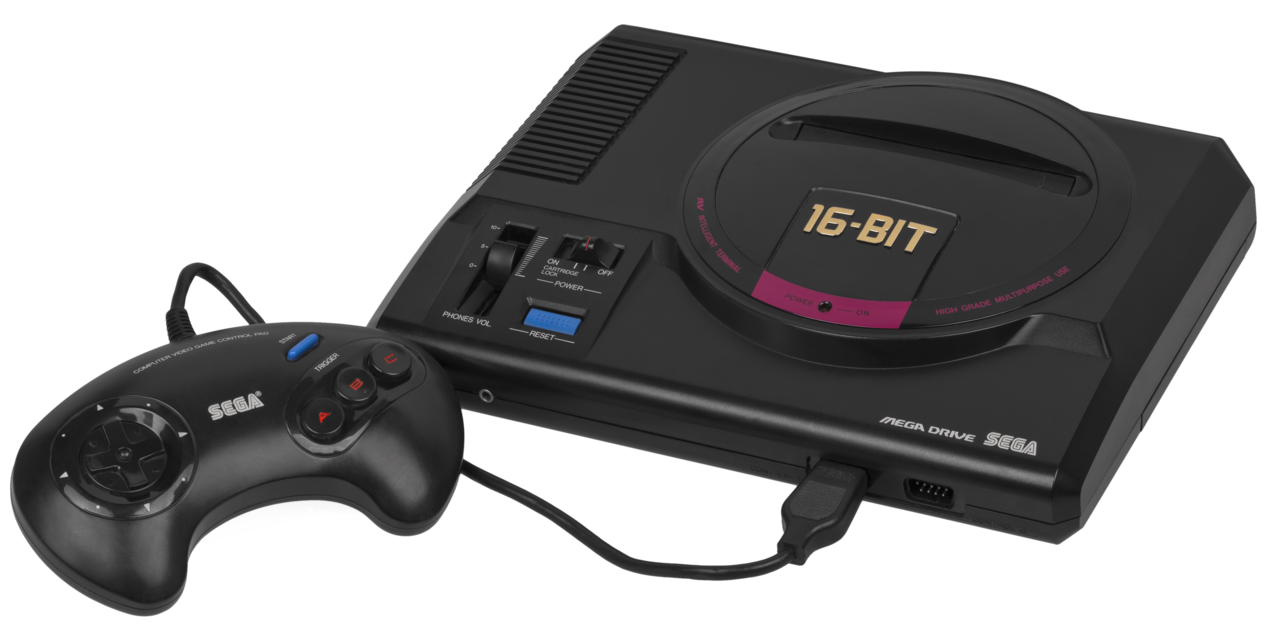
Sega 1988 Home console
Sega Mega Drive / Genesis
Sega brought its arcade experience home, then gave the machine a blue hedgehog who could make its case in a television advert.
Read the featureHow the hardware was designed, sold, and used. Compare the home consoles, portable systems and CD expansions from the first television games through the online period.
Filter by hardware type or manufacturer. Each profile identifies its regional releases and media requirements; handhelds and add-ons retain their own classifications.
Sega 1988 Home console
Sega brought its arcade experience home, then gave the machine a blue hedgehog who could make its case in a television advert.
Read the feature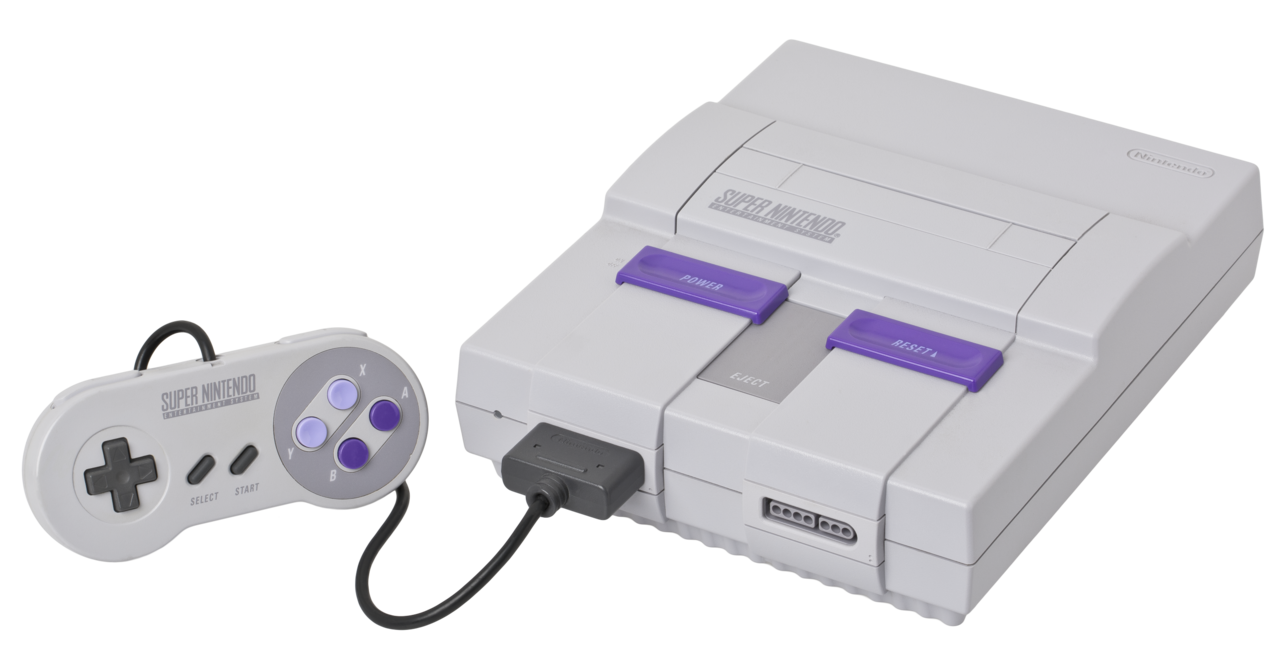
Nintendo 1990 Home console
The SNES gave Nintendo and its fellow developers more room to work. Super Mario World’s branching routes and Super Metroid’s interconnected spaces show how they used it.
Read the feature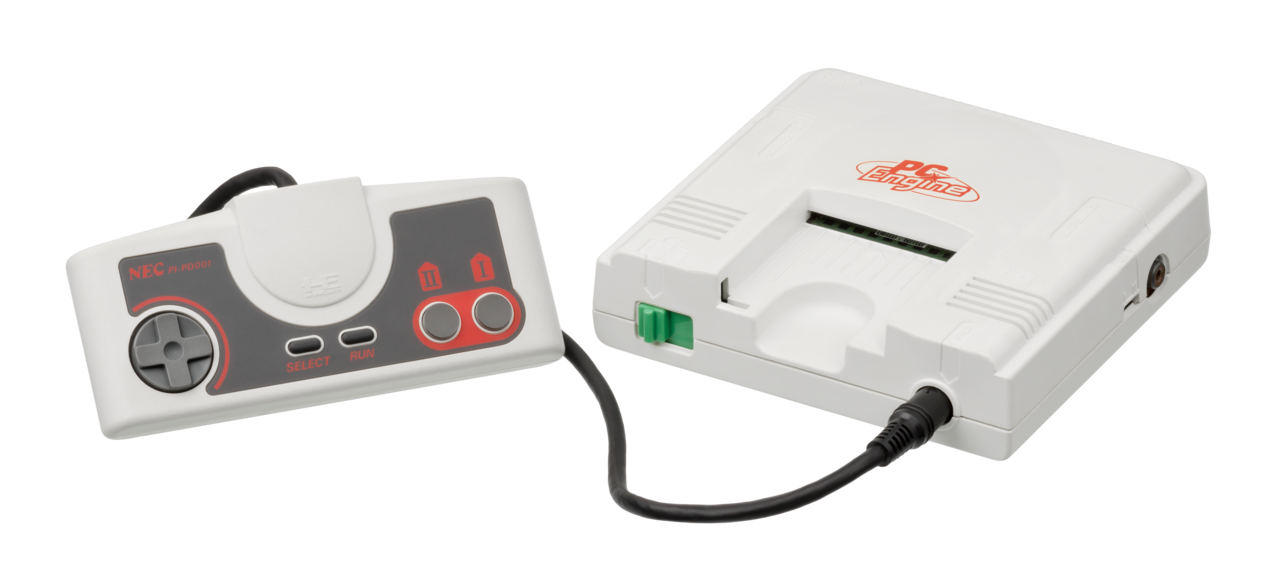
NEC / Hudson Soft 1987 Home console
NEC and Hudson’s compact machine reached Japan before either the Mega Drive or Super Famicom. Its later CD library gives the era a different direction to follow.
Read the feature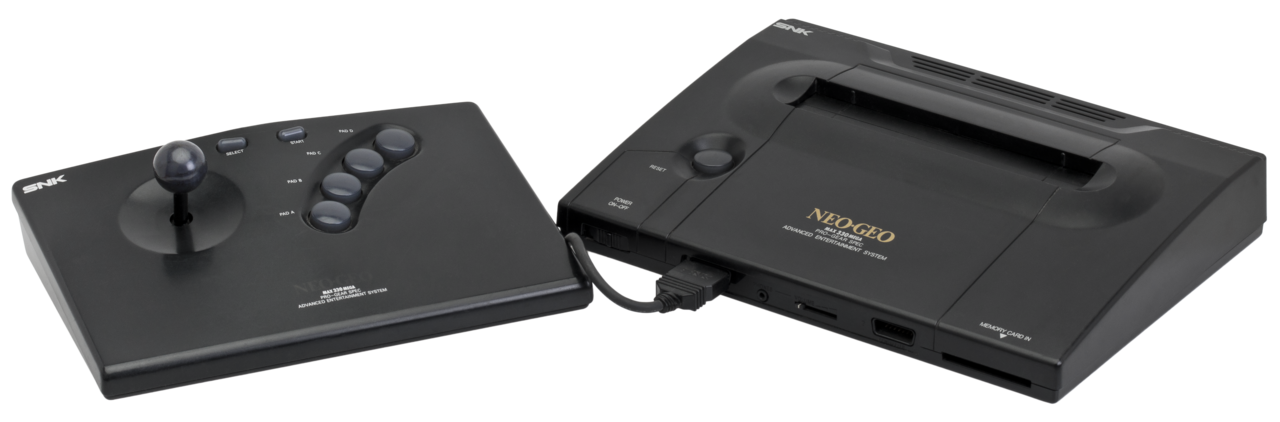
SNK 1990 Home console
SNK offered home players the same basic experience as its arcade machines. The price made that an expensive preference.
Read the featureNintendo 1989 Handheld
Nintendo put interchangeable games behind a four-shade screen. The handheld belongs alongside the home-console rivalry, with different demands on the player and the hardware.
Read the profileSega 1990 Handheld
A lit colour screen was the attraction. Sega’s handheld also made the cost of that screen visible in its battery compartment.
Read the profileAtari 1989 Handheld
Atari’s colour handheld combined reversible controls with linked multiplayer. Its own reports also record the difficulty of supplying enough games to support the hardware.
Read the profileSega 1991 Add-on
Sega’s CD expansion added a disc drive, its own processor and new sound and graphics functions. Playing its original discs requires the expanded system.
Read the profileNintendo 1983 Home console
Nintendo’s home library stretched from a running jump to an expedition with a saved game. The Famicom and NES share a history, but their hardware, release calendars and editions need separate attention.
Read the featureSega 1985 Home console
Sega’s 8-bit family carried arcade conversions alongside Phantasy Star and Alex Kidd. Its changing cases and longer life abroad make the model and the market part of the story.
Read the featureSega 1994 Home console
A measured sidestep, a sliding rally car and a loop through a dream show different sides of Saturn. Its library makes more sense when the Japanese and overseas editions are kept in view.
Read the featureSony 1994 Home console
PlayStation’s library moves from arcade rounds to recorded dialogue, racing careers and painted rooms. Its controllers changed too, so the edition and the pad both matter.
Read the featureNintendo 1996 Home console
An analogue stick makes a cautious step different from a run. Four controller sockets put more people around the same screen. Nintendo 64 explores both ideas while keeping its games on cartridges.
Read the featureSega 1998 Home console
Short arcade sessions sit beside the daily routines of Shenmue and the shared expeditions of Phantasy Star Online. Dreamcast’s modem offered another reason to return after the disc had loaded.
Read the featureSony 2000 Home console
PlayStation 2 gave the television a DVD player as well as a new game library. Its software ranges from densely populated cities to quiet landscapes with very little standing between the player and the horizon.
Read the featureNintendo 2001 Home console
GameCube puts the controller and the game at the centre of the machine. Its library makes room for crowded races, close combat, solitary exploration and small creatures carrying much larger objects.
Read the featureMicrosoft 2001 Home console
Xbox arrived with a hard disk and Ethernet already inside. Its later subscription service made finding players part of the platform, while its games still had to give those players a reason to stay.
Read the featureNintendo 2001 Handheld
A wider colour screen and shoulder buttons changed Nintendo’s portable games. Link cables connected players, while revisions changed how the same cartridges could be carried and seen.
Read the featureNintendo 2004 Handheld
Two displays, a touch panel and a microphone gave developers new ways to ask for input. Wireless play also changed what friends needed to bring to a shared game.
Read the featureSony 2004 Handheld
Sony brought optical media and wireless connections to a handheld built around a wide display. The later PSP go shows how much changes when the disc drive disappears.
Read the featureMagnavox 1972 Home console
A few white shapes on the television supplied only part of an Odyssey game. Overlays, cards and counters gave those shapes a setting and rules.
Read the featureAtari / Sears 1975 Home console
The home Pong unit made the television a table-tennis court. Its fixed game belongs to a different buying proposition from the cartridge libraries that followed.
Read the featureFairchild 1976 Home console
Fairchild’s Videocarts put interchangeable software at the centre of the home console. Built-in games remained available, while another cartridge could change what the system played.
Read the featureAtari 1977 Home console
Atari’s 1977 cartridge system became a home for arcade conversions and games designed for the living room. Different publishers and controllers widened what its modest hardware could offer.
Read the featureMattel 1979 Home console
A direction disc, side buttons and a numbered keypad gave Mattel’s console several ways to ask for input. Game-specific overlays kept those assignments close to the player’s hands.
Read the featureColeco 1982 Home console
Coleco built its console offer around recognisable arcade games and additional hardware. A native ColecoVision cartridge and an Atari cartridge played through an adapter are different editions.
Read the featureNo matches.
Try another title or remove a filter.