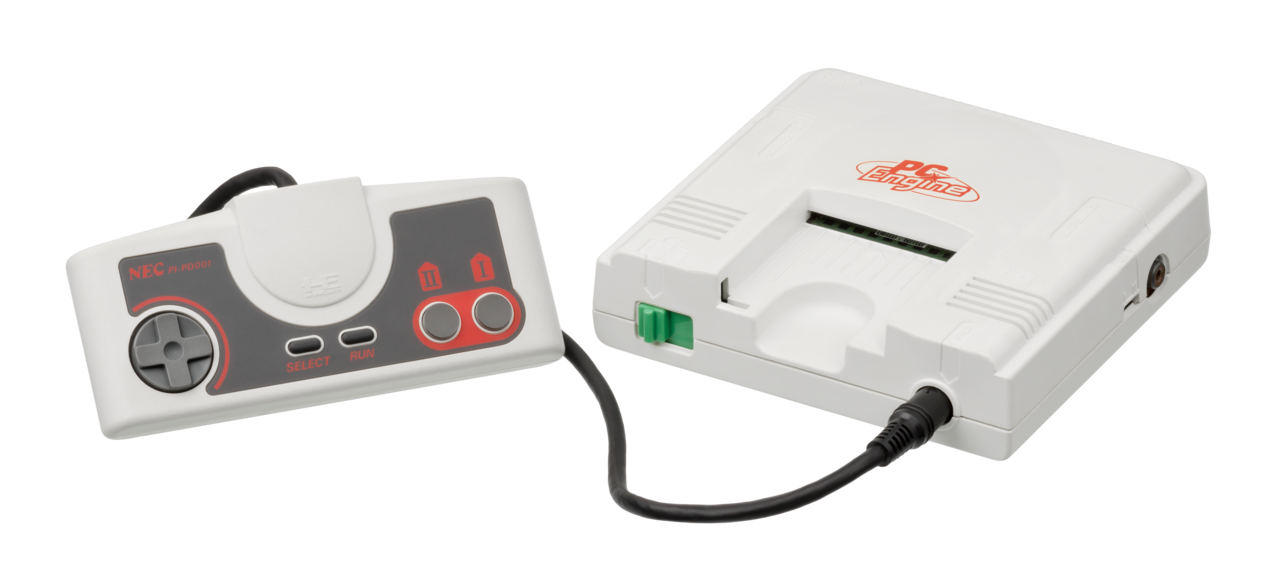
A generation is not a CPU label
Hudson and NEC’s compact machine reached Japan in 1987. Its HuC6280 is an 8-bit processor, supported by dedicated video hardware. Calling the whole period “16-bit” describes a marketing and design era; it does not mean every component in every system had the same data width.
Developer interviews describe Hudson bringing software and chip-design experience to a partnership with NEC’s consumer-electronics business. Their plans for expansion were part of the design from the start.
Sources for this section2 references
- PC Engine / TurboGrafx-16 Architecture ↗Rodrigo Copetti · Accessed 2026-10-27
Independent technical research, board photographs, CPU / video distinction and media.
- The history of the PC Engine: 1987 / 2003 interviews ↗Shmuplations / BEEP and GSLA · Accessed 2026-10-27
Translated interviews with Hudson developers. Proposals for peripherals in the 1987 interview are not evidence those products shipped.
Two names, two different fortunes
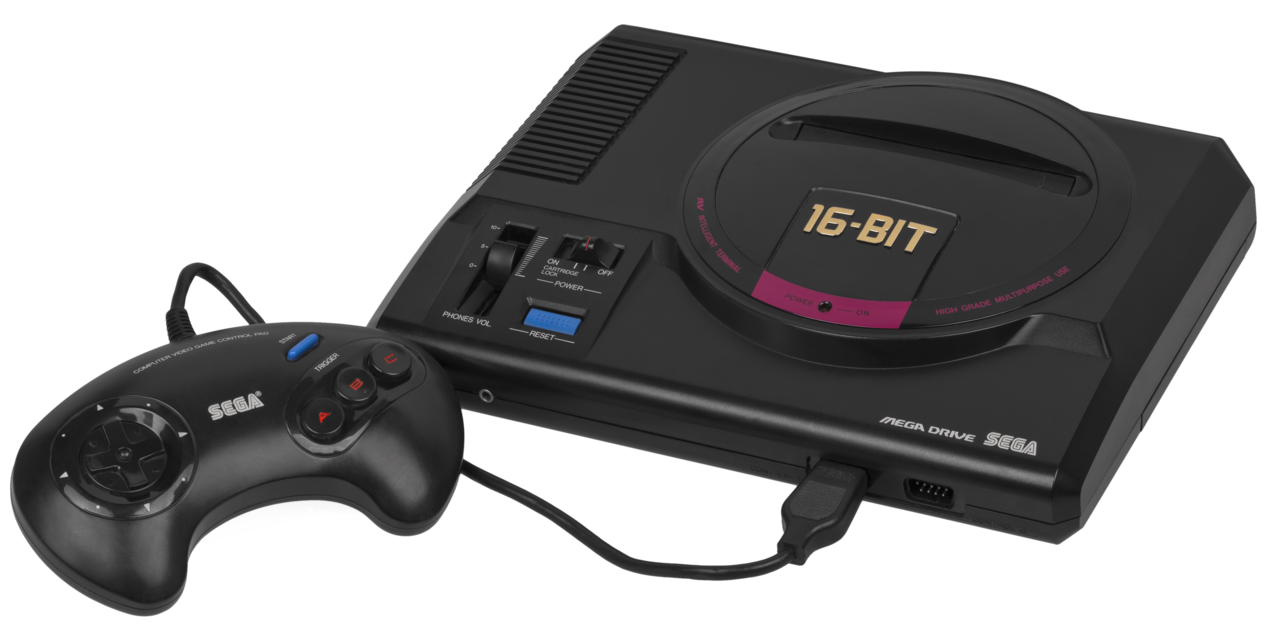
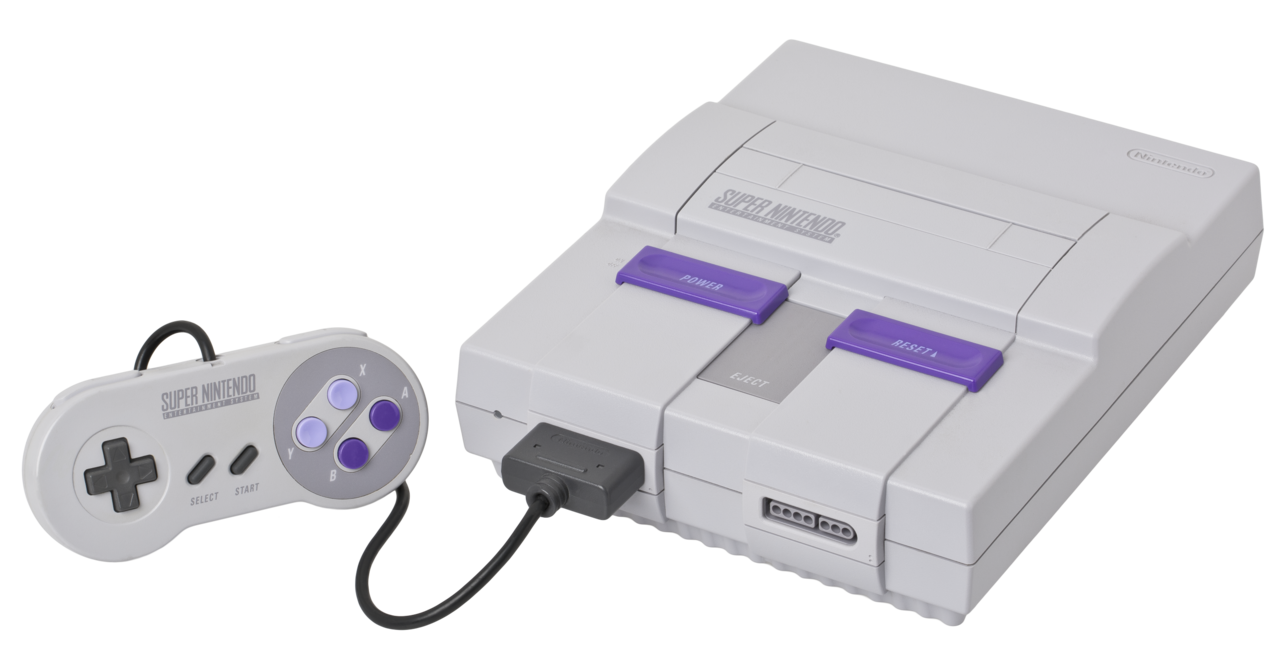
The 1989 North American TurboGrafx-16 arrived with a new name and a much larger case. Its place in an American rivalry should not erase the PC Engine’s importance in Japan. Sega itself acknowledges Nintendo and NEC as the domestic competitors whose positions it failed to overturn.
European distribution was uneven: Japanese imports and limited regional arrangements do not add up to one tidy continent-wide launch. We deliberately leave a single European release date out of this profile pending country-level research.
Sources for this section2 references
- TurboGrafx-16 ↗IT History Society · Accessed 2026-10-27
1987 Japanese and 1989 North American introductions; European import/distribution differences.
- Sega Hardware Story, part 3: Mega Drive ↗Sega · Accessed 2026-10-27
Manufacturer retrospective; used for development and regional context, not as a neutral measure of competitive success.
From HuCard to CD-ROM
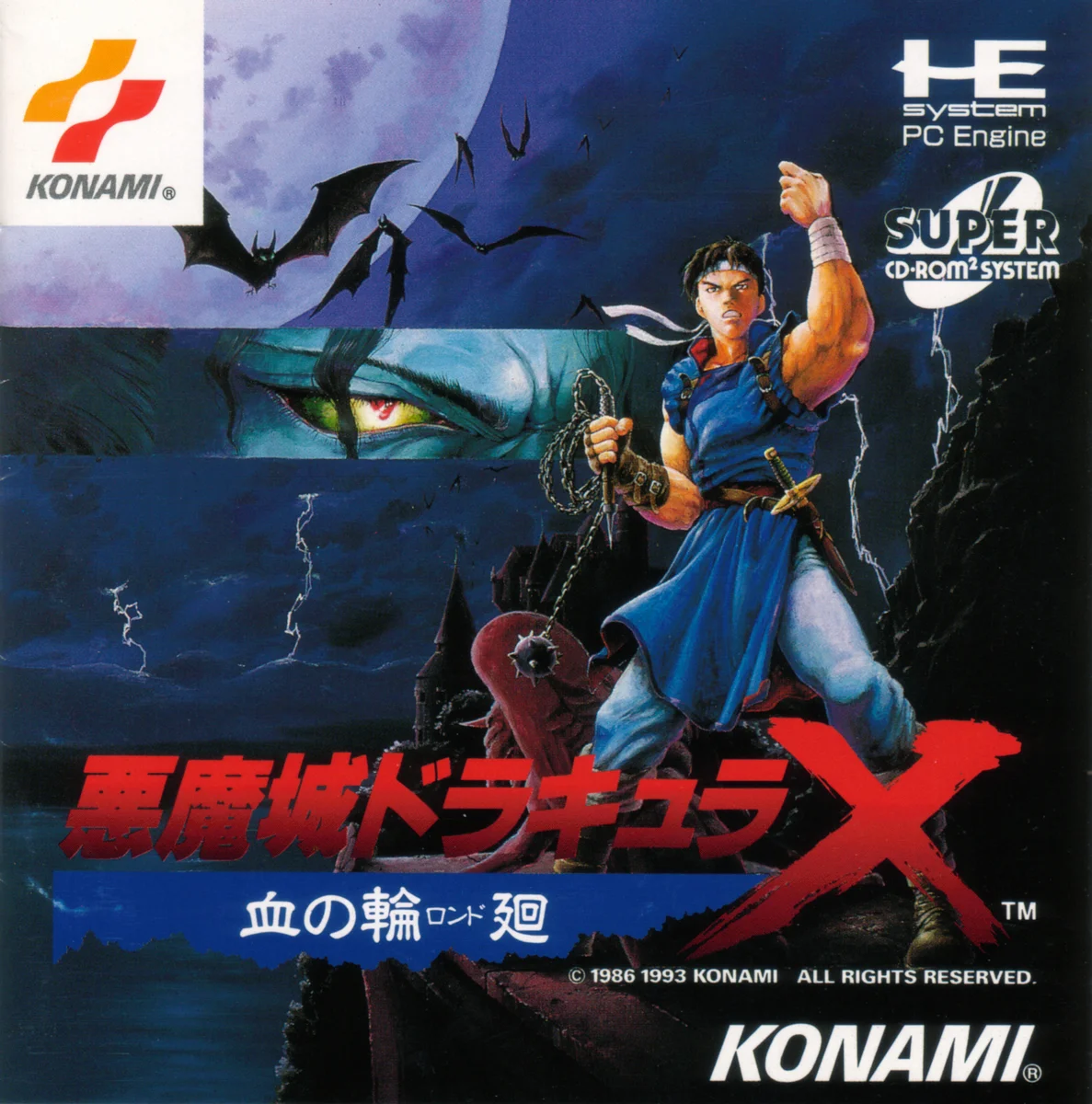
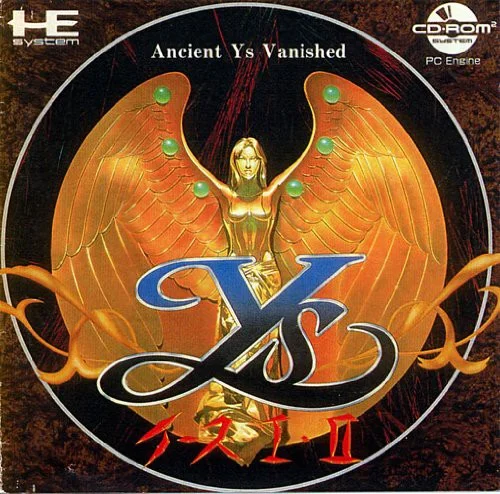
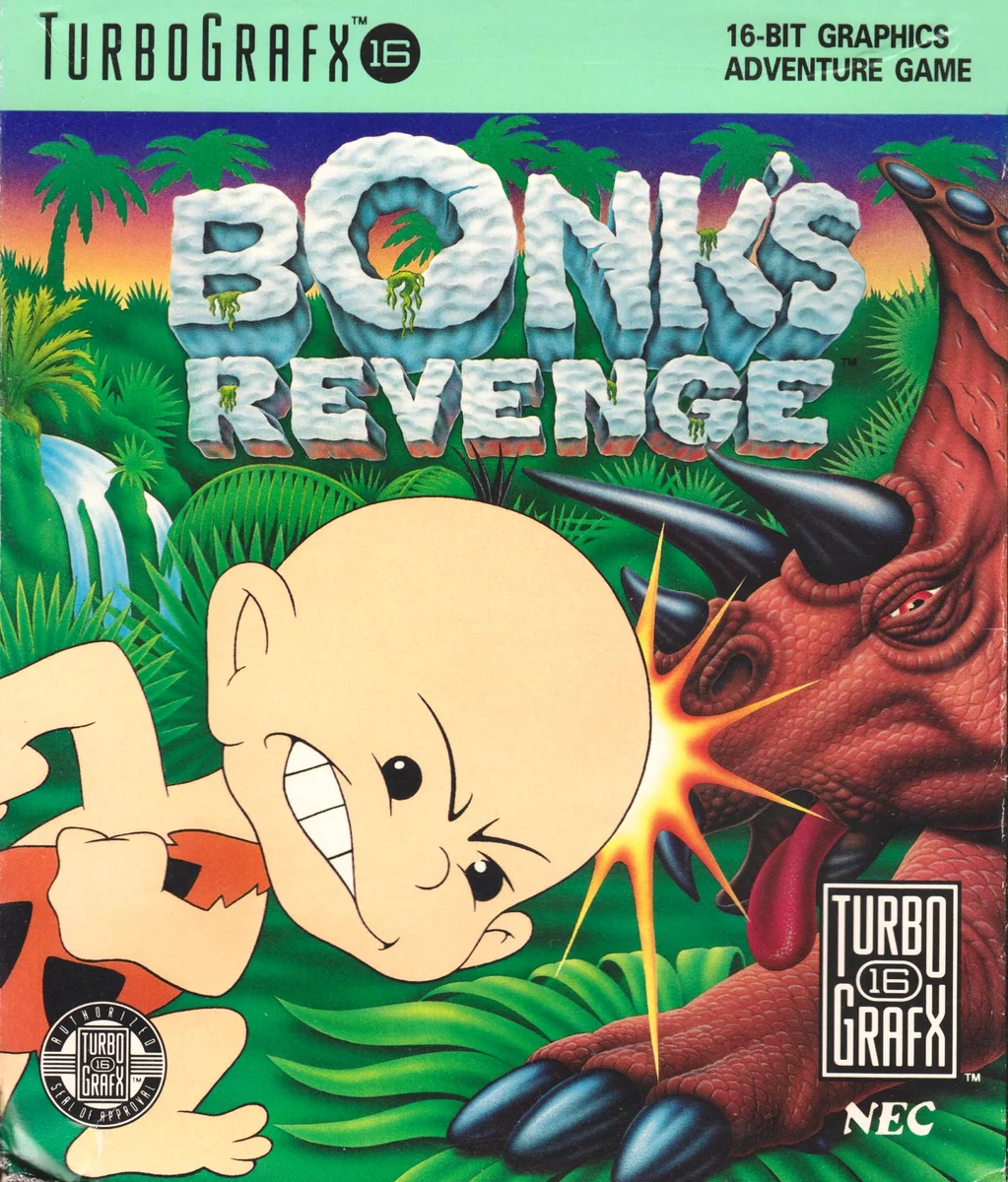
The system’s history includes both small HuCards and a developing CD-ROM ecosystem. Konami’s retrospective library illustrates the breadth: from Bonk’s compact platforming to the expanded sound and presentation of Ys I & II and Castlevania: Rondo of Blood.
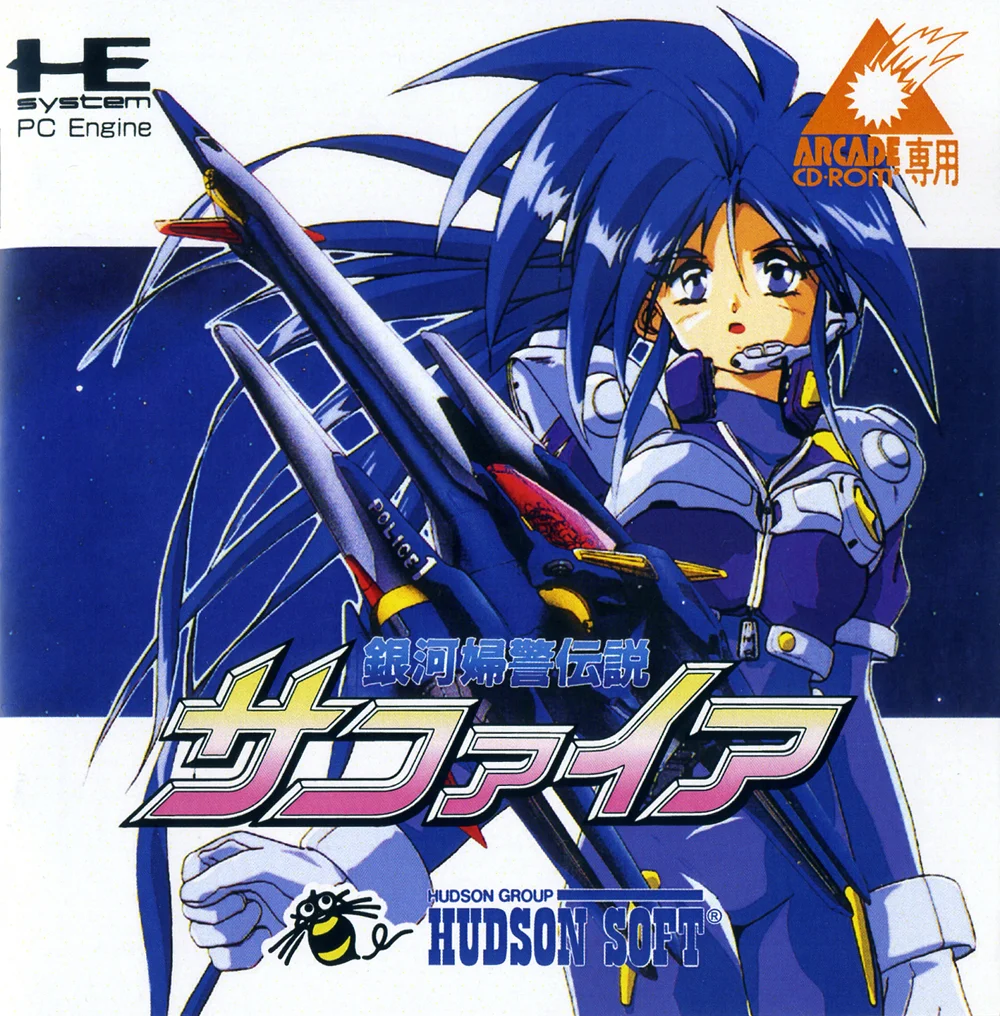
The ten-game selection identifies each original format. Ys I & II uses CD-ROM²; Rondo of Blood needs Super CD-ROM² support. Sapphire goes further and requires an Arcade Card. A disc and a base PC Engine are not enough to play any of these CD editions.
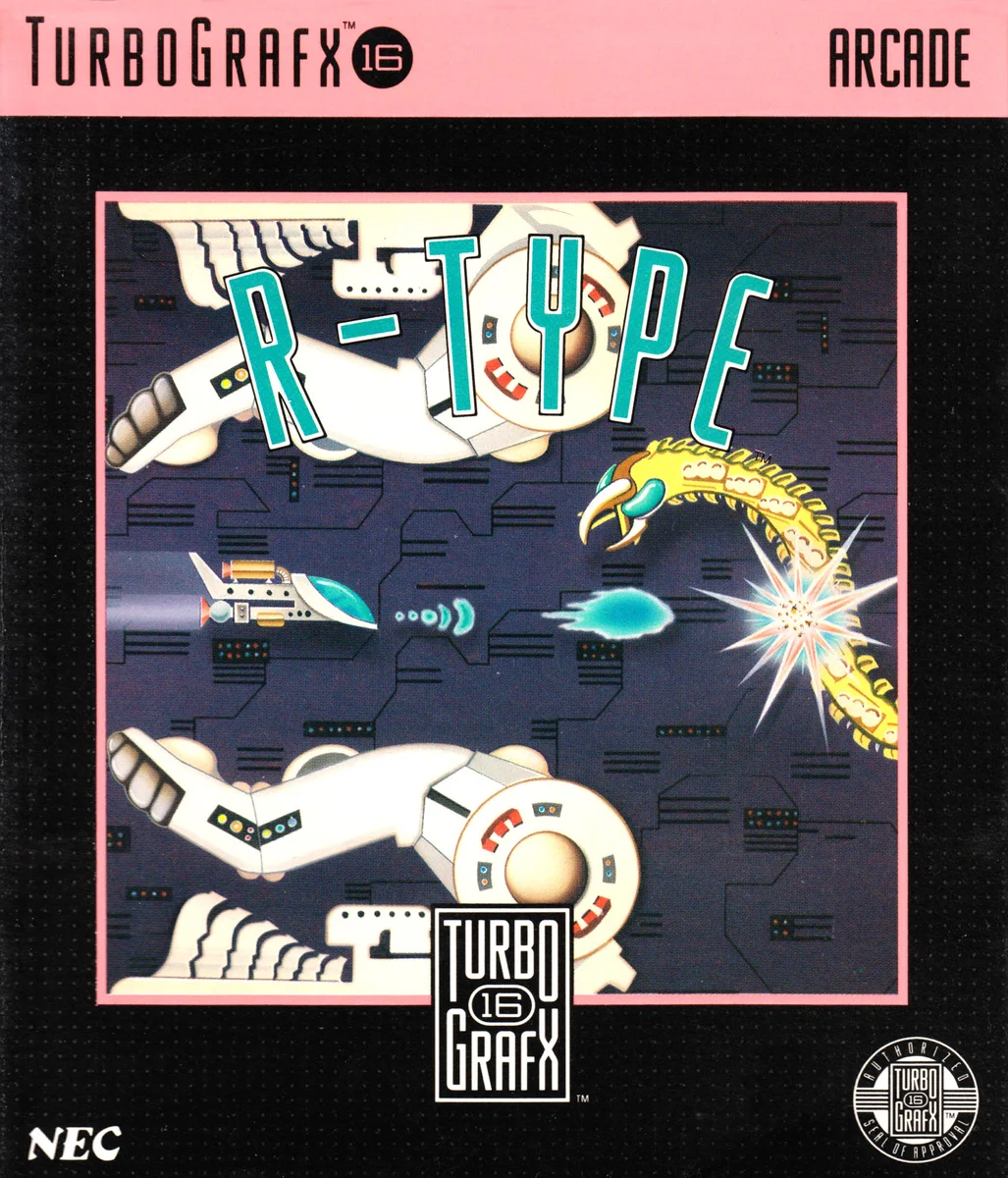
Konami’s mini catalogue brings these branches together as installed software. That simplifies the playing setup, but the original release records still matter: the North American eight-stage R-Type cartridge differs from Japan’s split release, and the English Ys edition followed the Japanese one.
Sources for this section7 references
- PC Engine mini: original game list ↗Konami · Accessed 2026-10-27
Original titles and release years; distinguishes HuCard and CD-era library context. Not a claim that the discontinued mini remains in stock.
- PC Engine / TurboGrafx-16 Architecture ↗Rodrigo Copetti · Accessed 2026-10-27
Independent technical research, board photographs, CPU / video distinction and media.
- Ys book I&II ↗Original publisher manual, preserved by Konami · Accessed 2026-10-27
Original North American manual. Printed p.1 specifies the TurboGrafx-CD player and System Card; later pages explain combat and saving.
- 悪魔城ドラキュラX 血の輪廻 ↗Original publisher manual, preserved by Konami · Accessed 2026-10-27
Original Japanese manual. Opening compatibility notice identifies Super CD-ROM² and requires a Super System Card on the older CD-ROM² system.
- 銀河婦警伝説サファイア ↗Original publisher manual, preserved by Konami · Accessed 2026-10-27
Original Japanese manual. Opening notice requires Arcade Card Pro with CD-ROM² or Arcade Card Duo with Super CD-ROM². Printed pp.8–9 explain weapons and charge attacks.
- PC Engine mini: Game List ↗Konami · Accessed 2026-10-27
Japanese and North American software editions and their respective years. Installed mini software is a documented playing route, not a claim about current hardware stock.
- R-TYPE ↗Original publisher manual, preserved by Konami · Accessed 2026-10-27
Original North American eight-stage TurboChip edition. The Japanese split release is a different packaging of the same game, not the arcade sequel.