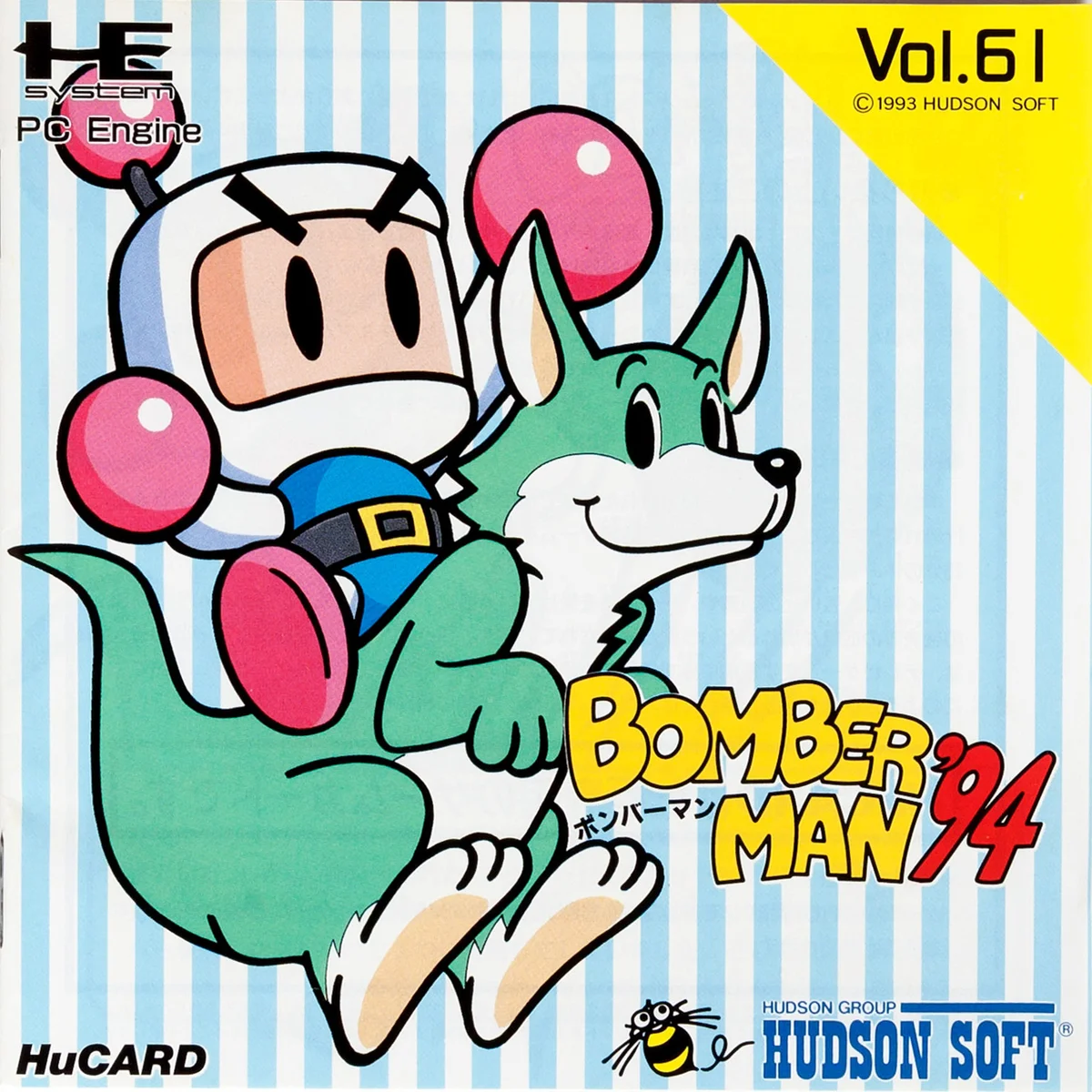
Leave yourself an exit
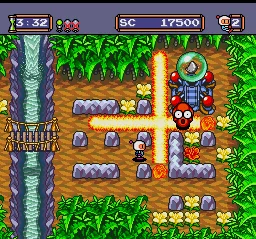
The first task is making space; the harder one is recognising when that space has become unsafe. Longer blasts make your bombs more useful and your escape routes less reliable. Louie mounts introduce extra abilities into this small grid, while multiplayer turns an orderly plan into a hurried negotiation with everyone else’s explosives.
Try a few short battles before changing the rules. Keep track of your own blast range after collecting power-ups. The solo campaign gives you time to learn how bombs reshape a route, but other people are the strongest reason to return.
Five players on one HuCard
Despite the title, the Japanese HuCard arrived in 1993. This entry introduced the rideable Louies and supports five-player battles. It makes the console’s multitap useful for competitive play, offering a different reason to gather around it from Dungeon Explorer’s shared adventure.
Why we chose it for PC Engine
Short battles let a group learn by making mistakes together. The threat changes as soon as somebody collects a larger blast.
Explore this console’s game selection ↗Release record
Original worldwide release: 1993. Release records above identify the console editions covered by this collection.
Sources and further reading3 references
- ボンバーマン'94 ↗Original publisher manual, preserved by Konami · Accessed 2026-10-27
Original Japanese HuCard manual; normal game, battle rules and multiplayer setup.
- ボンバーマン '94 ↗Konami · Accessed 2026-10-27
Historical description of the original mechanics and five-player battle mode. Not evidence that Wii U purchases remain available.
- PC Engine mini: Game List ↗Konami · Accessed 2026-10-27
Japanese and North American software editions and their respective years. Installed mini software is a documented playing route, not a claim about current hardware stock.