Small circuits, long rivalries
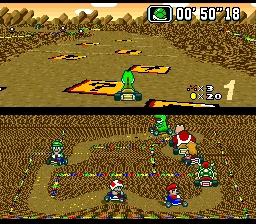
The circuits are small enough for a poor corner to follow you around the whole lap. Learning to slide cleanly is absorbing before anyone throws an item into the calculation. Battle Mode makes the rivalry more direct, asking you to anticipate another player’s turn in a confined arena. The split screen keeps that opponent in view throughout.
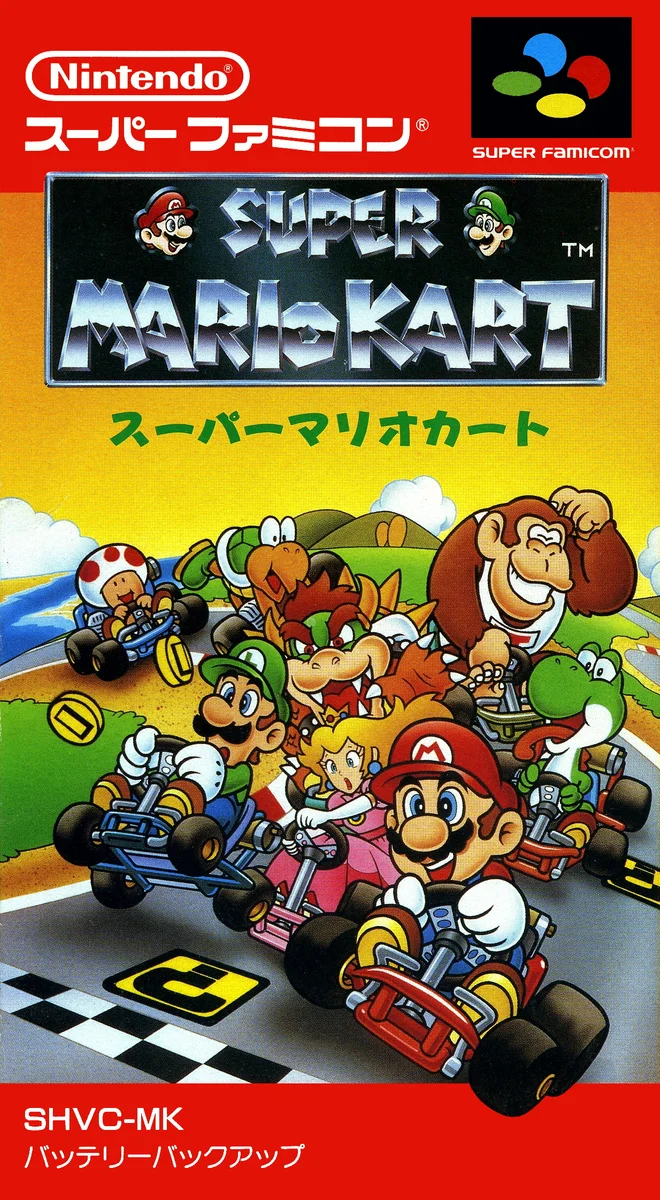
The first Mario Kart arrived on Super Famicom in August 1992. Its flat, rotating tracks give it a recognisably SNES presentation. It began a long-running series, but its compact circuits and particular handling also make it worth approaching on its own terms.
Learning the original handling
Familiarity with recent Mario Kart games may work against you at first. Start with a lower engine class and give the steering time to settle. A few two-player battles are a good introduction if the computer racers make the championship feel hostile.
Why we chose it for Super Nintendo
The series began with compact circuits and demanding handling. A second player in Battle Mode helps explain why the formula lasted.
Explore this console’s game selection ↗Release record
Original worldwide release: 1992. Release records above identify the console editions covered by this collection.
Sources and further reading3 references
- Nintendo Classic Mini: Super Famicom announcement ↗Nintendo · Accessed 2026-10-27
Original Japanese Super Famicom release dates and publishers, explicitly identified as such by Nintendo.
- Super Nintendo Entertainment System: Nintendo Classics game library ↗Nintendo · Accessed 2026-10-27
UK catalogue checked October 2026; standard paid Nintendo Switch Online membership. Availability can change.
- Games included in the Super NES Classic Edition ↗Nintendo · Accessed 2026-10-27
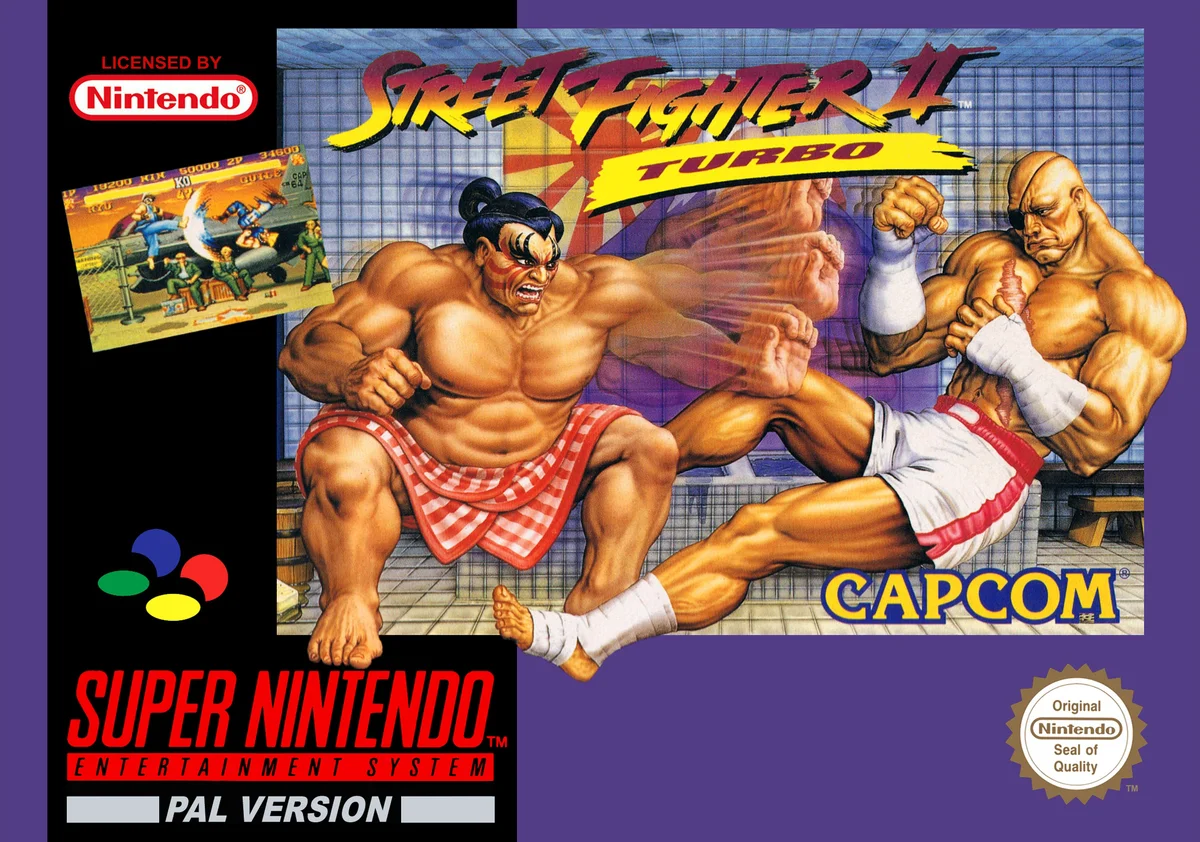
Built-in games, including the SNES port of Street Fighter II Turbo. Current hardware stock has not been checked.