The difference between walking and running
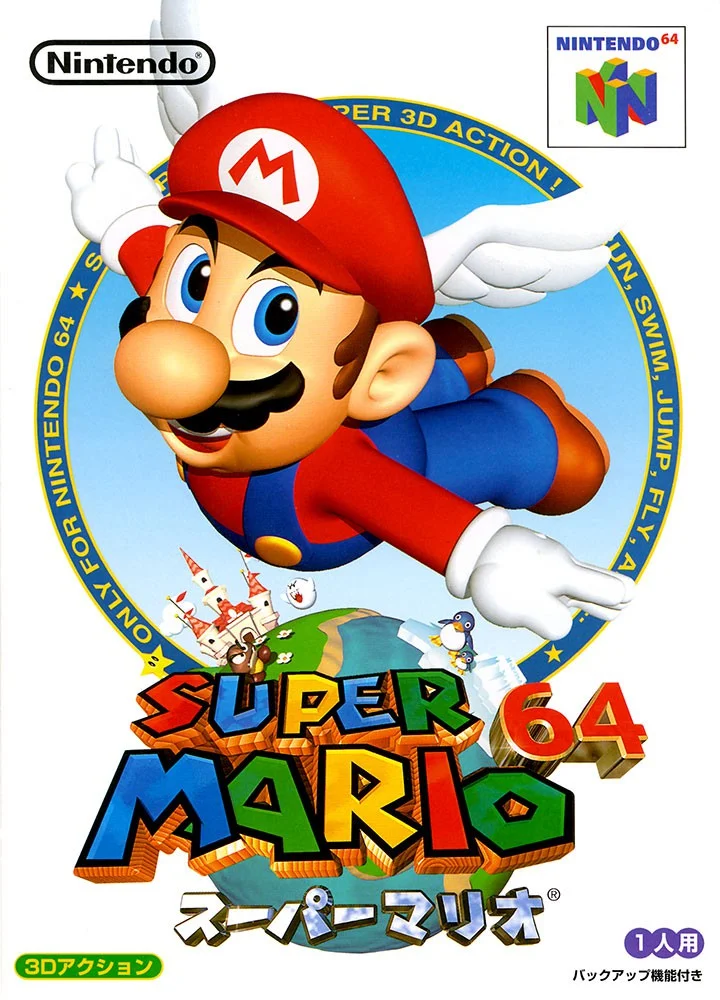
Super Mario 64 gives the analogue stick an immediate purpose: how far it moves changes how Mario moves. Slopes, ledges and open ground invite different speeds. The camera is another thing to learn, especially where a useful view of the destination is harder to arrange than the jump itself.
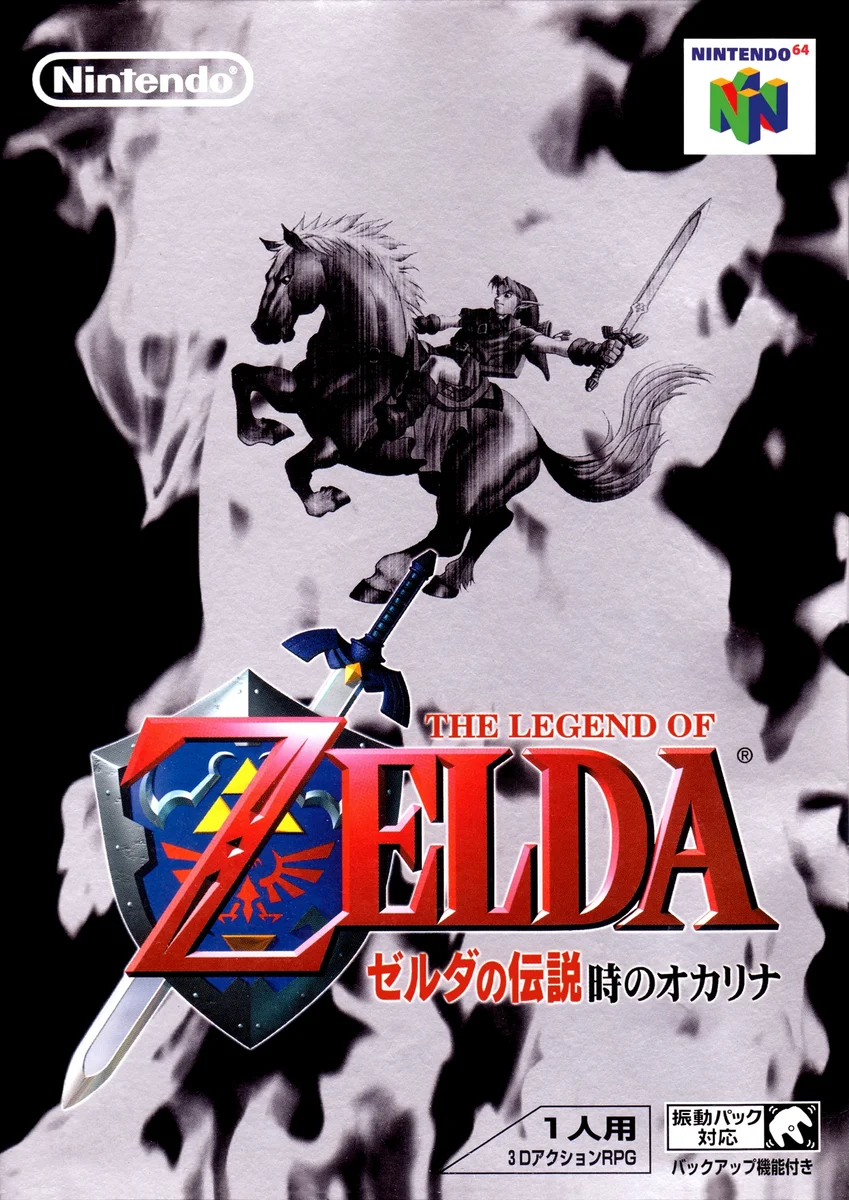
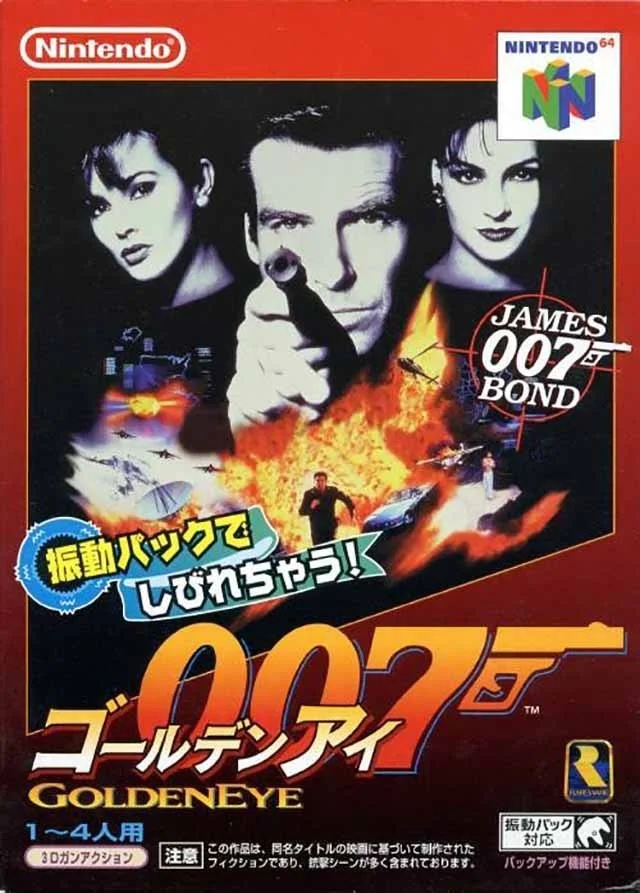
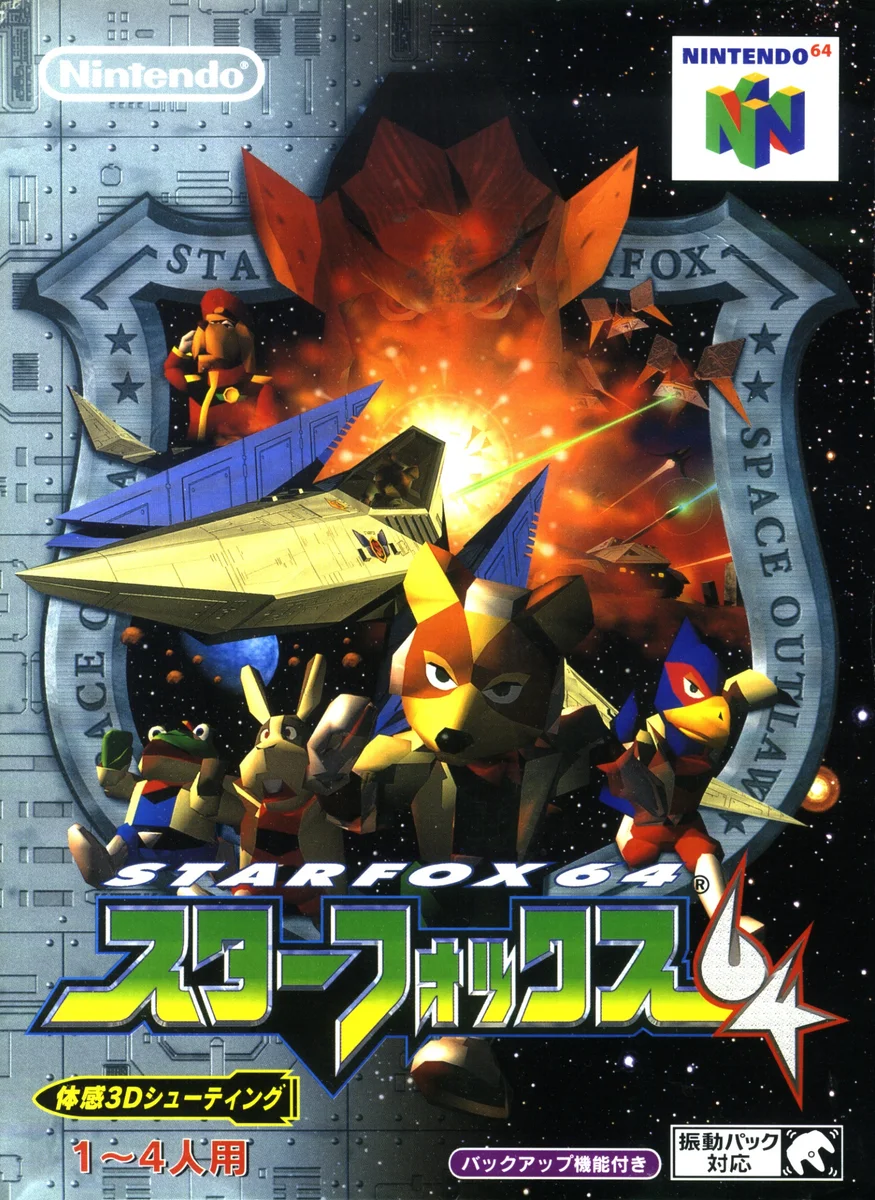
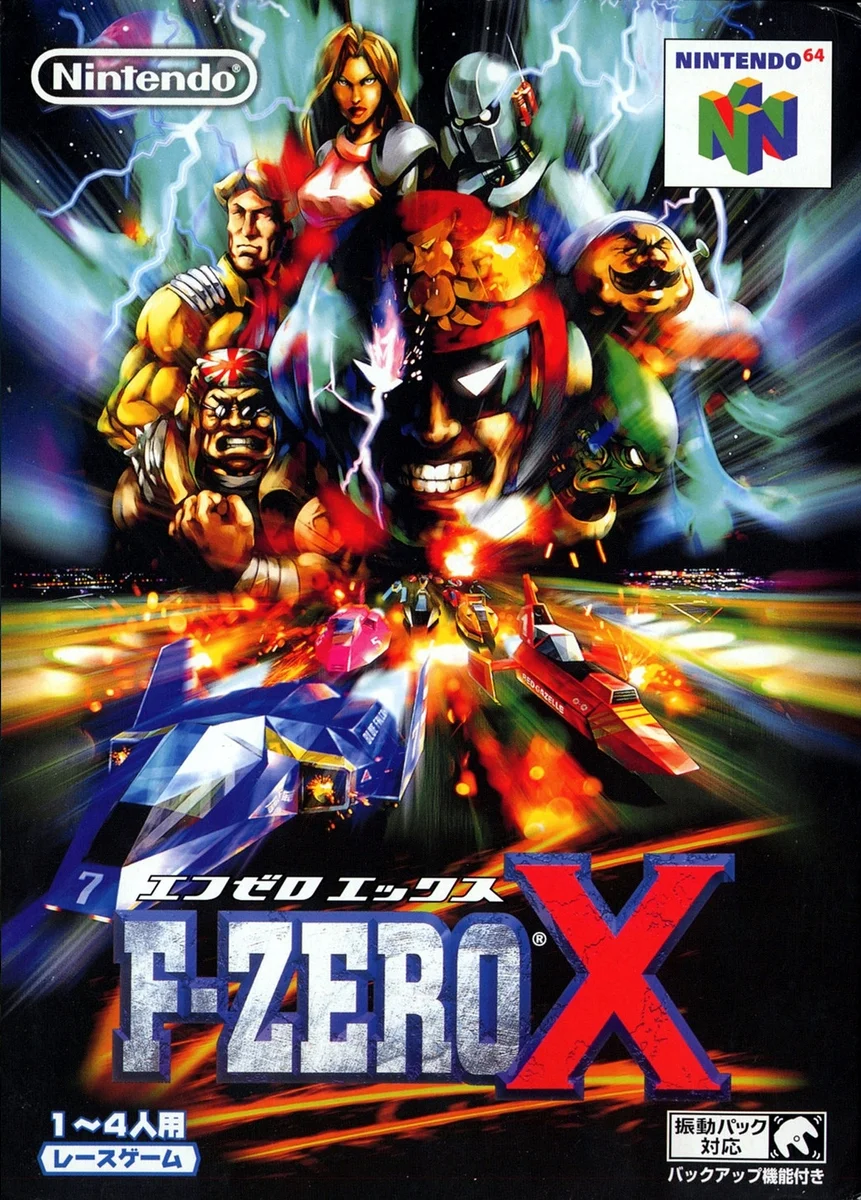
The controller’s shape does not prescribe one solution for every game. Star Fox 64 directs the player along routes; Ocarina of Time lets attention settle on a chosen target; GoldenEye asks for aiming and movement in narrow rooms. This collection uses those differences to examine the work involved in playing in three dimensions.
Sources for this section5 references
- Nintendo 64 ↗Nintendo UK · Accessed 2026-10-27
Four controller ports and analogue Control Stick. Promotional claims of being the first analogue controller are omitted.
- スーパーマリオ64 ↗Nintendo · Accessed 2026-10-27
Original Japanese game site and links to movement instructions; not a current storefront.
- スターフォックス64 ↗Nintendo · Accessed 2026-10-27
Japanese release with Rumble Pak, branching routes and mission play. Lylat Wars is the European title, as retained in the UK Classics catalogue.
- ゼルダの伝説 時のオカリナ ↗Nintendo · Accessed 2026-10-27
Original Japanese site: story, dungeons and release record.
- ゴールデン・アイ 007 ↗Nintendo / Rare · Accessed 2026-10-27
Original site credits Rare, identifies objective-based missions and two-to-four-player competition.
A cartridge in a disc generation
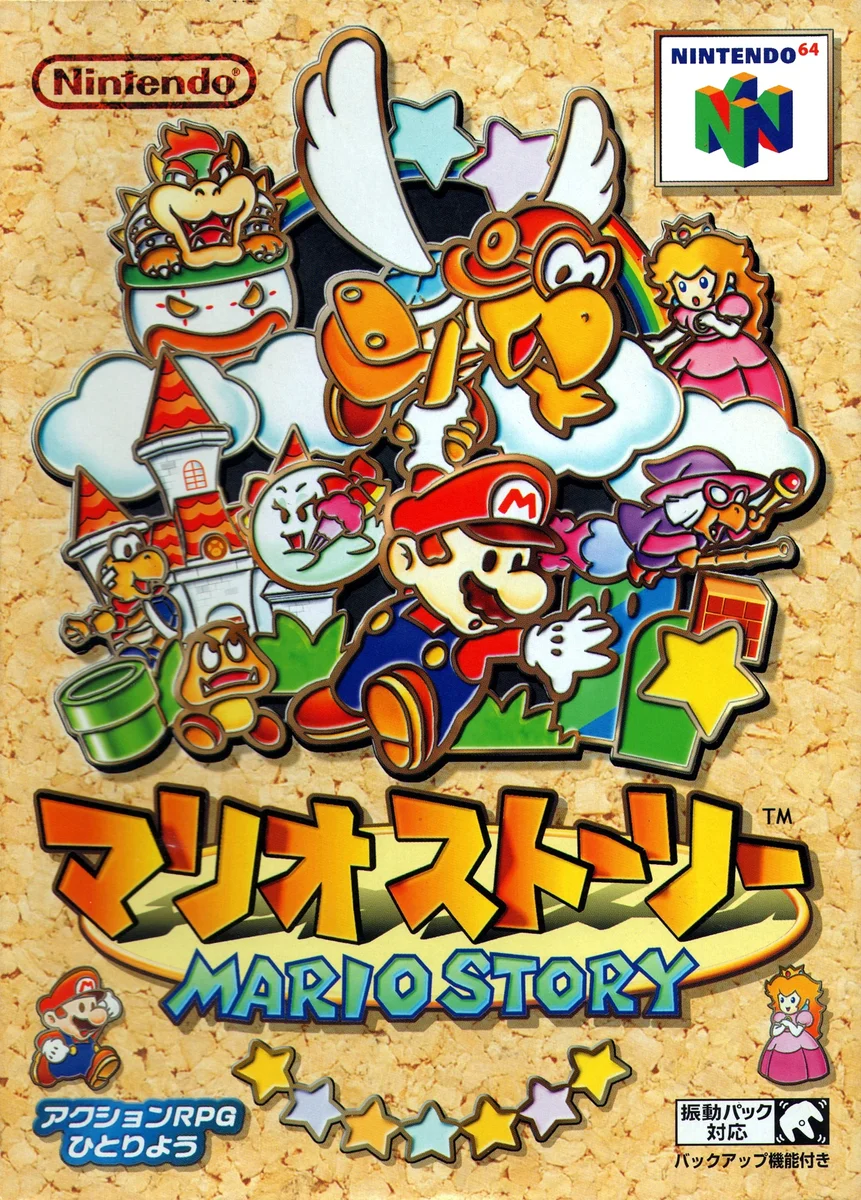
Nintendo retained cartridges for the main library. Their access characteristics differ from optical discs, while limited storage encourages different choices about recorded material. That trade-off cannot explain an entire game on its own: Paper Mario uses writing, staged scenes and a deliberately flat cast to build an adventure within it.
Nintendo’s 64DD was a separate Japanese disk expansion, recorded in its corporate chronology in 1999. It is not required for any of the ten recommendations here. The F-Zero X selection is the cartridge game, not its later 64DD Expansion Kit.
Sources for this section4 references
- Nintendo 64 Architecture ↗Rodrigo Copetti · Accessed 2026-10-27
Original analysis of cartridge access, memory, texture handling, regional video output and 64DD. Release summaries are not used to resolve disputed retail days.
- Annual Report 2006 ↗Nintendo · Accessed 2026-10-27
History of Nintendo, PDF page 12: US NES introduction in 1985, Europe in 1986, and Japanese Disk System in 1986. Europe is the beginning of a regional rollout, not one release date for every country.
- マリオストーリー ↗Nintendo / Intelligent Systems · Accessed 2026-10-27
Original site credits Intelligent Systems and dates Mario Story to August 2000. Battle and badge pages describe the action RPG systems.
- NINTENDO64全発売ソフト一覧 ↗Nintendo · Accessed 2026-10-27
Japanese Majora’s Mask and Mario Story (Paper Mario), both 2000. Original Shift-JIS text checked directly.
Four sockets on the front
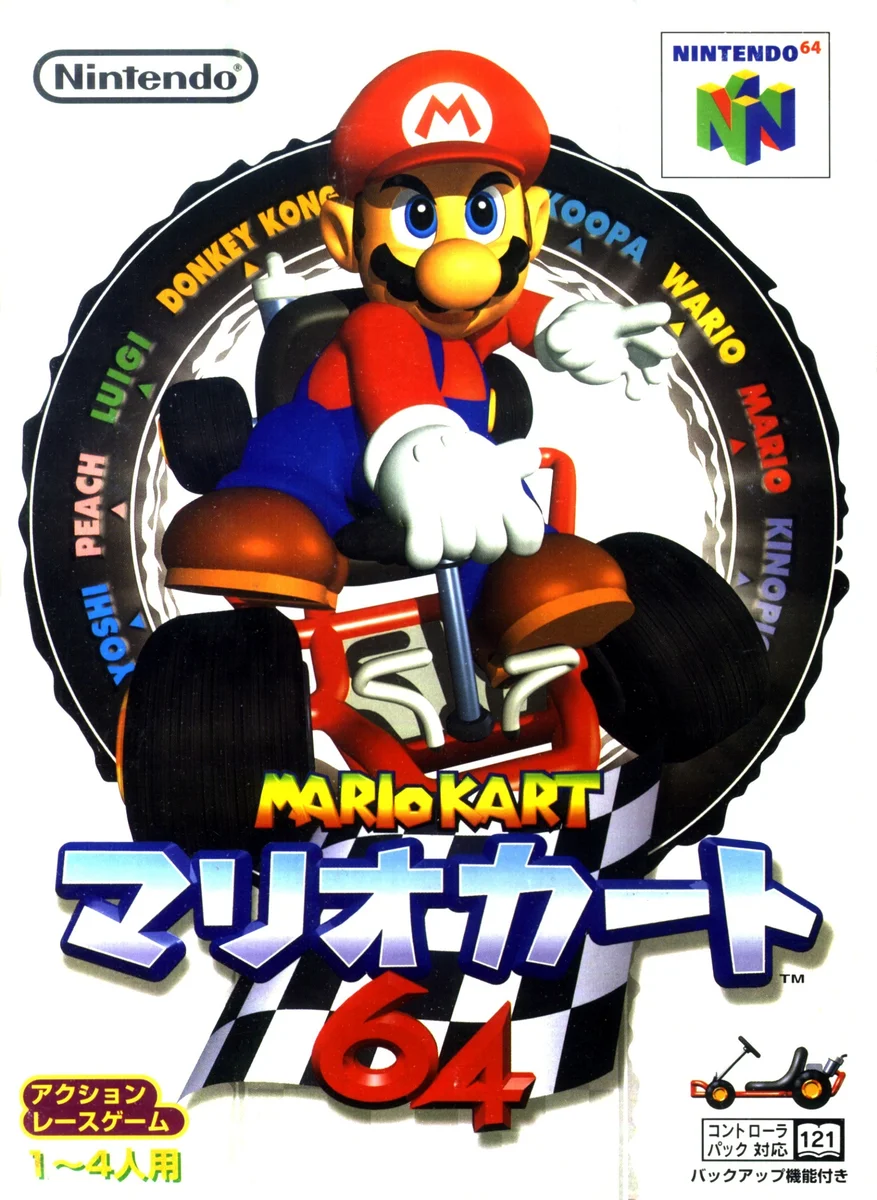
The built-in controller ports make local multiplayer part of the hardware’s everyday use. Mario Kart 64 and GoldenEye turn one television into several views of the same contest. Space, visibility and conversation become part of the match; a larger numerical player count does not describe that experience by itself.
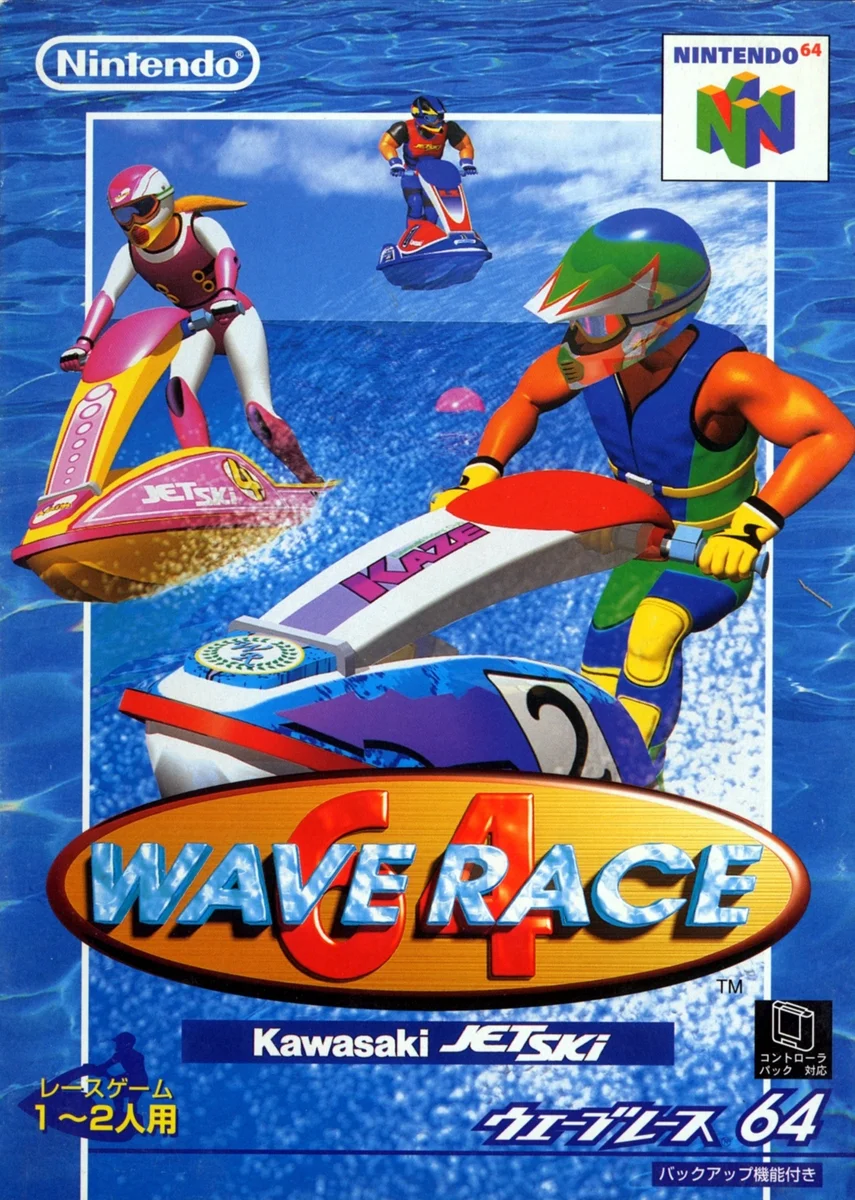
Not every game uses all four ports. Wave Race 64 offers a different kind of racing comparison, where reading the changing water matters more than collecting an item. Its place beside Mario Kart and F-Zero X is deliberate: three racing games can ask for three different kinds of judgement.
Sources for this section4 references
- Nintendo 64 ↗Nintendo UK · Accessed 2026-10-27
Four controller ports and analogue Control Stick. Promotional claims of being the first analogue controller are omitted.
- マリオカート64 ↗Nintendo · Accessed 2026-10-27
Original Japanese site, release date and multiplayer modes.
- ゴールデン・アイ 007 ↗Nintendo / Rare · Accessed 2026-10-27
Original site credits Rare, identifies objective-based missions and two-to-four-player competition.
- ウエーブレース64 ↗Nintendo · Accessed 2026-10-27
Original description of waves, handling, riders and optional Controller Pak data transfer; initial Japanese edition precedes the rumble revision.
Three Paks, different jobs
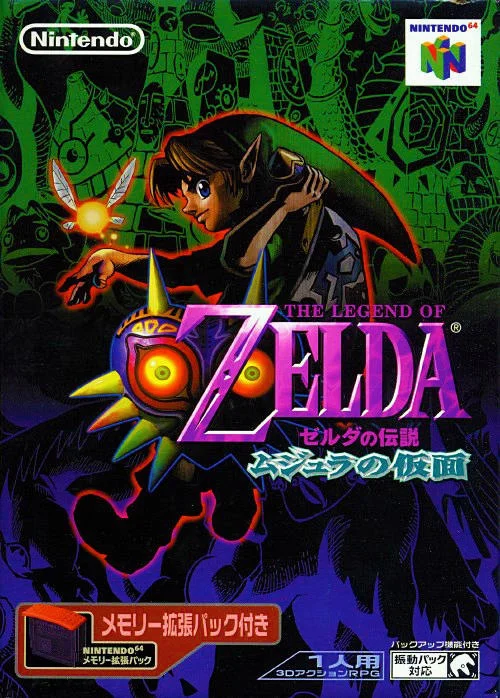
The Controller Pak stores data for games that support it. The Rumble Pak provides vibration through the controller. The Expansion Pak adds memory inside the console. Majora’s Mask requires the last of these on original hardware; buying a Controller Pak will not satisfy that requirement.
The Japanese launch preceded the European introduction by several months. Star Fox 64 reached Europe as Lylat Wars, and selected Nintendo Classics titles offer regional versions today. Original European hardware normally uses a 50 Hz video system, while Japanese and North American machines use 60 Hz. Games can adapt to those timings differently; the label alone does not establish a uniform speed difference across the library.
Sources for this section5 references
- Accessories ↗Nintendo UK · Accessed 2026-10-27
Separates Rumble Pak, Controller Pak, Transfer Pak and 4 MB Expansion Pak. Majora’s Mask requires Expansion Pak; Perfect Dark has restricted operation without it.
- ご購入前にお読み下さい ↗Nintendo · Accessed 2026-10-27
Original explicit notice: Majora’s Mask cannot run without the Memory Expansion Pak.
- Nintendo History ↗Nintendo UK · Accessed 2026-10-27
European launches and Super FX / Super Game Boy context. Older sales prose on this page is superseded by Nintendo investor relations data.
- Nintendo 64 – Nintendo Classics ↗Nintendo UK · Accessed 2026-10-27
Live UK catalogue includes all ten selections. Paid Nintendo Switch Online + Expansion Pack required. Selected games offer regional versions; no universal PAL/NTSC equivalence is implied.
- Nintendo 64 Architecture ↗Rodrigo Copetti · Accessed 2026-10-27
Original analysis of cartridge access, memory, texture handling, regional video output and 64DD. Release summaries are not used to resolve disputed retail days.