A landmark and its detours
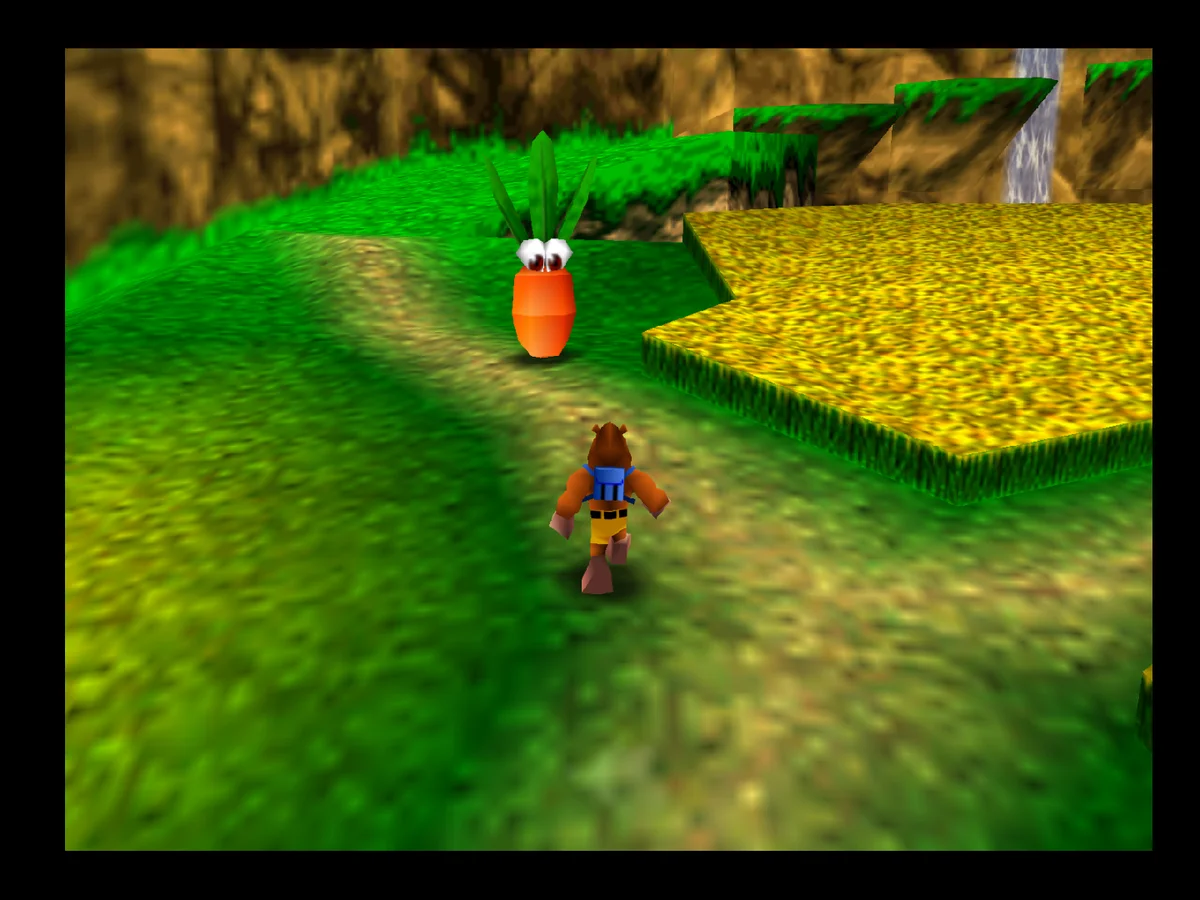
A landmark gives a world a centre; smaller paths around it invite you to test a new move or investigate a sound. The collecting works best when an item leads to a small encounter rather than merely filling a total. Banjo and Kazooie’s shared movement keeps the actions characterful. The original note-score rules can make an interrupted visit costly, so a long session sometimes matters more than it first appears.
Learn the newly introduced moves before trying to clear a world completely. Keep an eye on the original edition’s note score and understand what happens when you leave. A later version’s saving behaviour should not be assumed to apply here.
Two characters, one set of moves
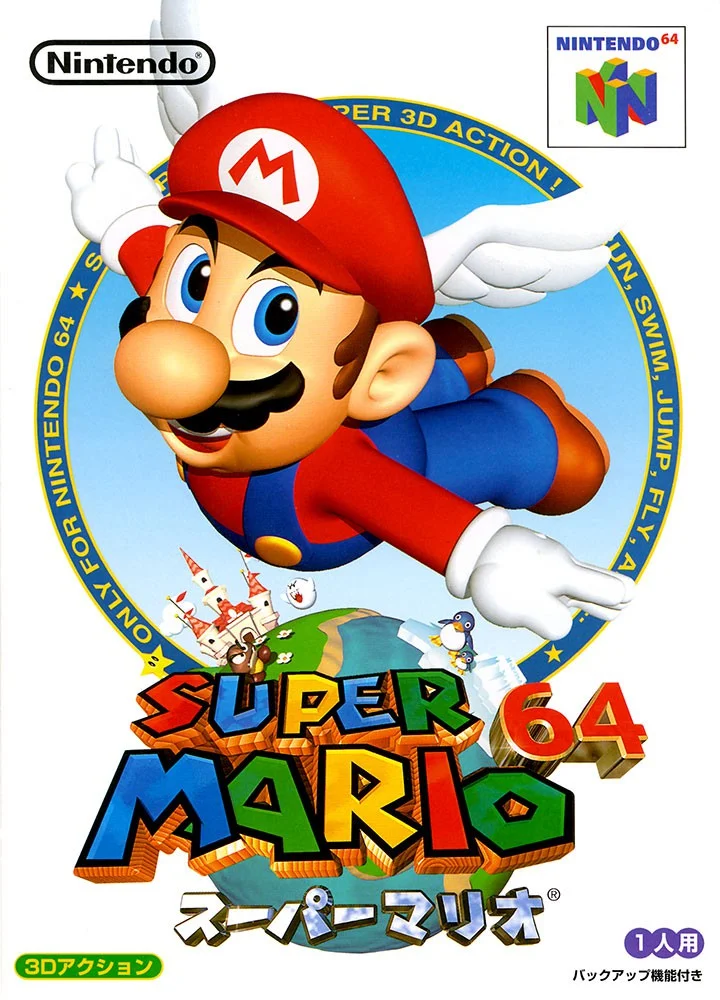
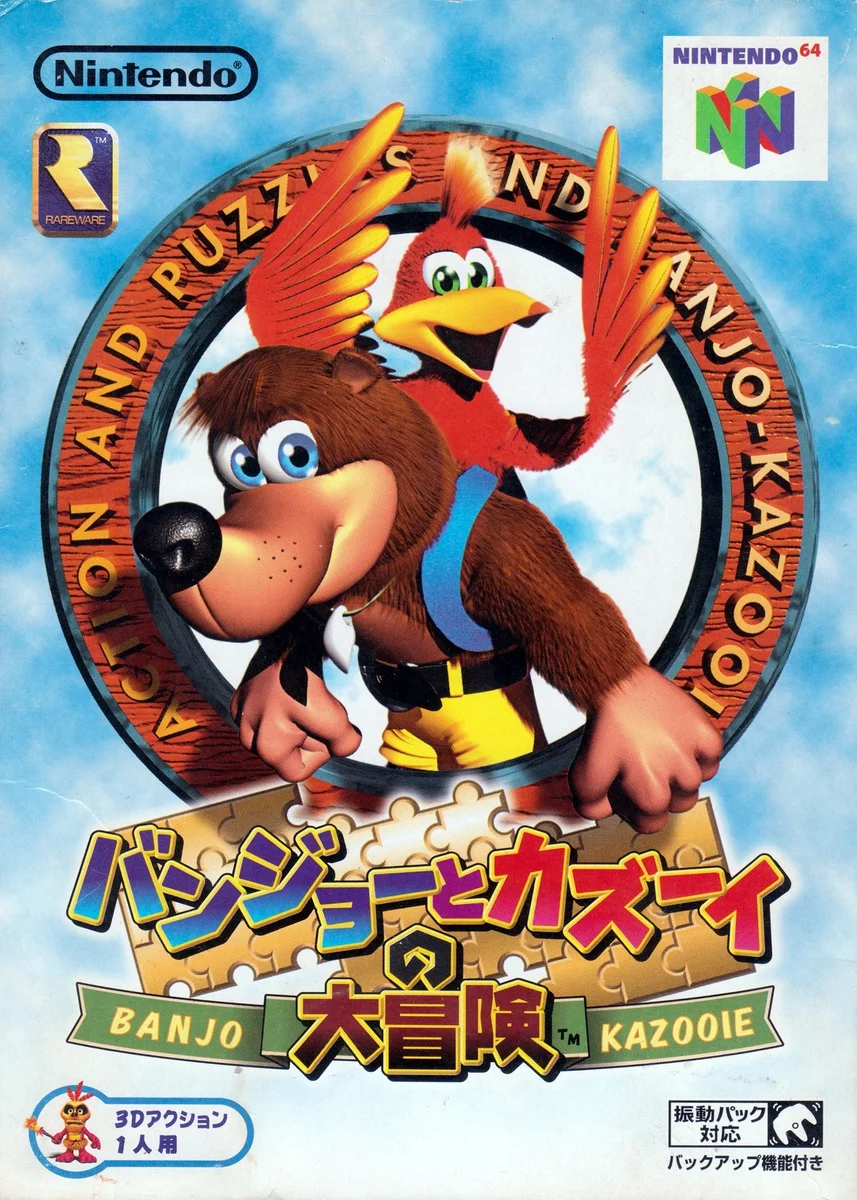
Rare’s game arrived in 1998, with Nintendo’s Japanese edition following in December. Its densely populated stages build on exploratory 3D platforming while tying progression to several kinds of collectible. The pair’s combined abilities give the controls a different rhythm from Mario’s jumps.
Why we chose it for Nintendo 64
Landmarks, character moves and collecting give its worlds a density worth exploring.
Explore this console’s game selection ↗Release record
Original worldwide release: 1998. Release records above identify the console editions covered by this collection.
Sources and further reading3 references
- NINTENDO64全発売ソフト一覧(1998年) ↗Nintendo · Accessed 2026-10-27
Japanese Ocarina of Time, Banjo-Kazooie and F-Zero X releases. Original Shift-JIS text checked directly.
- バンジョーとカズーイの大冒険 ↗Nintendo / Rare · Accessed 2026-10-27
Original site credits Rare and describes the combined bear/bird actions; Japanese date is December 1998.
- Nintendo 64 – Nintendo Classics ↗Nintendo UK · Accessed 2026-10-27
Live UK catalogue includes all ten selections. Paid Nintendo Switch Online + Expansion Pack required. Selected games offer regional versions; no universal PAL/NTSC equivalence is implied.