Spend the safety margin
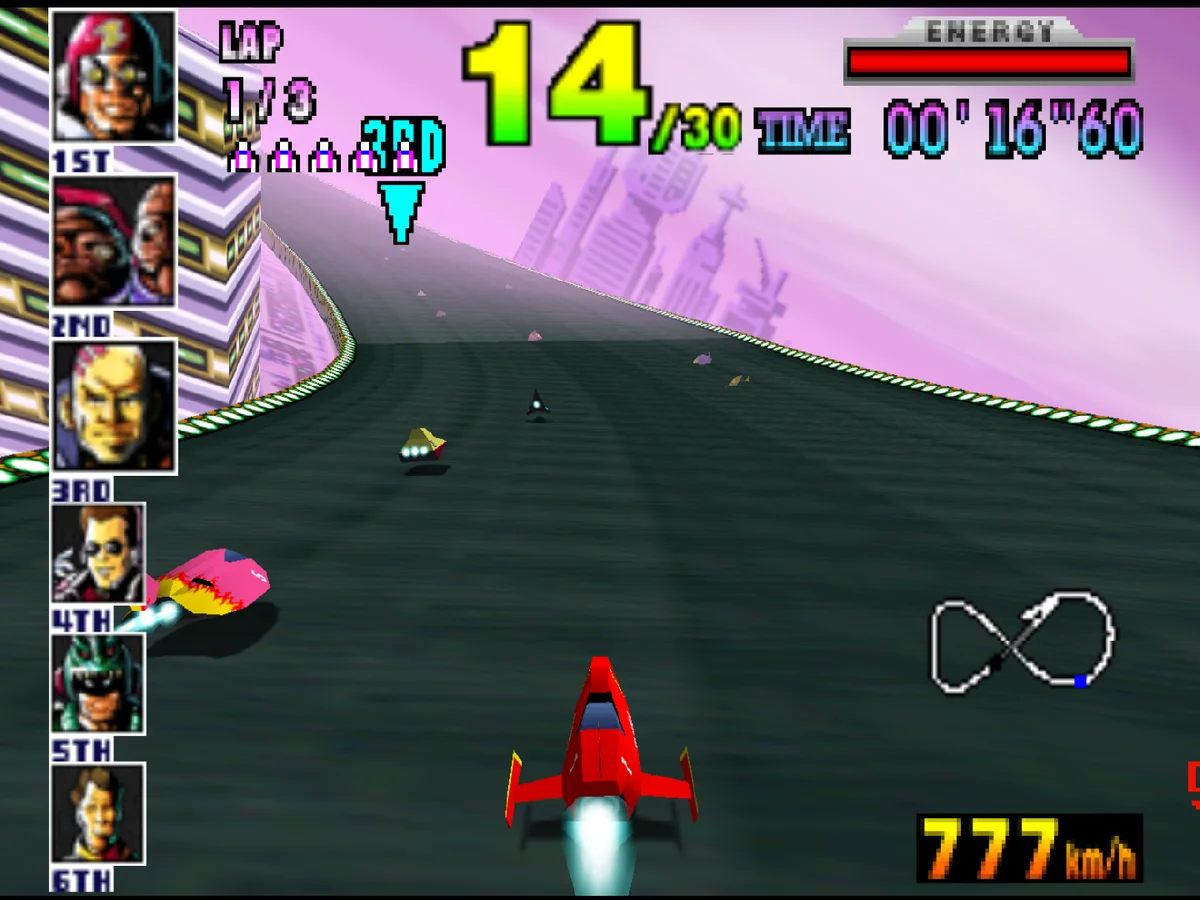
The course can roll into a tube, rise into a loop or leave very little room beside the racing line. Simple scenery helps the route stay legible at speed. Once boosting becomes available, the energy meter creates a useful dilemma: accelerate now or preserve enough margin for the next collision. A crowded race makes that choice less predictable than a private time trial.
Learn where a track lets you replenish energy before spending it aggressively. Practise one course without trying to win the entire cup immediately. A controlled finish is a better starting point than a fast lap that repeatedly ends outside the track.
A track that leaves the plane
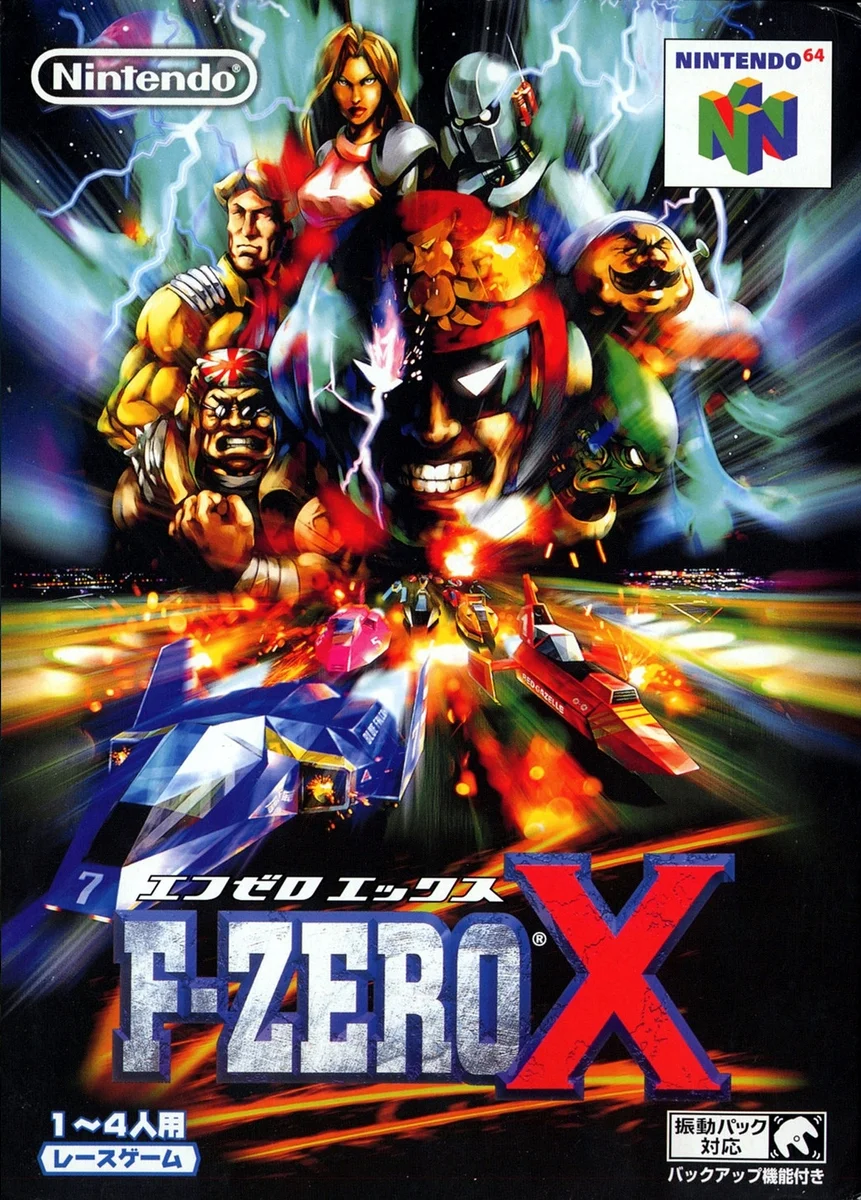
The 1998 Japanese release extends F-Zero into courses with pronounced height and curvature. Nintendo’s original description emphasises 60-frame-per-second movement and the three-dimensional track shapes. That target gives the spare presentation a clear purpose, without requiring the claim that all editions or emulations behave identically.
Why we chose it for Nintendo 64
Boosting spends survival energy, giving every fast section a cost to judge.
Explore this console’s game selection ↗Release record
Original worldwide release: 1998. Release records above identify the console editions covered by this collection.
Sources and further reading3 references
- NINTENDO64全発売ソフト一覧(1998年) ↗Nintendo · Accessed 2026-10-27
Japanese Ocarina of Time, Banjo-Kazooie and F-Zero X releases. Original Shift-JIS text checked directly.
- F-ZERO X INTRODUCTION ↗Nintendo · Accessed 2026-10-27
Original Japanese product page: July 1998 release, 60 fps target and loop, tube and half-pipe track forms. Promotional claims of exclusivity are omitted.
- Nintendo 64 – Nintendo Classics ↗Nintendo UK · Accessed 2026-10-27
Live UK catalogue includes all ten selections. Paid Nintendo Switch Online + Expansion Pack required. Selected games offer regional versions; no universal PAL/NTSC equivalence is implied.