A race with interruptions
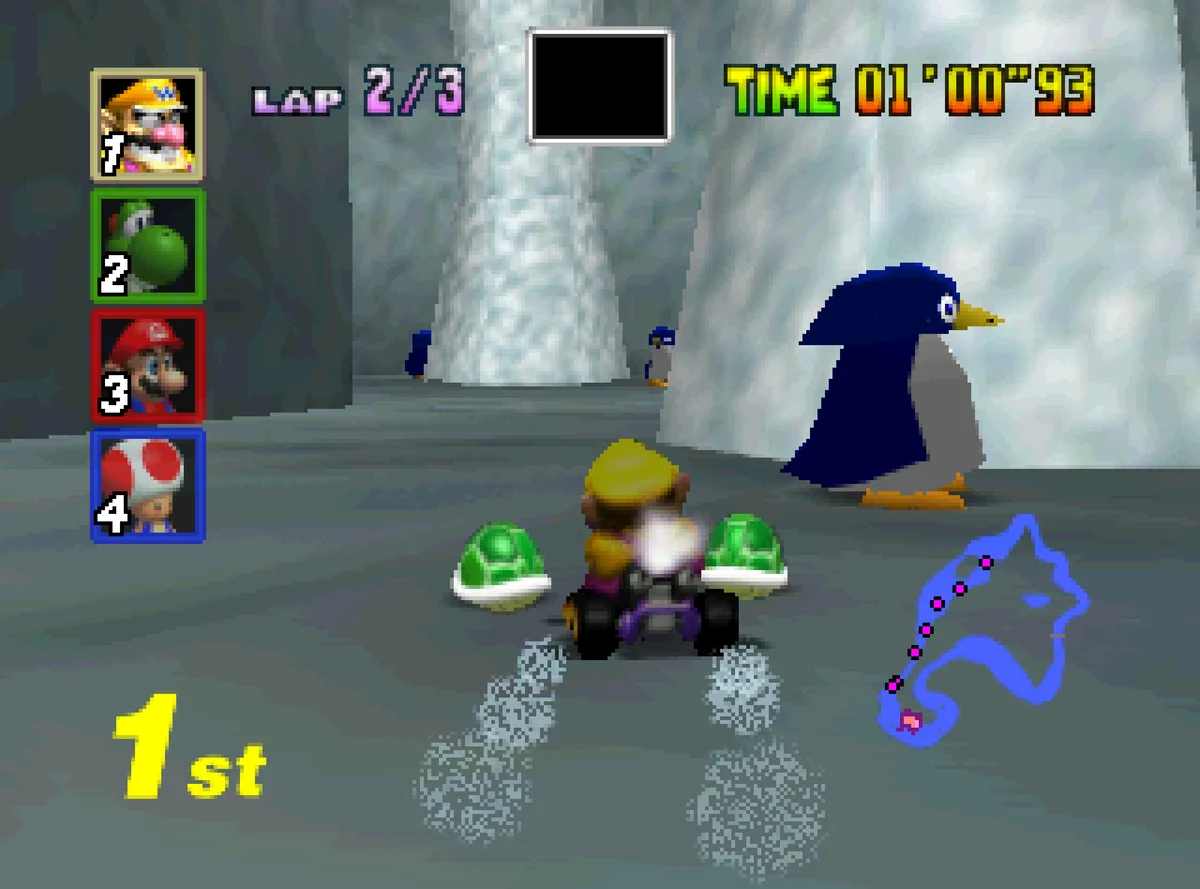
The courses give players room to recover, find a line and then lose it to somebody else’s item. Steering and sliding still matter, but the race rarely belongs entirely to the cleanest driver. Battle mode uses the same handling for a more direct argument over territory and pursuit. Four people sharing the screen can turn a familiar track into a succession of small grudges.
Learn the slide and boost on a quiet time trial, then return to a group race. Treat item reversals as part of the contest. Battle mode is worth a separate visit because its arenas ask for different routes from the racing circuits.
1996 in Japan
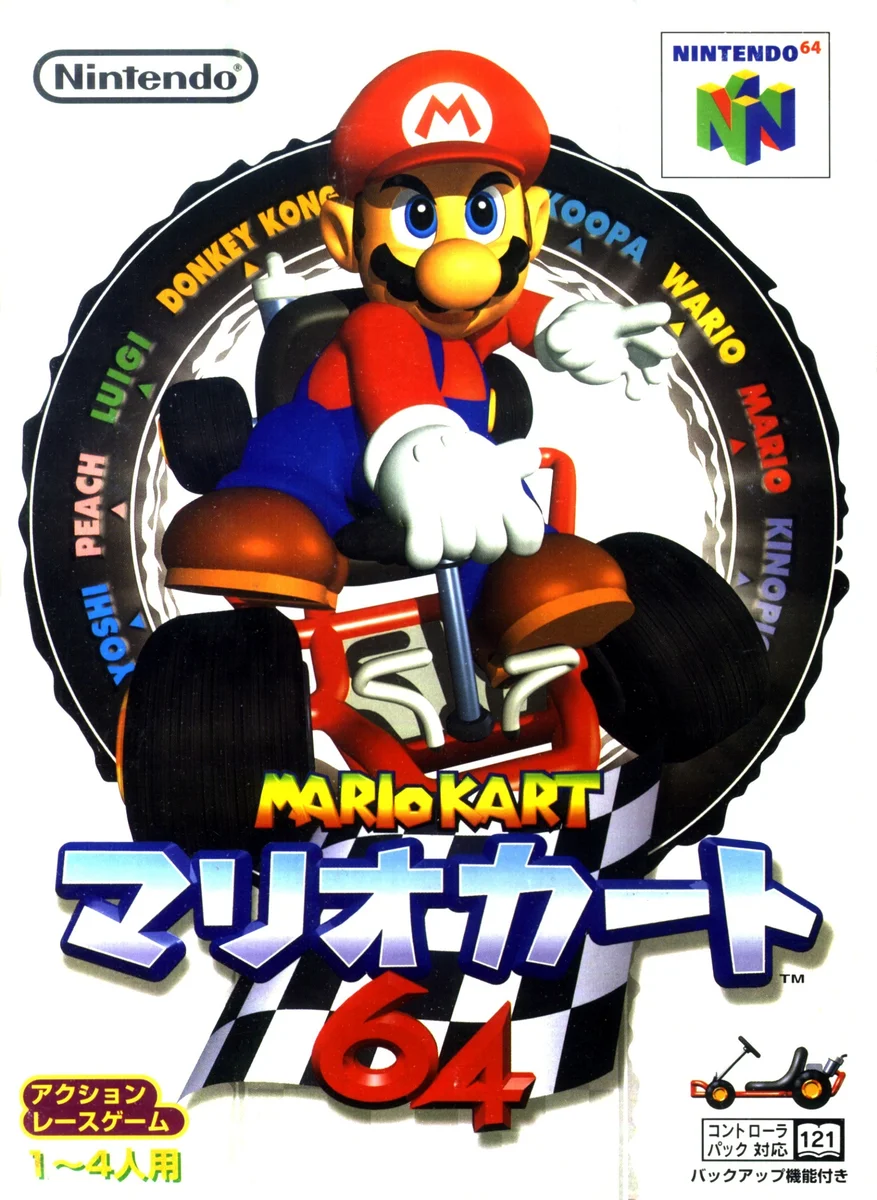
Mario Kart 64 launched in Japan in December 1996, before its overseas editions. The debut year therefore differs from the 1997 date many players associate with it. Nintendo 64’s four controller ports make a full local race possible without a multitap, though each player still needs a controller.
Why we chose it for Nintendo 64
Local races and battle arenas make productive use of the four controller ports.
Explore this console’s game selection ↗Release record
Original worldwide release: 1996. Release records above identify the console editions covered by this collection.
Sources and further reading4 references
- NINTENDO64全発売ソフト一覧(1996年) ↗Nintendo · Accessed 2026-10-27
Japanese Super Mario 64, Wave Race 64 and Mario Kart 64 releases. Original Shift-JIS text checked directly.
- マリオカート64 ↗Nintendo · Accessed 2026-10-27
Original Japanese site, release date and multiplayer modes.
- Nintendo 64 ↗Nintendo UK · Accessed 2026-10-27
Four controller ports and analogue Control Stick. Promotional claims of being the first analogue controller are omitted.
- Nintendo 64 – Nintendo Classics ↗Nintendo UK · Accessed 2026-10-27
Live UK catalogue includes all ten selections. Paid Nintendo Switch Online + Expansion Pack required. Selected games offer regional versions; no universal PAL/NTSC equivalence is implied.