Where should the camera stand?
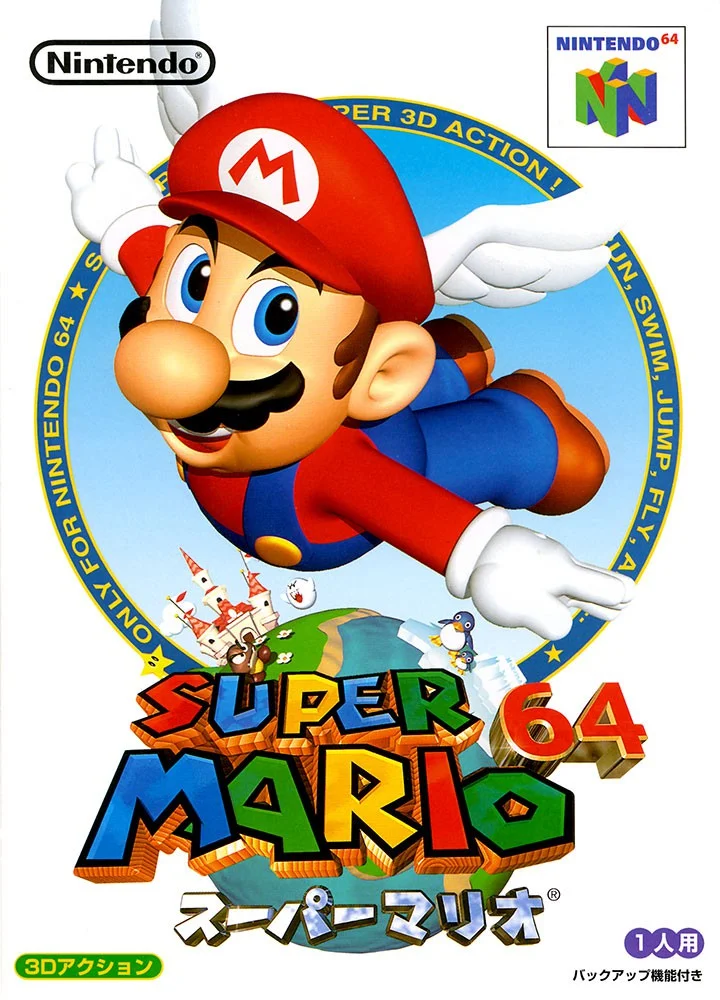
A jump in Super Mario 64 asks two questions at once: can Mario reach the ledge, and can the player see enough of it to judge the distance? The analogue stick allows a cautious walk or a full run. Camera buttons let the player adjust the view. Neither makes the problem disappear. They make it something the game and the player can negotiate.
Tomb Raider takes a different approach. Lara’s movement measures the architecture in deliberate steps and jumps. Crash Bandicoot narrows the route until a stage is closer to an obstacle course than an open landscape. These games share polygonal spaces without agreeing on how much freedom is useful. Their differences matter more than a simple division between flat games and three-dimensional ones.
Three machines, separate arrivals
Sega introduced Saturn in Japan on 22 November 1994. Sony followed with PlayStation on 3 December. The overseas launches came later: Sega’s retrospective places Saturn’s North American introduction in May 1995, while Sony records 9 September for North America and 29 September for Europe. A Japanese launch date is therefore a poor substitute for the date a British or American player could buy the machine. Sega’s hardware record and Sony’s regional chronology keep those calendars separate.
Nintendo 64 arrived in Japan on 23 June 1996. US sales began that year; the European rollout began in March 1997. Nintendo’s regional history and 2006 annual report support that sequence. The chart below retains year precision where an exact local retail day has not been reconciled. Its points mark introductions, not the day older consoles ceased to matter.
This chapter concentrates on three libraries. 3DO, Atari Jaguar and PC-FX also belong to the period, as do computer and arcade games. The selection is a starting point for comparison rather than a complete account of the market.
The space on the disc
Saturn and PlayStation used CD-ROM. Nintendo 64 used cartridges. Disc capacity made room for recorded speech, music and film, while access speed and working memory still constrained what could happen during play. Cartridges offered a different balance of access, capacity and manufacture. None of those properties, by itself, explains a platform’s whole library or commercial outcome. The PlayStation and Nintendo 64 hardware analyses help separate storage from rendering and memory.
Final Fantasy VII makes the mixture visible. Small real-time characters move through rendered backgrounds, then a film sequence changes the scale and detail. Resident Evil 2 uses fixed views to compose rooms and conceal what is just beyond the frame. Metal Gear Solid moves between player-controlled infiltration, radio conversation and directed scenes. “3D” describes part of each presentation; it does not tell us who controls the camera or when control returns to the player.
Learning what the hands can do
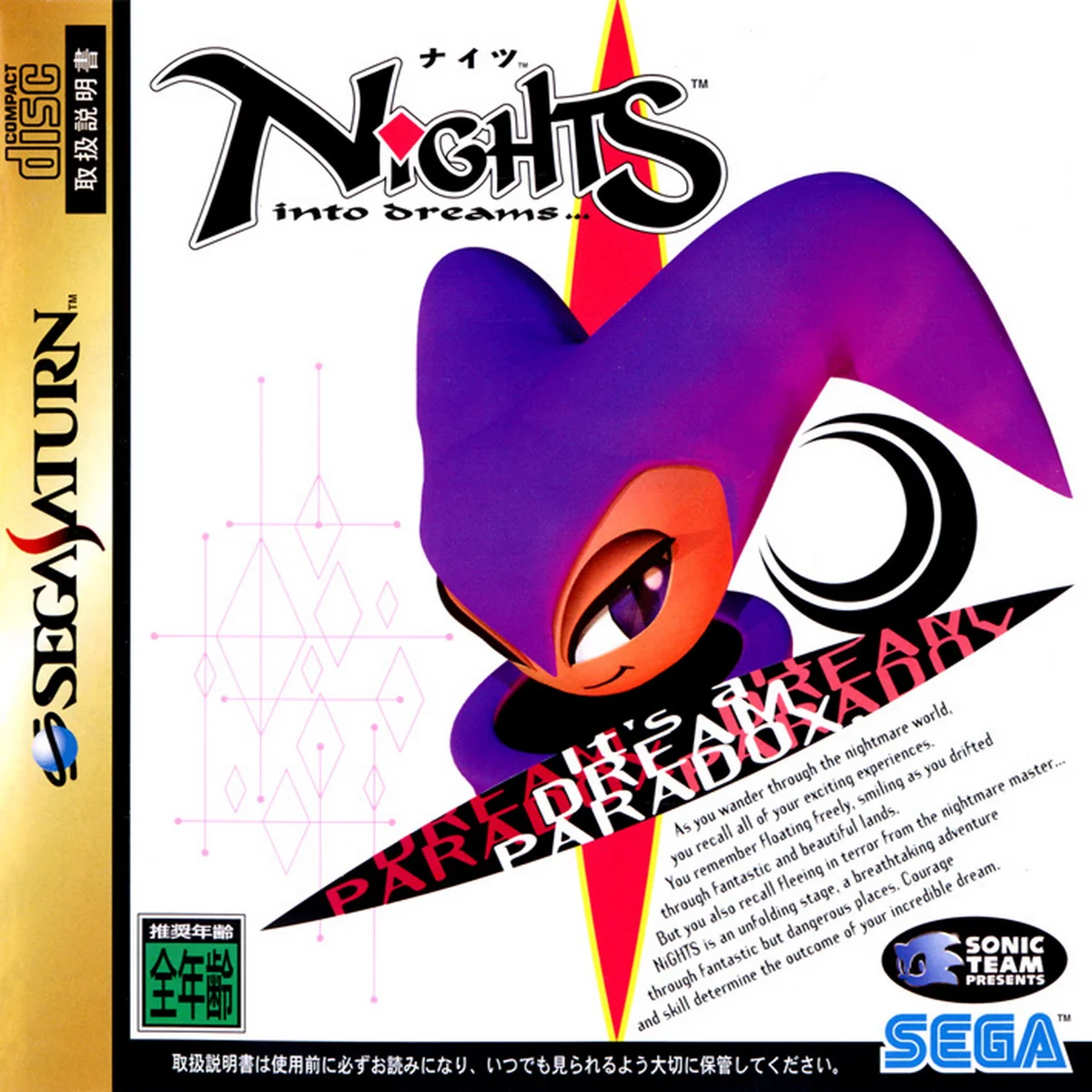
Saturn’s optional analogue controller suits the curved flight of NiGHTS. Nintendo 64 puts an analogue stick on its standard controller and four controller ports on the console. Sony’s controller family moves from the original digital pad to dual-analogue designs. These arrangements create different expectations, but software has to give the extra inputs a purpose.
Ocarina of Time uses targeting to keep an opponent and Link in a readable relationship. Ape Escape assigns tools to the right stick, making analogue input mandatory on the original PlayStation. In Star Fox 64, released in Europe as Lylat Wars, the Rumble Pak adds a physical response to the action. Its original Japanese package included the accessory. Nintendo’s game record and Sony’s controller history document those particular uses without requiring a claim that either company invented every underlying idea.
Local multiplayer changes the demands again. Mario Kart 64 and GoldenEye divide the screen; Saturn Bomberman keeps its players on one board. Nintendo 64’s four ports simplify the first arrangement. Bomberman’s larger matches need additional controllers and adapters. “Multiplayer” can describe a very different shopping list and a very different kind of attention.
The illustrated games stayed
Saturn’s library gives this chapter some of its clearest reasons to resist a purely polygonal history. Guardian Heroes makes movement between fighting planes part of a crowded brawl. Radiant Silvergun asks which weapon shape fits the approaching formation. Dragon Force moves between a campaign map and armies meeting in battle. Their illustrated characters are working parts of the design, not an apology for the hardware’s age.
On PlayStation, Symphony of the Night builds its argument through a castle the player gradually learns to traverse. Konami records the Japanese PlayStation game in 1997 and a Saturn version in 1998. That later port belongs to the same game feature here, with its own release record. A platform list should help readers compare editions without turning each port into an unrelated work.
Returning with the right edition
A current title is not always the original game. Crash Bandicoot N. Sane Trilogy reconstructs earlier games; Tomb Raider I–III Remastered revises their presentation; a modern conversion of Tekken 3 contains the PlayStation package. The archive names those routes separately from the original discs and cartridges. Store availability is dated evidence, not a promise about next year’s catalogue or the accuracy of every emulator.
Hardware requirements also need plain names. Majora’s Mask requires the Nintendo 64 Expansion Pak. The similarly named Controller Pak does not replace it. Nintendo’s original purchase notice makes that requirement explicit. A subscription with “Expansion Pack” in its name is a different thing again: Nintendo’s current UK catalogue lists the ten Nintendo 64 selections under that paid service.
Start with the kind of play that interests you. A few laps of Sega Rally expose its steering and surfaces quickly. A route through Panzer Dragoon II Zwei invites another attempt from a new angle. Final Fantasy VII needs a longer commitment. The recommendations below distinguish those starting points, and the linked features explain what each edition asks of the player.