Depth along a narrow route
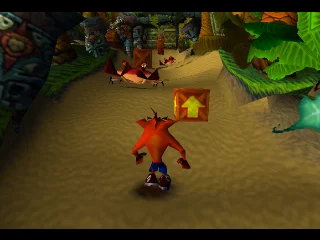
Crash keeps the route tight enough that the challenge lies in placing a jump, rather than deciding where to explore. Running towards or away from the camera can make distance harder to judge than in the side-on sections. That uncertainty is part of the difficulty, sometimes frustratingly so. Repetition makes a route clearer, and the animated hazards give even a short stretch an identifiable rhythm.
Treat a first attempt as a chance to learn the camera’s distances. Gem hunting can wait until reaching the end of a level is reliable. Original saving and completion rules are less accommodating than those in the later reconstruction.
The original and the reconstruction
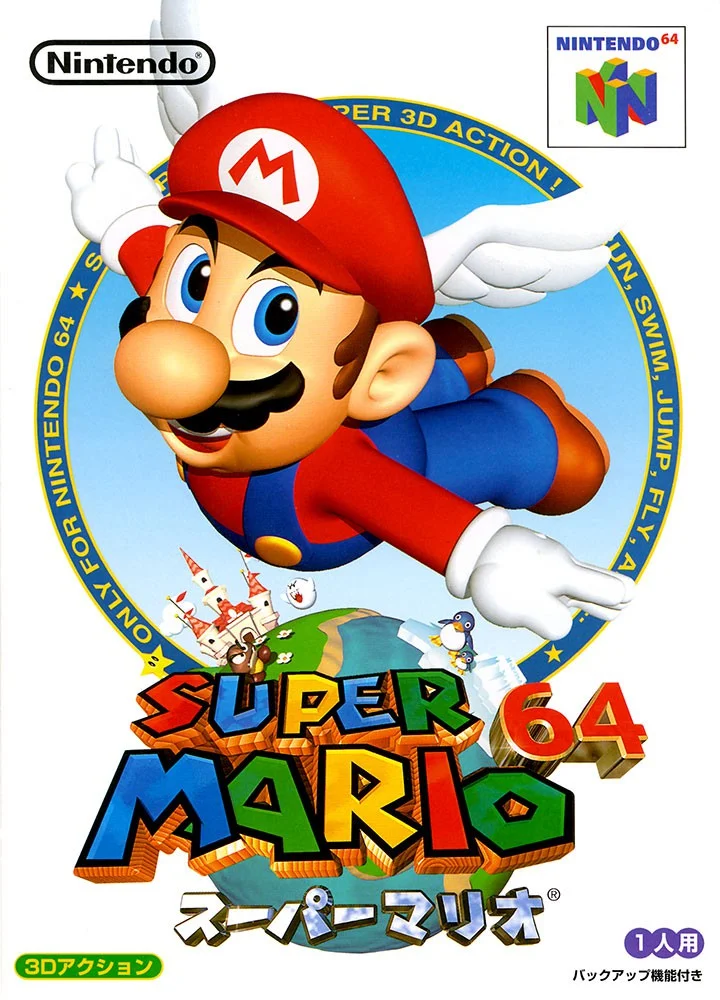
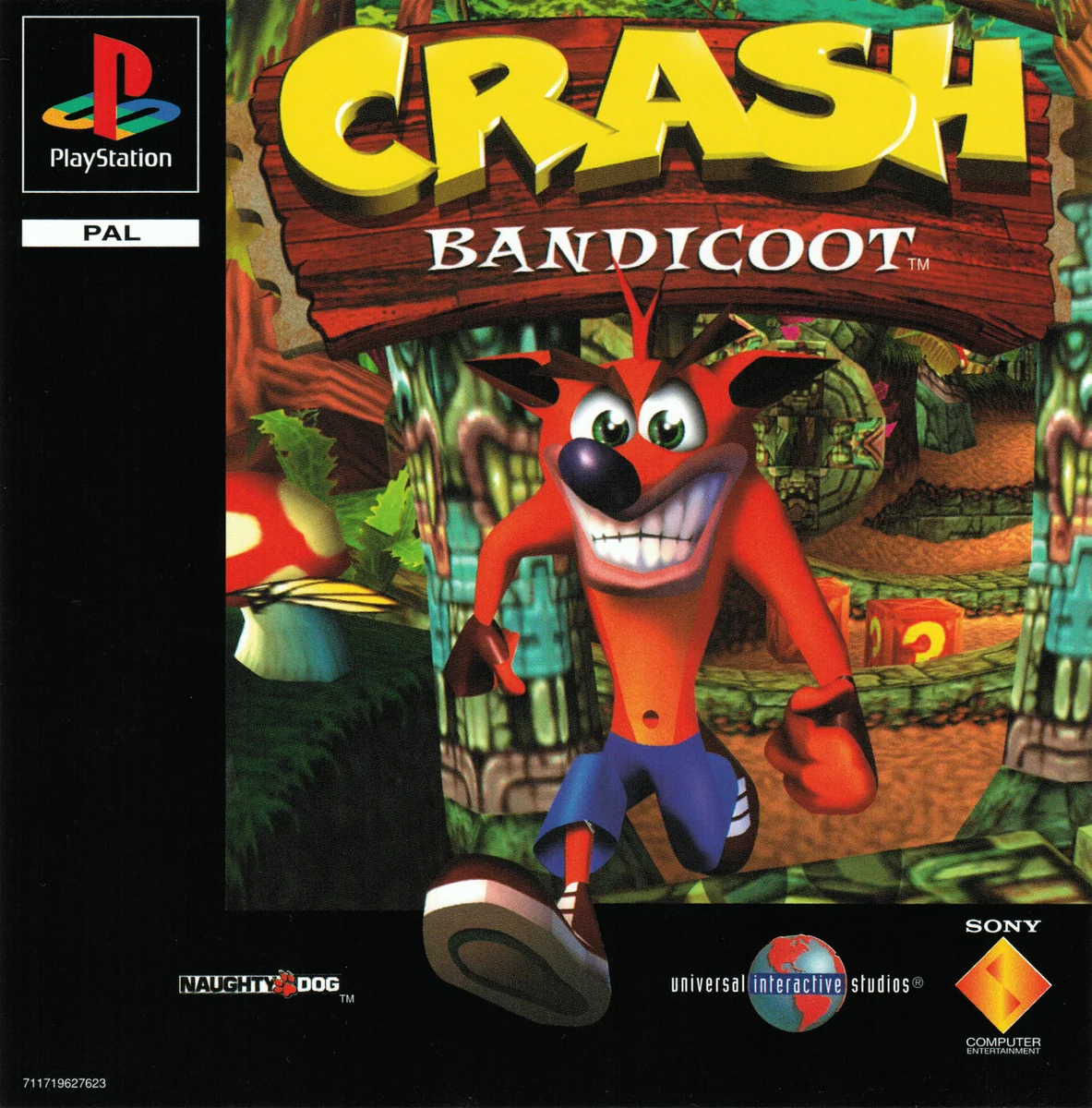
Naughty Dog’s retrospective dates the original to 1996. Its corridor-based levels offer a different answer to 3D platforming from Super Mario 64’s open stages. The later N. Sane Trilogy rebuilt the games and changed systems including saving, so it should not erase the distinctions of the first release.
Why we chose it for PlayStation
Its confined routes offer a useful alternative to the open stages of contemporary 3D platformers.
Explore this console’s game selection ↗Release record
Original worldwide release: 1996. Release records above identify the console editions covered by this collection.
Sources and further reading3 references
- 30 Years of Naughty Dog Games: Looking Back ↗Evan Wells / Naughty Dog / PlayStation Blog · Accessed 2026-10-27
Developer retrospective on the 1996 debut and the original studio. Remembered staffing claims are not needed for this feature.
- Crash Bandicoot N. Sane Trilogy: First Screens, In-Depth Details ↗Dan Tanguay / Vicarious Visions / PlayStation Blog · Accessed 2026-10-27
Developer explains rebuilt gameplay and unified saving. Evidence that the later trilogy is a reconstruction, not identical original code.
- PlayStation history: 1994 ↗Sony Interactive Entertainment · Accessed 2026-10-27
3 December 1994 Japanese launch and the shift to CD-ROM and 3D.