Spinners before scattered rocks
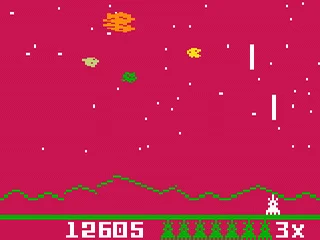
Astrosmash turns a screen of falling objects into a sequence of priorities. A rock can be allowed to fall at a cost to the score; a spinner that reaches the ground costs a gun. Breaking a large rock produces smaller targets, which rewards accurate shooting while adding more movement to read. Auto-fire frees attention for positioning. The challenge is deciding what must be intercepted now and what can pass while you deal with something worse.
Try auto-fire first and learn the difference between rocks and spinners. Keep the selected starting speed consistent when comparing scores. There is no conventional final stage to clear, so a self-chosen score target is more useful than treating the game as an unfinished campaign.
A score that changes the pace
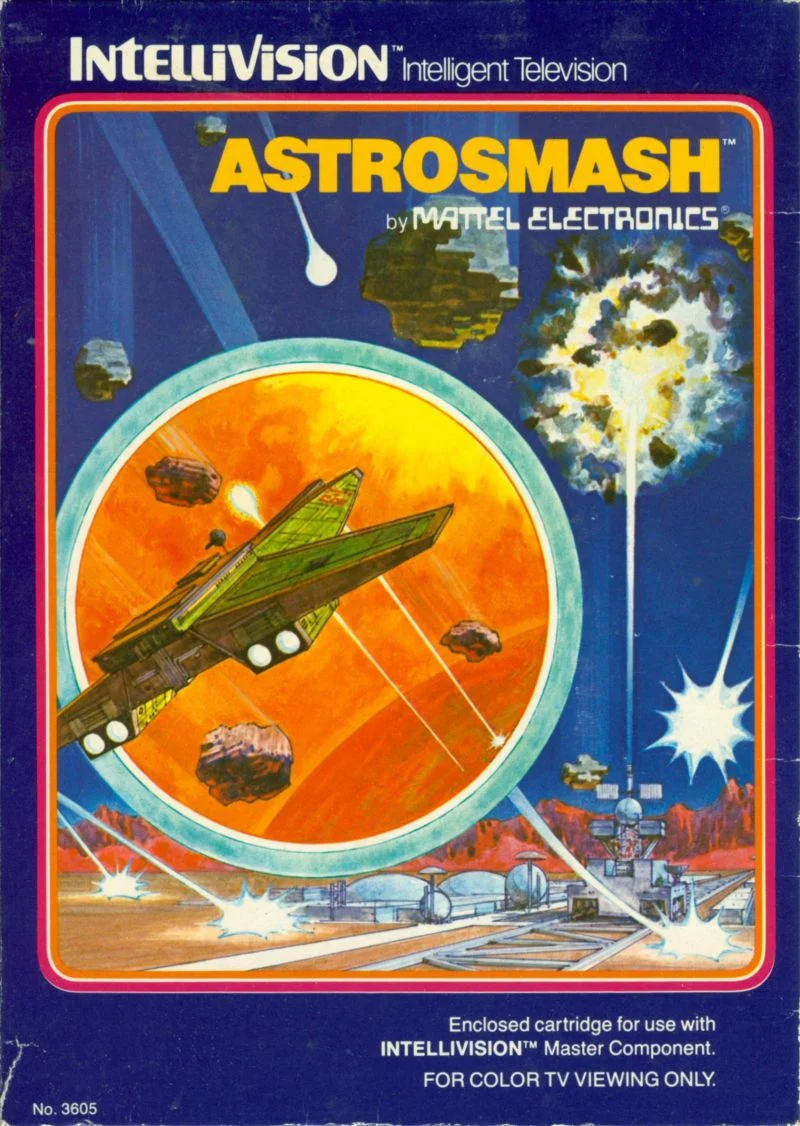
The participant archive credits John Sohl and dates the Intellivision release to 1981. It describes a game whose pace responds to the score, easing again as the score falls. That makes recovery part of its rhythm. The result provides a useful comparison with arcade-inspired shooters that escalate towards a short, decisive defeat.
Why we chose it for Intellivision
A readable introduction to the disc controller, with a score-driven pace and falling targets that demand different priorities.
Explore this console’s game selection ↗Release record
Original worldwide release: 1981. Release records above identify the console editions covered by this collection.
Sources and further reading2 references
- Astrosmash ↗Blue Sky Rangers · Accessed 2026-10-27
Participant archive: 1981 release and John Sohl design/programming credit. Production recollections remain attributed.
- Astrosmash instructions ↗Mattel Electronics / Blue Sky Rangers archive · Accessed 2026-10-27
Later instruction transcription with computer control adaptations. Used for game rules; the page also contains unrelated Treasure of Tarmin material.