Several ways through the same world
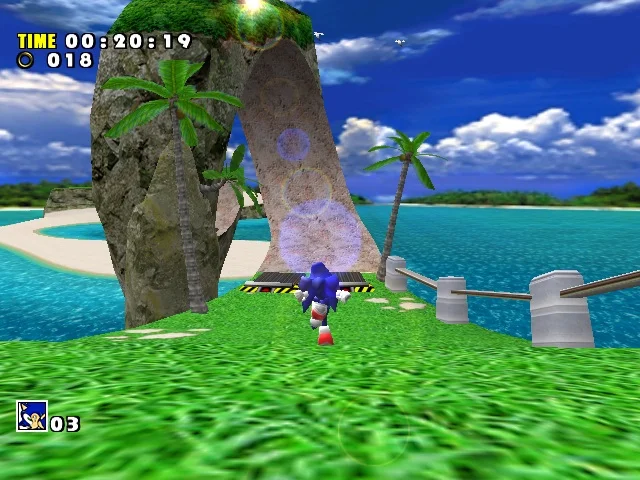
Sonic’s stages are most convincing when a clear line lets you build speed and correct it with small movements. Exploration between them changes the pace, while other characters revisit locations with different objectives. The breadth is uneven: a camera turn or a collision can break the flow, and the slower activities ask for a different kind of patience. It is a revealing collection of attempts to give familiar characters a place in a three-dimensional world.
Begin with Sonic’s story and learn to make small steering corrections at speed. Approach the other characters as changes of genre rather than expecting the same running game throughout. Give camera adjustments time before committing to an uncertain jump.
Which Adventure?
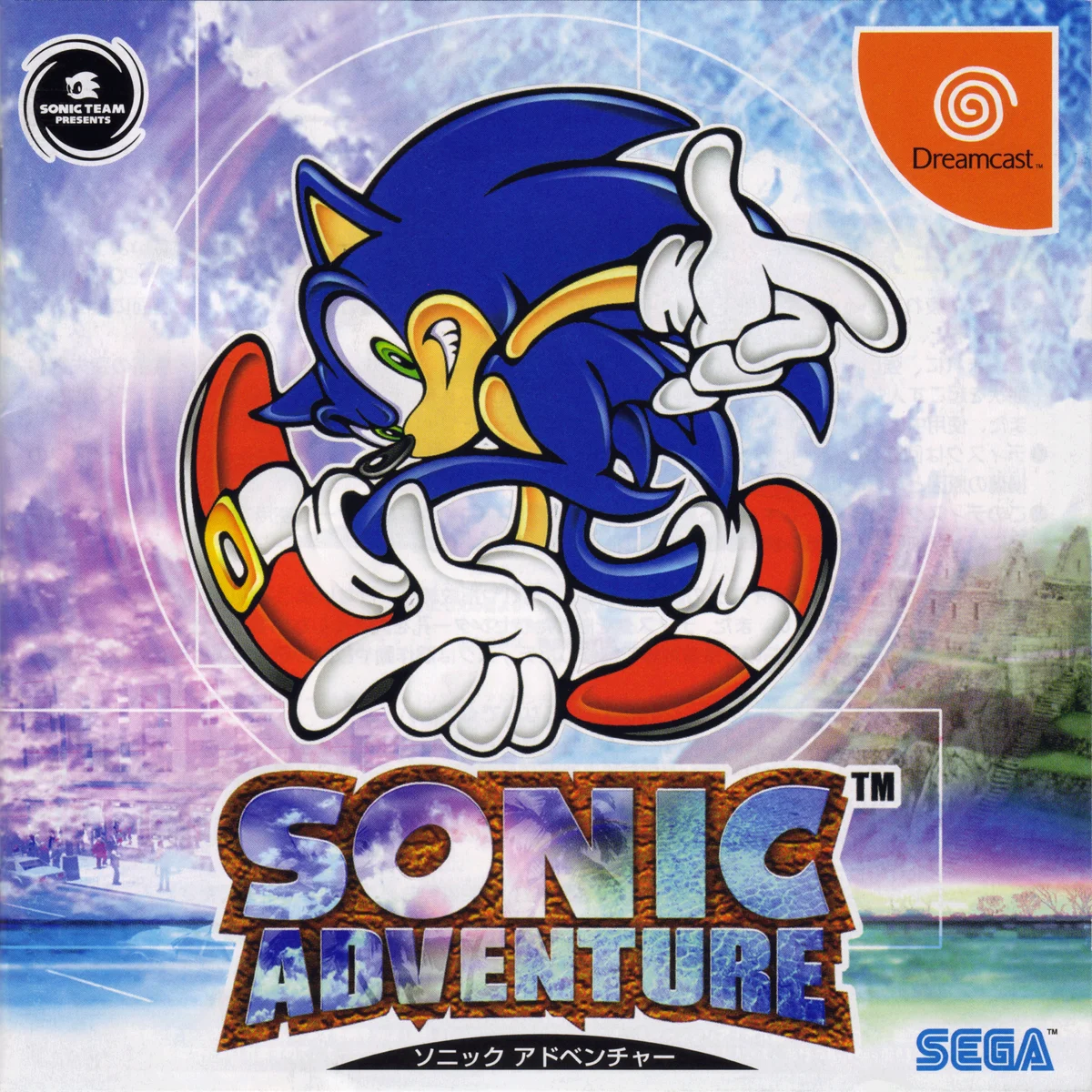
The Japanese original arrived in December 1998. Sega and Sonic Team catalogue the 1999 International revision separately. This matters when comparing memories of the game: the early Japanese disc, later Dreamcast editions and subsequent adaptations are related releases with differences of their own.
Why we chose it for Dreamcast
Its uneven collection of character stories shows several approaches to Sonic in three dimensions.
Explore this console’s game selection ↗Release record
Original worldwide release: 1998. Release records above identify the console editions covered by this collection.
Sources and further reading3 references
- ソフトウェア一覧(セガ発売) | ドリームキャスト ↗Sega · Accessed 2026-10-27
Japanese GD-ROM catalogue; distinguishes the original Sonic Adventure, International revision, Jet Set Radio revision and original PSO from Ver.2. Historical download links are not current availability evidence.
- ドリームキャスト 専用ソフト ↗Sonic Team / Sega · Accessed 2026-10-27
Developer catalogue: Sonic Adventure, ChuChu Rocket! and Phantasy Star Online release years, including the separate International and Ver.2 editions.
- SONIC ADVENTURE ↗Sonic Team / Sega · Accessed 2026-10-27
Original product site, with character and system information.