The reward for a collision
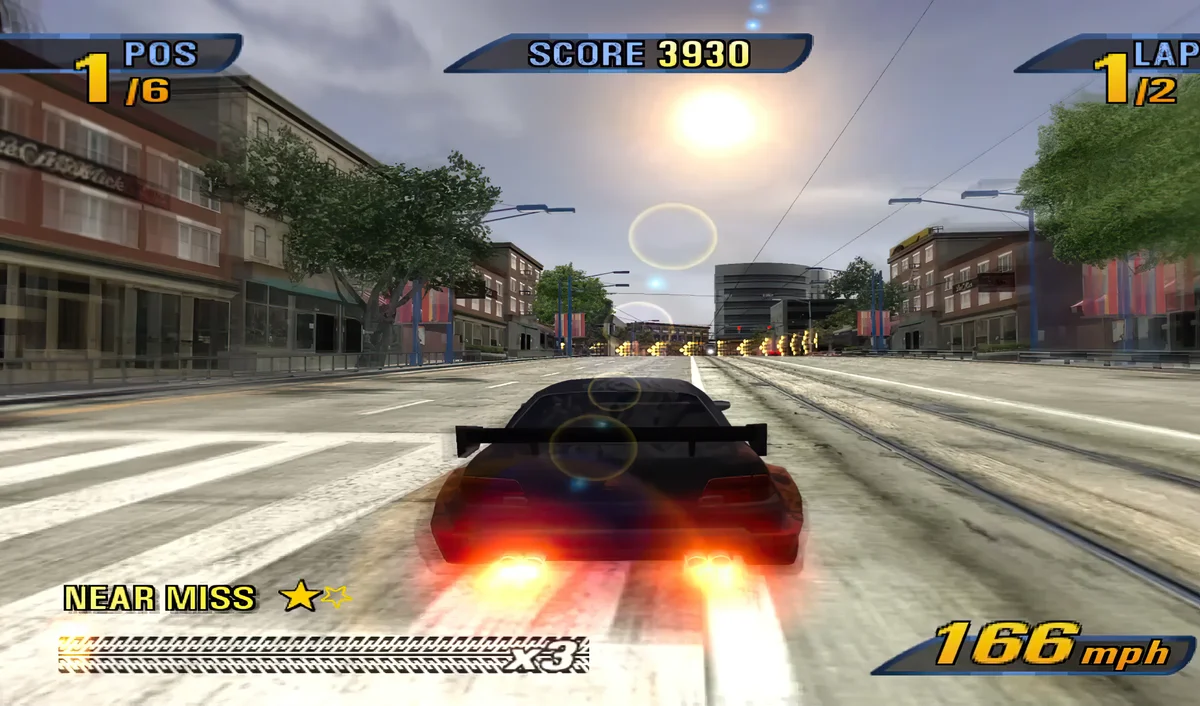
Aggression changes the racing line. You can aim for an efficient corner or use its exit to push another car into trouble, receiving more speed for taking the risk. Traffic keeps those attacks dangerous even when the rival is easy to reach. Crash events make the collision itself a problem to plan. The rewards are immediate, but later races still demand attention to the road beyond the spectacular impact.
Learn a course without holding boost continuously, then identify where a takedown is worth the extra speed. Alternate races with crash events if repeated high-speed attempts become tiring. The local modes give the game value without historical online services.
Changing what boost encourages
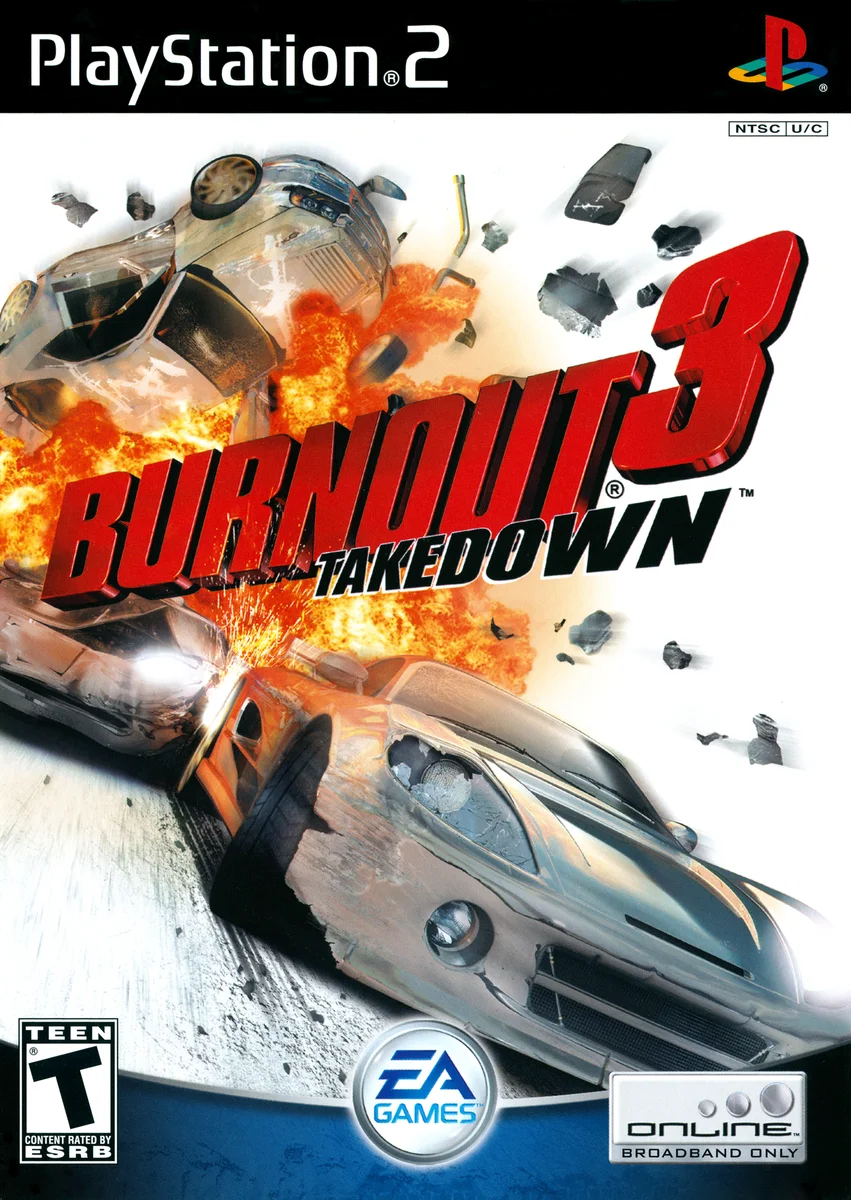
Criterion dates its first collaboration with EA to 2004 and describes takedowns as the addition that connected aggression to the existing boost system. Its contemporary creative-manager interview explains the emphasis on using cars as weapons. This is a different design priority from the measured driving and garage progression of Gran Turismo 4.
Why we chose it for PlayStation 2
Takedowns give aggressive driving a precise reward while traffic keeps it risky.
Explore this console’s game selection ↗Release record
Original worldwide release: 2004. Release records above identify the console editions covered by this collection.
Sources and further reading2 references
- Check Out Criterion Studios Games ↗Criterion Games / Electronic Arts · Accessed 2026-10-27
Developer history dates Burnout 3 to 2004 and explains takedowns and boost. Quoted review scores are not repeated as a new consensus.
- Burnout 3 Q&A ↗GameSpot / Alex Ward, Criterion Games · Accessed 2026-10-27
February 2004 interview with Criterion’s creative manager about the change to aggressive driving. Distinguishes development intentions from measured final behaviour.