Keep the first car
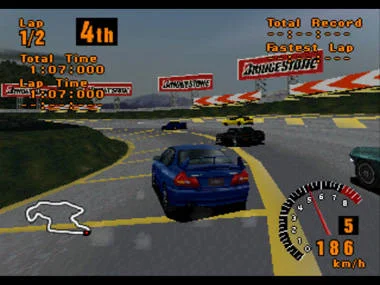
An ordinary car can become worth keeping because you know where it loses grip and which upgrade would help it most. Licence tests interrupt the urge to collect by insisting on a braking point or a controlled corner. The handling asks for restraint before speed. Races provide the money, but the garage gives that money a purpose and makes small improvements feel consequential.
Use the first tests to learn braking before steering. Buying power immediately can make an unfamiliar car harder to place. A modest vehicle and a repeatable lap are enough to begin understanding the tuning choices.
Before Polyphony Digital
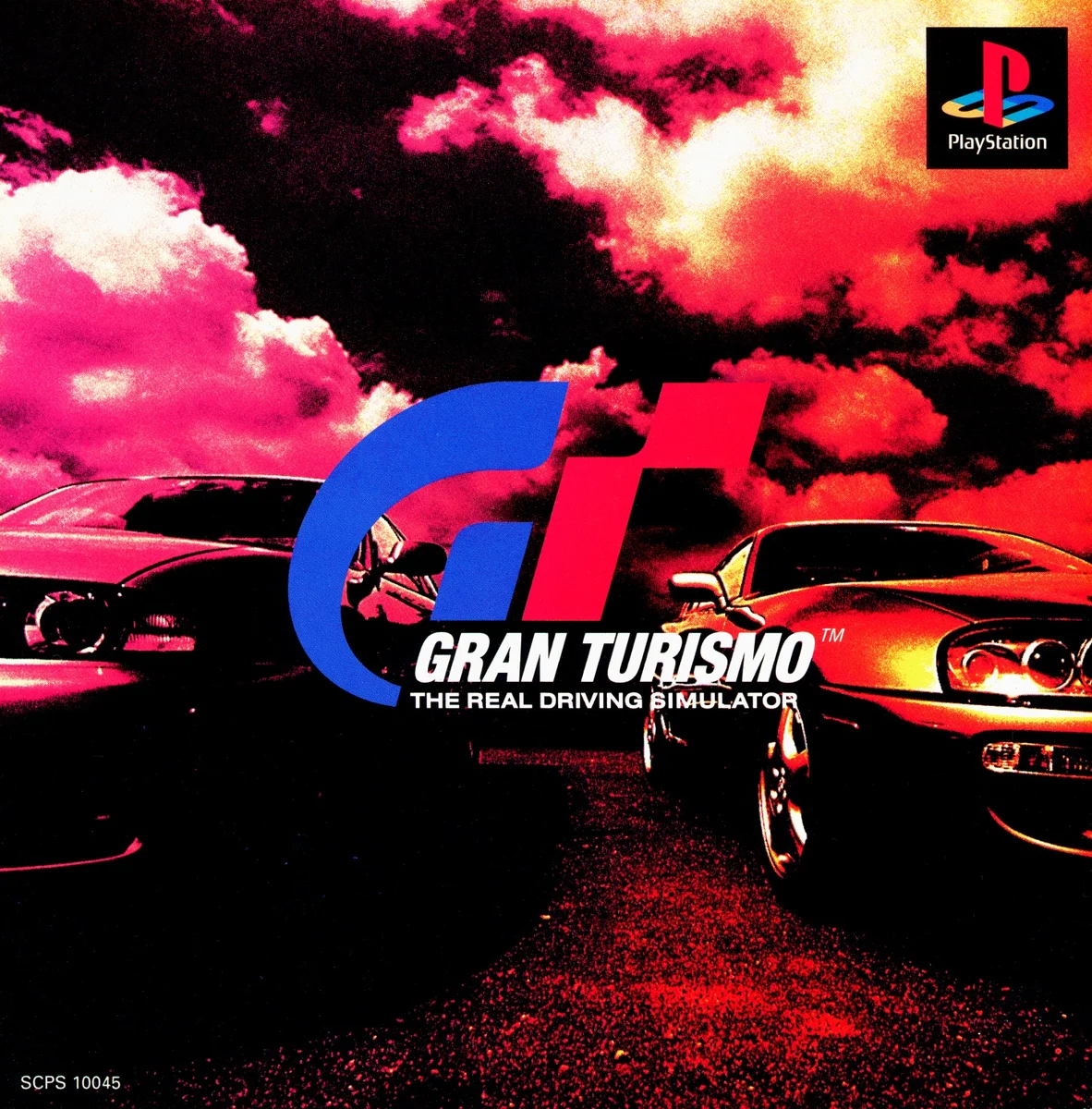
The Japanese original arrived in 1997. Yamauchi and Yoshida’s account places the formation of Polyphony Digital after this first game, so the archive retains the earlier team name. Licensed road cars and the progression through tests and purchases distinguish its home campaign from Sega Rally’s concentrated arcade runs.
Why we chose it for PlayStation
Licence tests and a garage of tunable road cars make progression as important as the race itself.
Explore this console’s game selection ↗Release record
Original worldwide release: 1997. Release records above identify the console editions covered by this collection.
Sources and further reading2 references
- Gran Turismo ↗Polyphony Digital / Sony · Accessed 2026-10-27
Japanese original dated December 1997, with car collecting and tuning. UK localisation differs by one day; retain year precision. Modern corporate credits are not used to rename the original development team.
- Extended Play: Kazunori Yamauchi & Shuhei Yoshida look back at Gran Turismo’s inception ↗PlayStation Blog · Accessed 2026-10-27
Participant accounts of licensing, simulation and the team’s formation as Polyphony Digital after the first game.