Growing beyond the obstacle
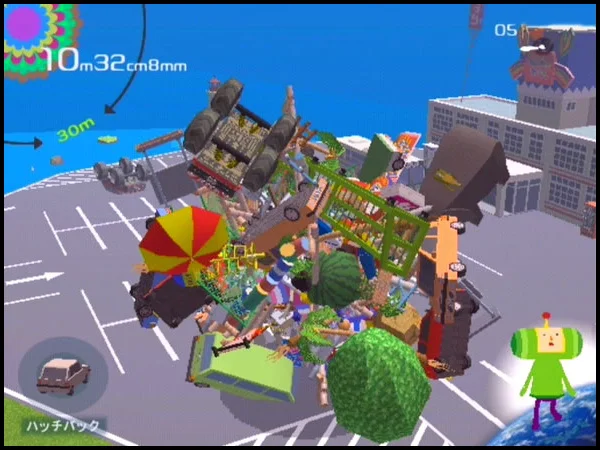
A useful route depends on what you can pick up now. A line of tiny objects builds the size needed for a larger cluster, and a previously threatening obstacle becomes another piece of the ball. The awkwardness of an uneven shape gives growth a tactile quality. Time limits keep the absurd accumulation purposeful, although the dual-stick steering takes practice before tight spaces feel comfortable.
Practise turning and reversing before chasing the target size. Follow dense groups of collectable objects rather than charging at the largest thing in view. Replaying a stage reveals routes that were invisible when every obstruction looked permanent.
Scale as a rule and a joke
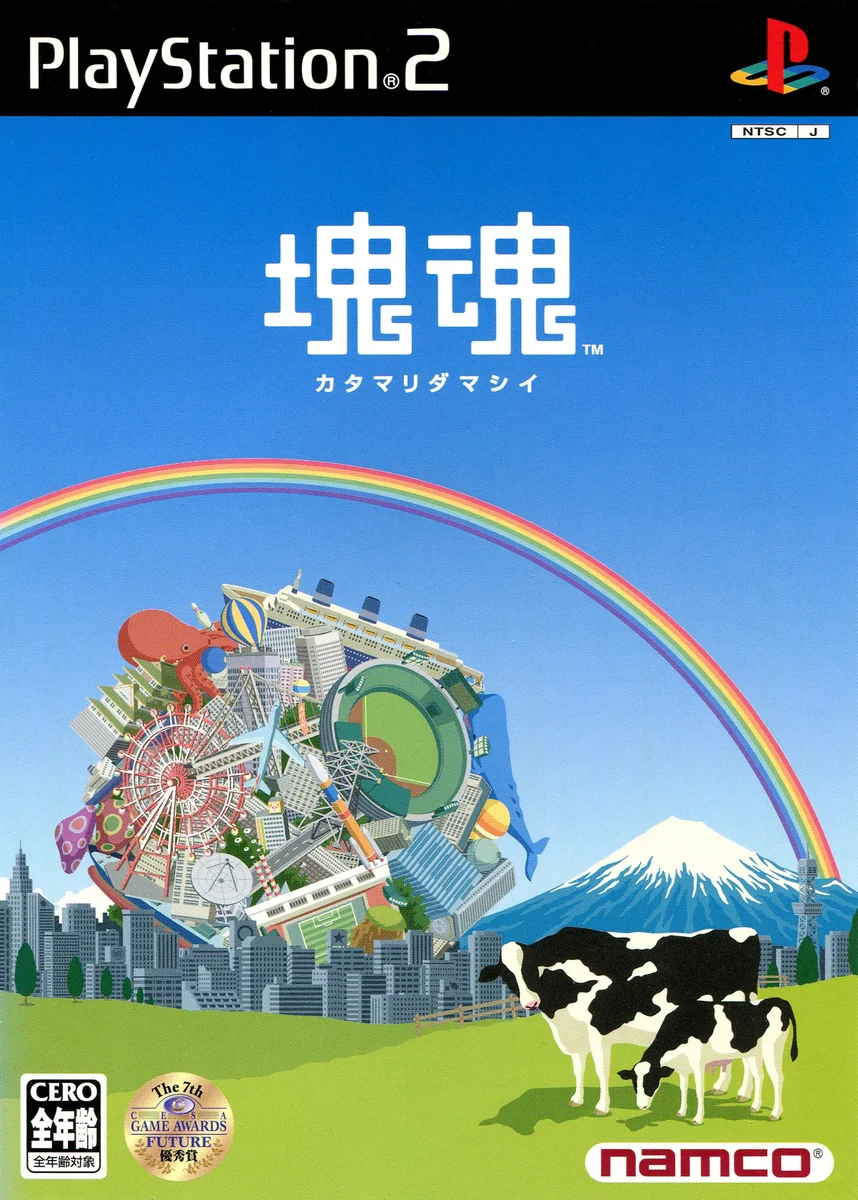
Namco’s original Japanese release table dates the PS2 game to March 2004. The company describes a design built around simple rules and a rising viewpoint. The game makes that change of scale a playable joke: a room, a neighbourhood and a landscape cease to be stable categories as the collection grows.
Why we chose it for PlayStation 2
Growth repeatedly transforms obstacles into rewards and makes scale part of the joke.
Explore this console’s game selection ↗Release record
Original worldwide release: 2004. Release records above identify the console editions covered by this collection.
Sources and further reading1 reference
- 「塊魂」シリーズが国内販売累計50万本を突破 ↗Namco · Accessed 2026-10-27
January 2006 corporate release lists the original Japanese game on 18 March 2004, separate from We Love Katamari and the PSP game; describes increasing scale. No series sales total is repurposed as an original-game total.