An arrow changes the plan
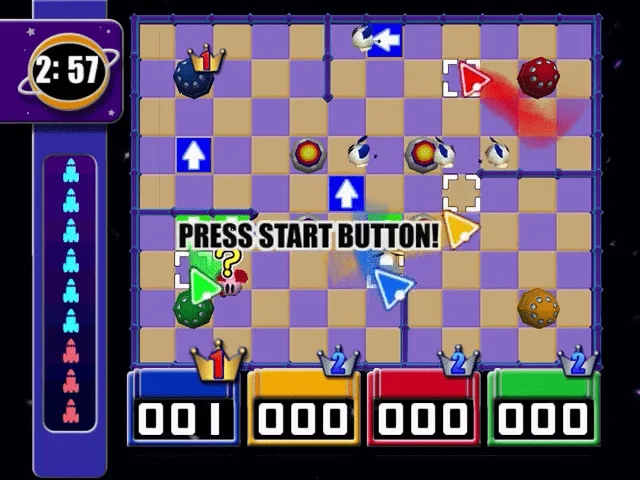
The pieces keep moving while you place directions on the floor. A promising route can be overturned by another player, and the limited supply of arrows makes a new instruction erase an older one. Competition is therefore about revising a shared system quickly. Solo puzzles slow the same rules down into a more deliberate exercise, making a useful place to understand why a tiny change sends everything the wrong way.
Learn the mice’s behaviour in a few puzzles, then try local competition. Watch routes rather than individual animals and remember that sending a cat away from your rocket may be as useful as collecting another mouse.
A small game for a connected console
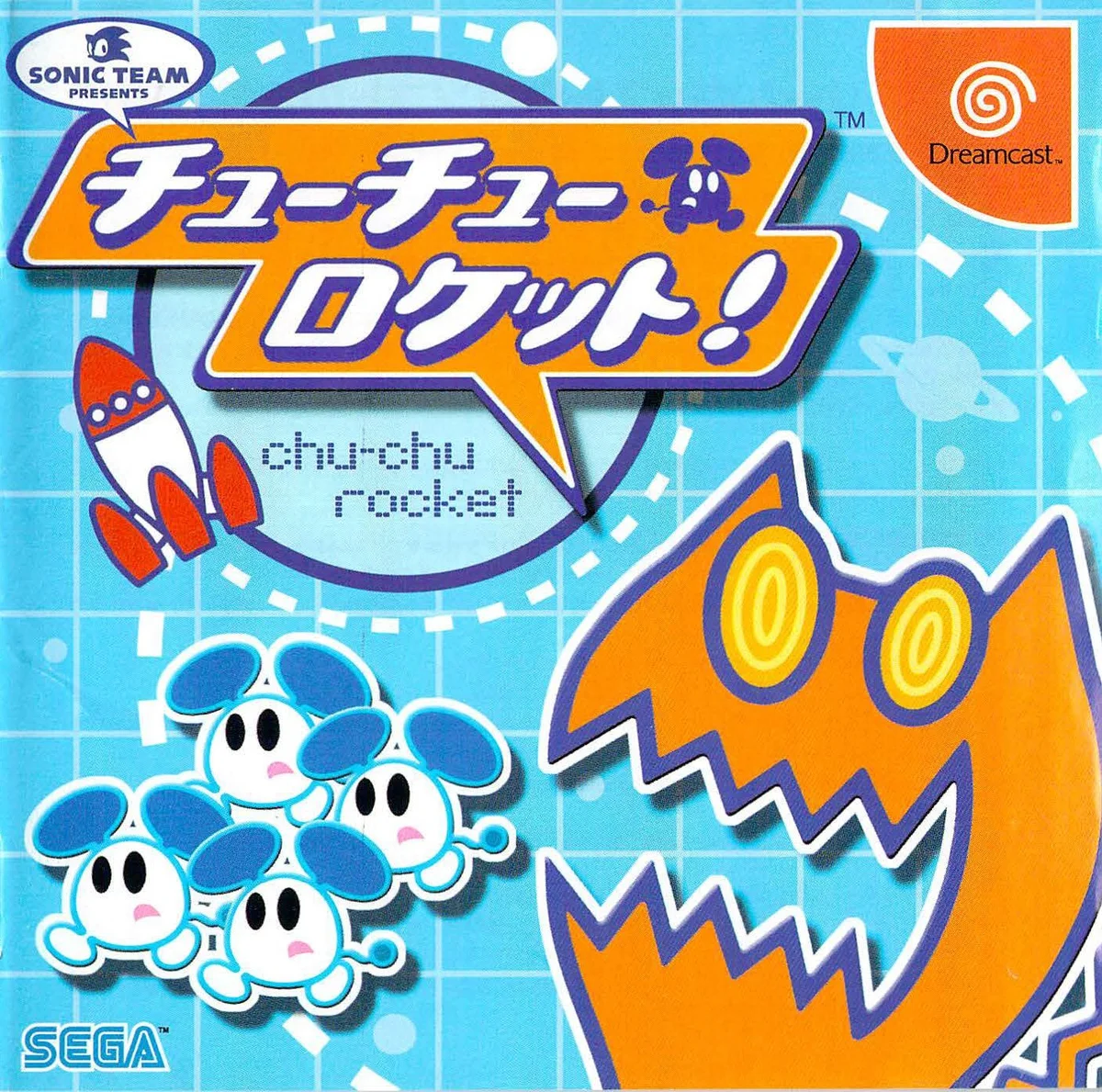
Sonic Team released the Japanese Dreamcast game in November 1999. Its composer Tomoya Ohtani recalls working on it shortly after joining Sega that year. The pairing of compact rules and network play gives the chapter an alternative to the large worlds of its adventures.
Why we chose it for Dreamcast
A few arrows produce both deliberate solo puzzles and rapidly changing local competition.
Explore this console’s game selection ↗Release record
Original worldwide release: 1999. Release records above identify the console editions covered by this collection.
Sources and further reading3 references
- ソフトウェア一覧(セガ発売) | ドリームキャスト ↗Sega · Accessed 2026-10-27
Japanese GD-ROM catalogue; distinguishes the original Sonic Adventure, International revision, Jet Set Radio revision and original PSO from Ver.2. Historical download links are not current availability evidence.
- ドリームキャスト 専用ソフト ↗Sonic Team / Sega · Accessed 2026-10-27
Developer catalogue: Sonic Adventure, ChuChu Rocket! and Phantasy Star Online release years, including the separate International and Ver.2 editions.
- 『ソニック25周年』振り返りAct 1 ↗Sega / Tomoya Ohtani · Accessed 2026-10-27
First-person composer account identifies Sonic Team and the 1999 production. Used as a participant account, not an independent reception survey.