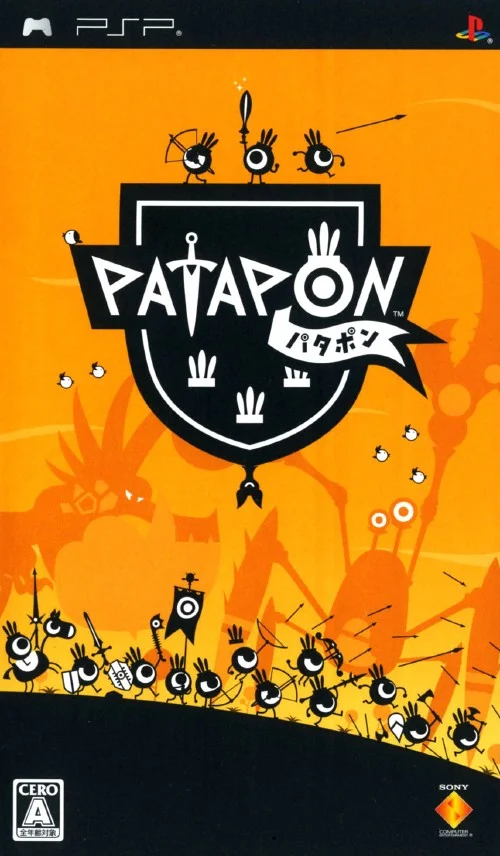
Leave time for an answer
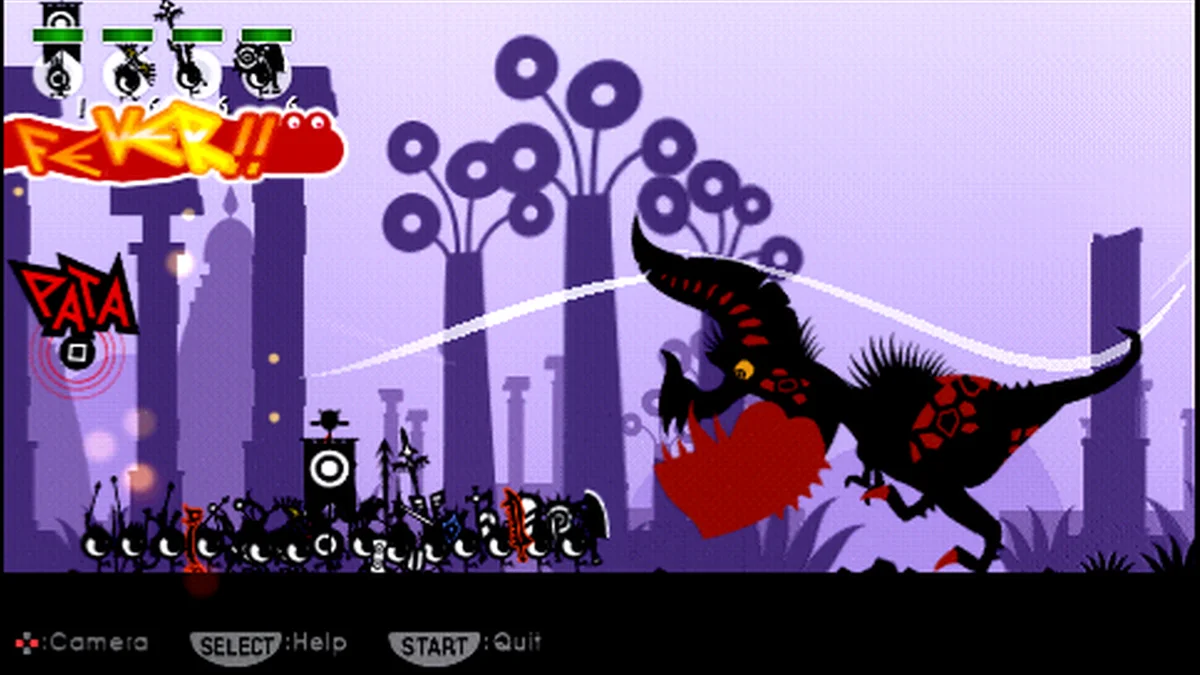
You cannot correct a bad order as freely as in a conventional action game. The troops must perform their response, and the next rhythm has to arrive at the right time. That delay makes reading an enemy’s distance and intentions as important as keeping the beat. Choosing and equipping the army gives the battles preparation outside the music. Repeating hunts for materials can slow the campaign, but a well-timed defence still makes the command system satisfying to learn.
Command and response
Patapon first appeared in Japan in 2007 and reached North America in 2008. Producer Chris Hinojosa-Miranda explicitly credits Pyramid with development and Japan Studio with production. The creators describe call and response as the basis of the game, joining troop commands to a recurring musical exchange.
Keep counting during the army’s response instead of waiting for your next input cue. Learn the distance covered by a march before pressing toward a boss. A quiet listening environment is more useful here than trying to follow every animation at once.
Why we chose it for PSP
Use call and response to turn a rhythm into a tactical order.
Explore this console’s game selection ↗Release record
Original worldwide release: 2007. Release records above identify the console editions covered by this collection.
Sources and further reading5 references
- Pata-me, Pata-you, Patapon news ↗Chris Hinojosa-Miranda / PlayStation Blog · Accessed 2026-10-28
Producer clarifies Pyramid’s development and Japan Studio production and records the Japanese launch period in December 2007.
- The complete story behind rhythm-action classic Patapon, as told by the game’s creators ↗PlayStation Blog / Hiroyuki Kotani and Kemmei Adachi · Accessed 2026-10-28
Creator interview describes command rhythms, call and response, troop composition and the 2007 original.
- P-Day is upon us! ↗Chris Hinojosa-Miranda / PlayStation Blog · Accessed 2026-10-28
Contemporary US producer post confirms retail availability on 26 February 2008; quoted review scores are not imported.
- PSP™ Enters the Market on December 12, 2004 at 19,800 Yen in Japan ↗Sony Computer Entertainment · Accessed 2026-10-28
27 October 2004 announcement: Japanese launch and PSP-1000 specifications. Preferred over the later PlayStation history page’s conflicting 11 December date.
- PSP® Go PSP® (PlayStation®Portable) Evolves to Match the Digital Lifestyle ↗Sony Computer Entertainment · Accessed 2026-10-28
2009 PSP-N1000 announcement: no UMD drive, 16 GB flash storage and region-specific launches. Original storefront instructions are historical.