Move the ground
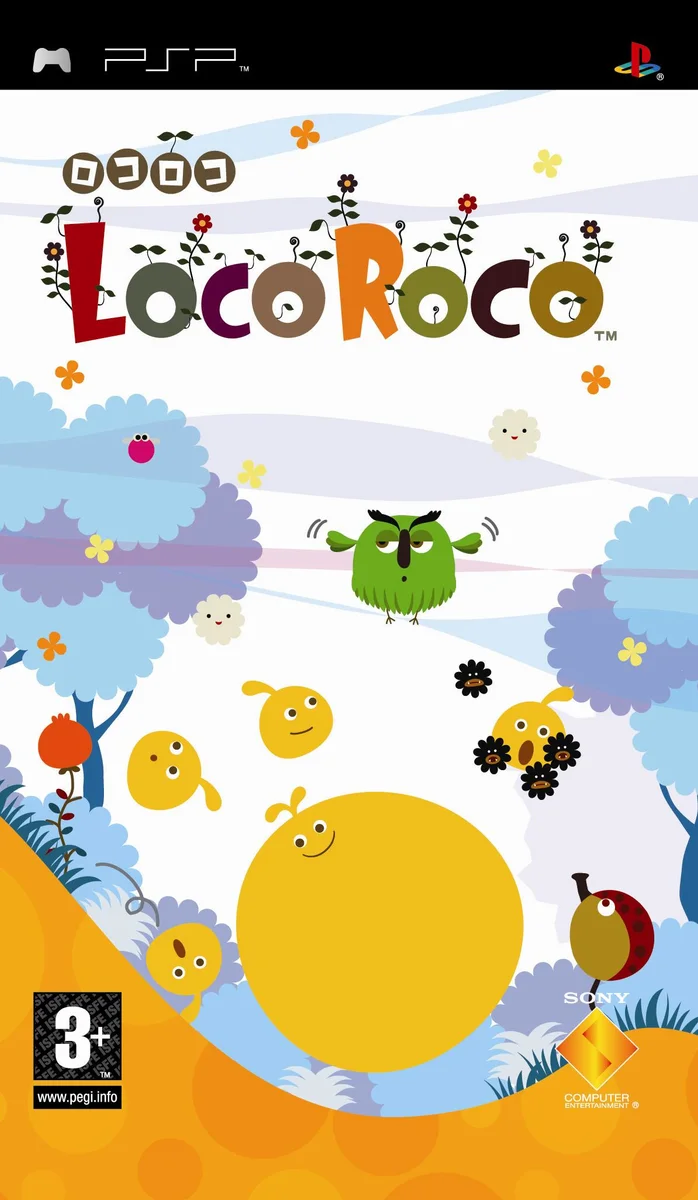
The shoulder buttons make movement feel like handling the terrain. A small tilt starts a roll; holding it too long can carry the LocoRoco past a useful ledge or into a hazard. Splitting the creature lets its pieces tumble through tight routes, then regroup into one body. The broad shapes keep these changes legible, while the singing gives the group a presence of its own. Searching for every hidden resident is a slower pursuit than simply finding the exit.
Use brief tilts to settle on small platforms, and watch how the group moves before forcing it through a narrow opening. Finish a level once before treating every missing resident as a failed attempt.
A group with one shape
Japan Studio’s 2006 game organises play around the PSP’s shoulder buttons and a deformable protagonist. Its creators describe an early idea built from simple autonomous circles. The finished levels make that concern with shape and collective movement something the player can manipulate directly.
Why we chose it for PSP
Guide a changing body by tilting the landscape under it.
Explore this console’s game selection ↗Release record
Original worldwide release: 2006. Release records above identify the console editions covered by this collection.
Sources and further reading4 references
- LocoRoco Creators on the Game That Made the World Smile ↗PlayStation Blog / Tsutomu Kouno and Keigo Tsuchiya · Accessed 2026-10-28
Creator interview covers the 2006 PSP game, shoulder-button controls and design. Its July reference describes the Japanese release; it is not used to deny earlier regional availability.
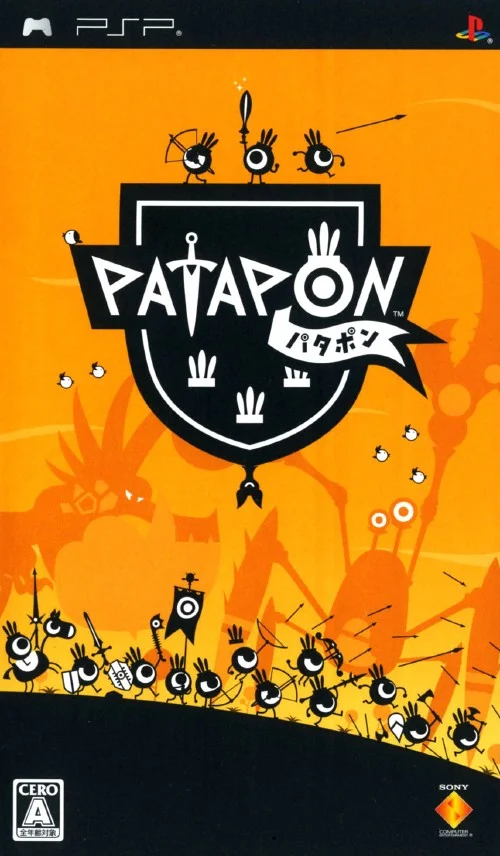
- Pata-me, Pata-you, Patapon news ↗Chris Hinojosa-Miranda / PlayStation Blog · Accessed 2026-10-28
Producer clarifies Pyramid’s development and Japan Studio production and records the Japanese launch period in December 2007.
- PSP™ Enters the Market on December 12, 2004 at 19,800 Yen in Japan ↗Sony Computer Entertainment · Accessed 2026-10-28
27 October 2004 announcement: Japanese launch and PSP-1000 specifications. Preferred over the later PlayStation history page’s conflicting 11 December date.
- PSP® Go PSP® (PlayStation®Portable) Evolves to Match the Digital Lifestyle ↗Sony Computer Entertainment · Accessed 2026-10-28
2009 PSP-N1000 announcement: no UMD drive, 16 GB flash storage and region-specific launches. Original storefront instructions are historical.