Judging the run-up
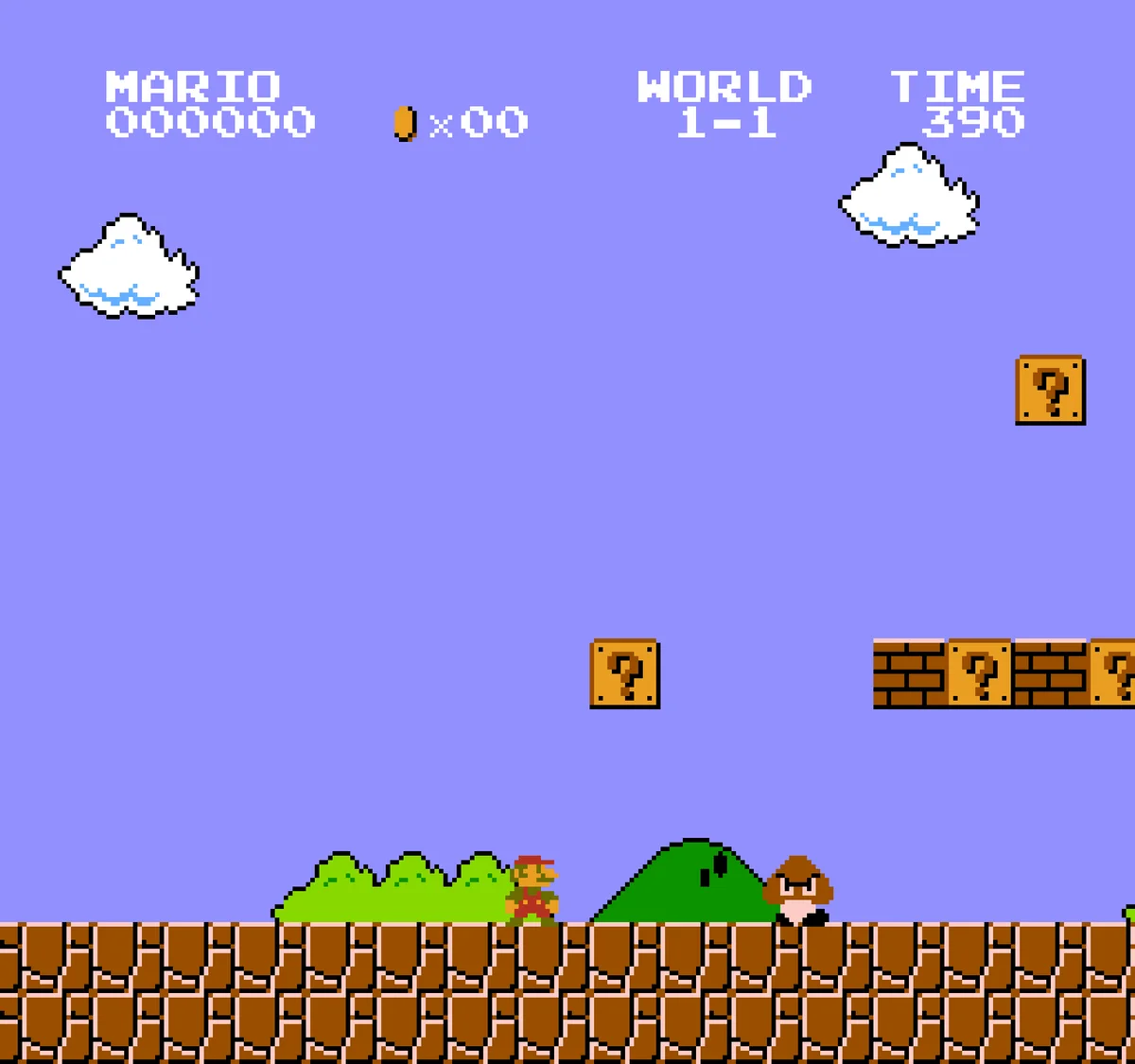
Mario’s momentum turns a plain gap into a judgement about the run-up. A mushroom adds room for one mistake, but chasing it can create the mistake in the first place. The levels repeatedly put a reward just far enough out of the direct route to make you weigh the risk. Underwater movement and castle hazards stretch the same compact control scheme. There is little space here to hide an uncertain jump behind a menu or an upgrade.
Begin without warp zones and get used to releasing the run button before landing on a narrow platform. An early mistake is cheap enough to learn from. Later lives are more precious, so saves between worlds can keep a study of the whole game from becoming endless practice of its opening.
Before the world map
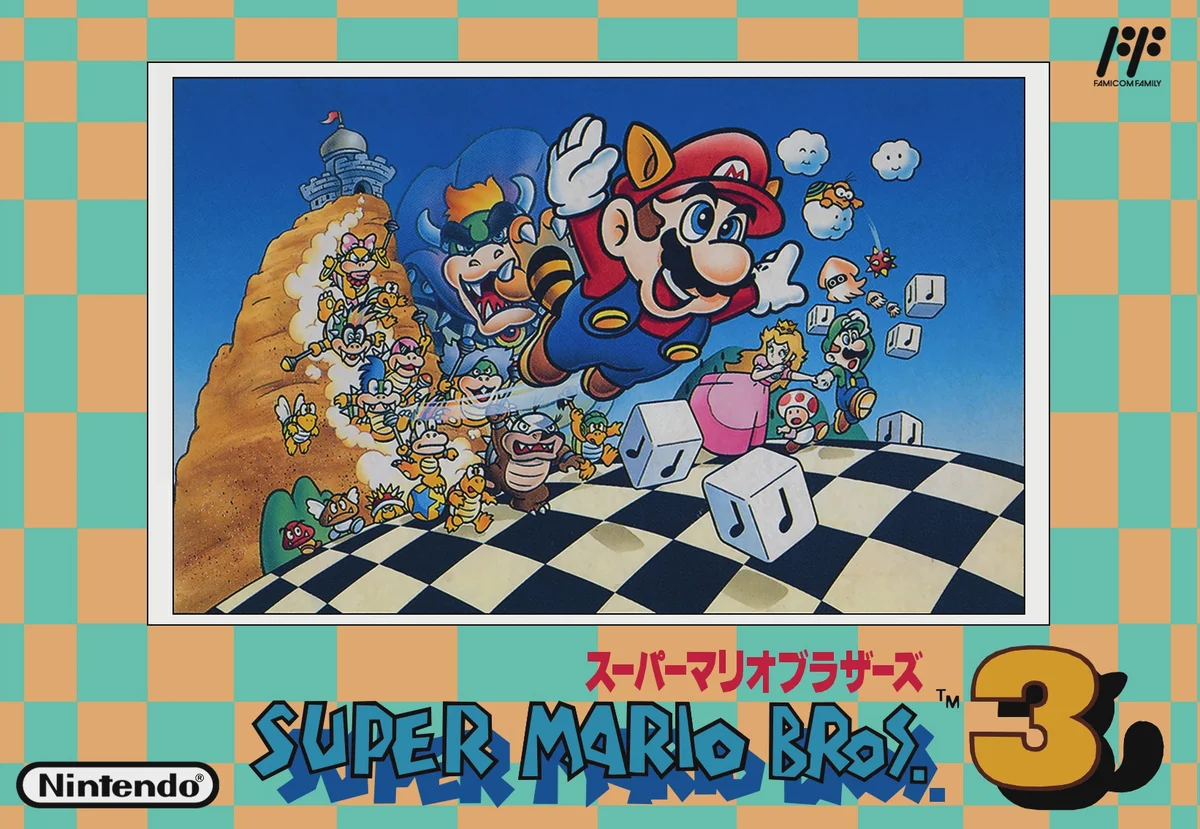
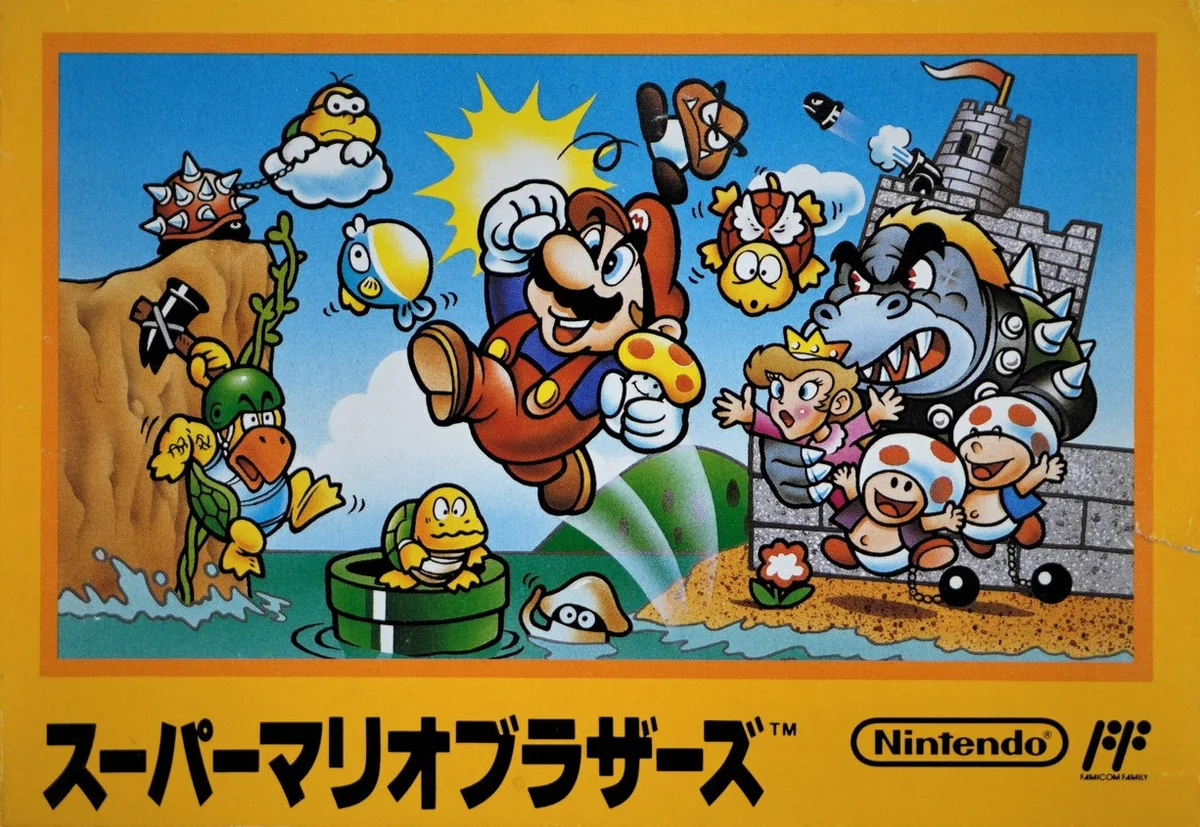
Nintendo dates the Japanese release to September 1985; its European chronology gives 1987. The original and Super Mario Bros. 3 make a useful pair: the earlier game sustains its variation through changes in terrain and pace, before the later game adds a map, stored items and a larger wardrobe.
Why we chose it for NES / Famicom
Play alongside Super Mario Bros. 3 to see how much variety Nintendo first extracted from running, jumping and a small set of power-ups.
Explore this console’s game selection ↗Release record
Original worldwide release: 1985. Release records above identify the console editions covered by this collection.
Sources and further reading3 references
- スーパーマリオブラザーズ ↗Nintendo · Accessed 2026-10-27
Japanese release on 13 September 1985 and original instructions for movement, power-ups and the eight worlds.
- Super Mario-Portal ↗Nintendo Germany · Accessed 2026-10-27
European chronology gives Super Mario Bros. as 1987 and Super Mario Bros. 3 as 1991. These are regional years, not Japanese debuts or uniform country-specific launch days.
- Nintendo Entertainment System – Nintendo Classics ↗Nintendo UK · Accessed 2026-10-27
Live UK catalogue checked for the seven Nintendo games recommended here. Paid membership is required; availability is time-sensitive.