The map changes with your equipment
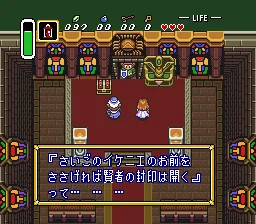
The opening gives Link an urgent errand; the world gradually fills with reasons to wander away from it. Finding a new tool prompts you to remember an obstacle passed hours earlier. Dungeons concentrate that pleasure into a small space, where equipment answers a puzzle and the answer suggests another use. Moving between the paired worlds makes familiar ground worth examining again.
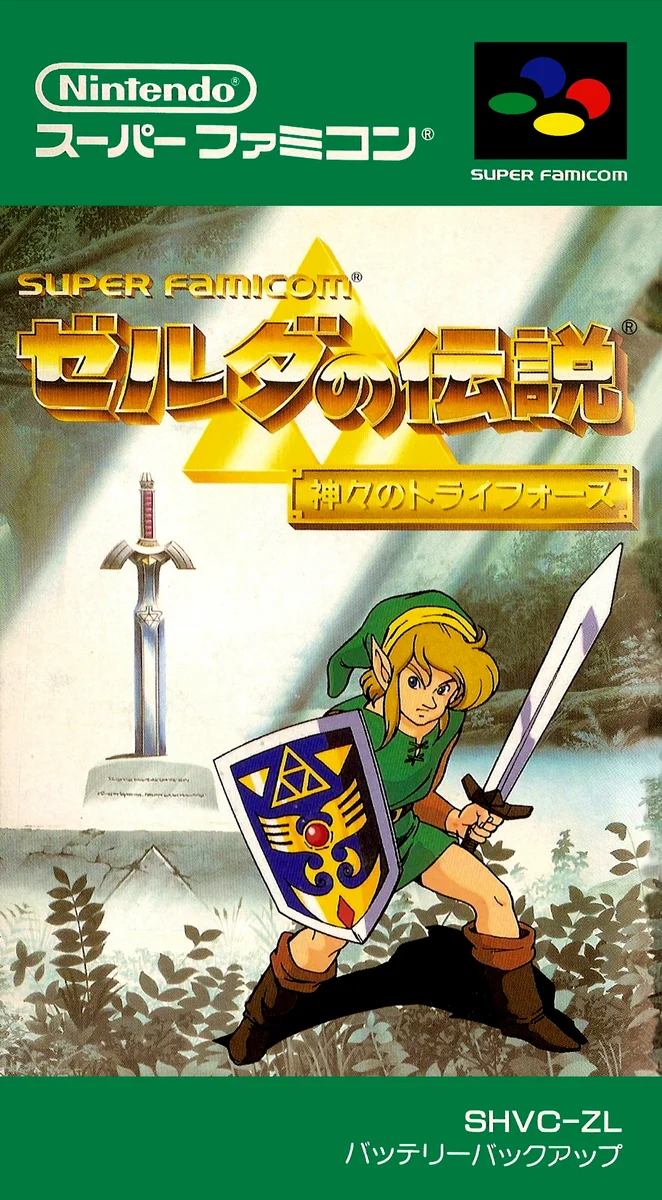
Released for Super Famicom in Japan in November 1991, A Link to the Past returned Zelda to an overhead view. Its equipment-driven structure ties progress to knowing the map. It is a particularly clear example of ideas the series developed across several games, rather than the invention of exploration or item-based puzzles.
When to ask for a hint
A few passages remain obscure. Talk to characters and keep track of locations you cannot yet reach. If stuck, a small hint can preserve the satisfaction of making the next connection yourself; a complete route guide tends to hurry past it.
Why we chose it for Super Nintendo
Equipment makes the map worth revisiting. The pleasure is remembering a blocked route just as you find the means to open it.
Explore this console’s game selection ↗Release record
Original worldwide release: 1991. Release records above identify the console editions covered by this collection.
Sources and further reading3 references
- Nintendo Classic Mini: Super Famicom announcement ↗Nintendo · Accessed 2026-10-27
Original Japanese Super Famicom release dates and publishers, explicitly identified as such by Nintendo.
- Super Nintendo Entertainment System: Nintendo Classics game library ↗Nintendo · Accessed 2026-10-27
UK catalogue checked October 2026; standard paid Nintendo Switch Online membership. Availability can change.
- Games included in the Super NES Classic Edition ↗Nintendo · Accessed 2026-10-27
Built-in games, including the SNES port of Street Fighter II Turbo. Current hardware stock has not been checked.