What a punch can buy
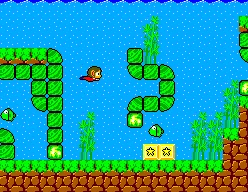
Alex’s short punch makes distance unusually important. A block invites you to step close, while an enemy makes that same movement dangerous. Shops interrupt the jumping with choices about vehicles and useful items. A motorcycle gives the landscape a different pace, and the rock-paper-scissors encounters stop it altogether. These changes make a small adventure feel unpredictable, though a lost duel can be a frustrating way to end a good run.
Alex before Sonic
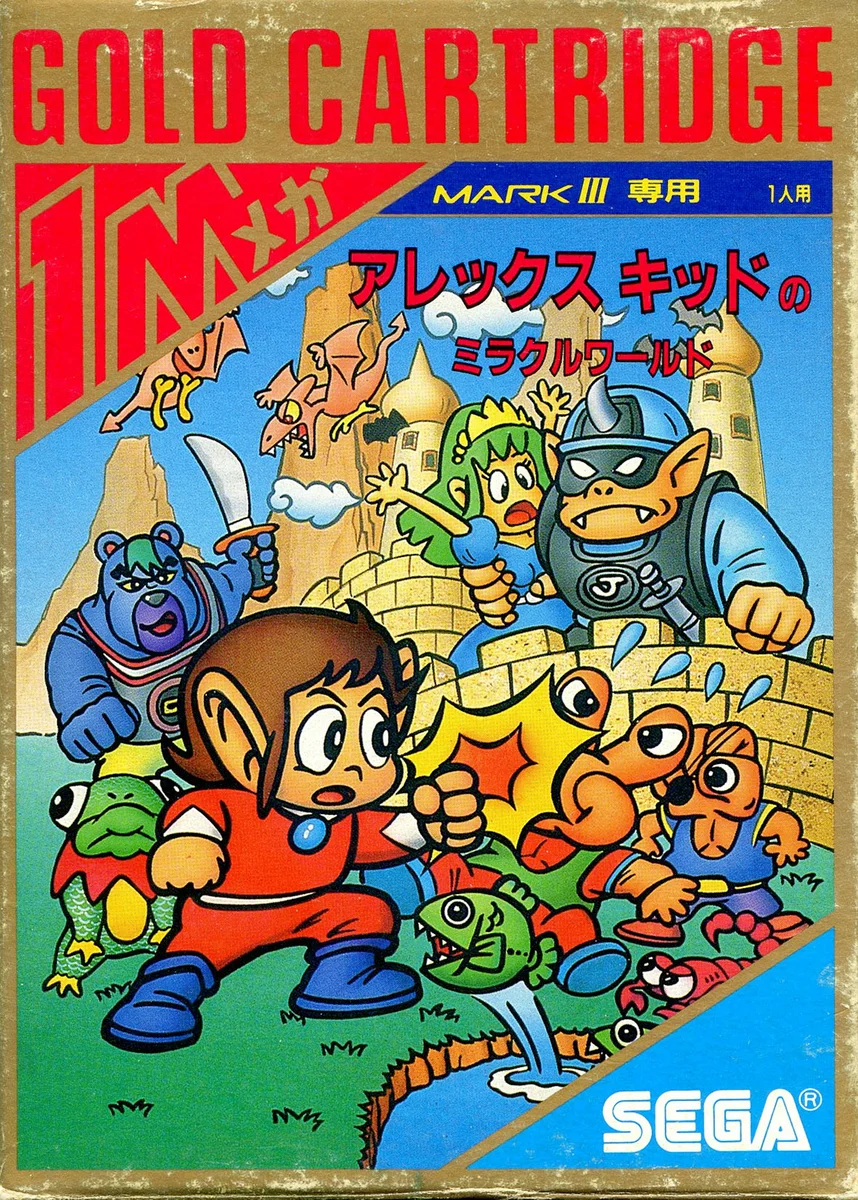
Sega’s Mark III catalogue dates Alex’s debut to 1986. The game gives the company a home-console character with his own rules: bought vehicles, destructible blocks and opponents who demand a hand-game contest. Its identity is clearer in those details than in a retrospective claim that it was simply Sega’s answer to Mario.
Learn the punch range before committing to a crowded jump. Use the reissue’s rewind while learning a difficult passage, then try it again without assistance. The changing pace is worth seeing even if the original restart rules are not appealing.
Why we chose it for Master System
Vehicles, close-range punches and hand-game contests show how Sega gave its early home character a distinct set of rules.
Explore this console’s game selection ↗Release record
Original worldwide release: 1986. Release records above identify the console editions covered by this collection.
Sources and further reading3 references
- ソフトウェア一覧 | セガ・マークⅢ ↗SEGA · Accessed 2026-10-27
Japanese Mark III and Master System release catalogue. These dates are not worldwide launches.
- SEGA AGES アレックスキッドのミラクルワールド ↗SEGA · Accessed 2026-10-27
1986 original, vehicle purchases, rock-paper-scissors encounters and the changes in AGES mode.
- SEGA AGES Alex Kidd in Miracle World ↗Nintendo UK / SEGA · Accessed 2026-10-27
Live UK Switch listing for the original-game reissue, including rewind. This is separate from the DX remake.