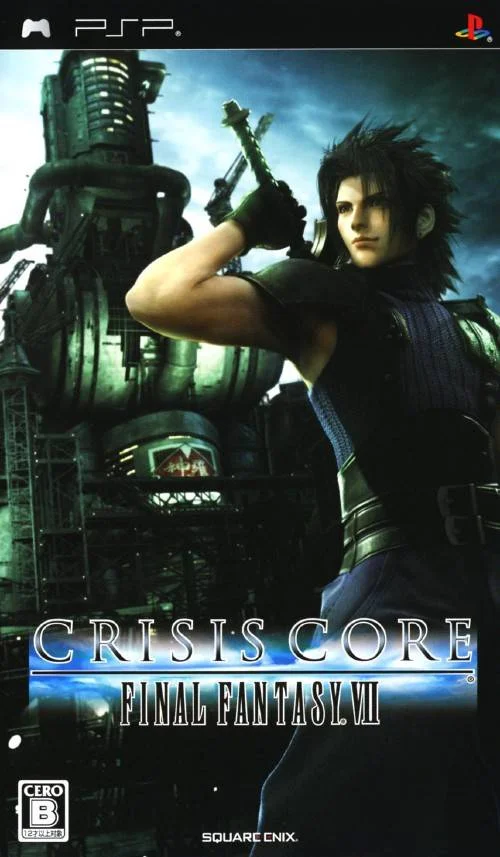
Zack and the spinning reels
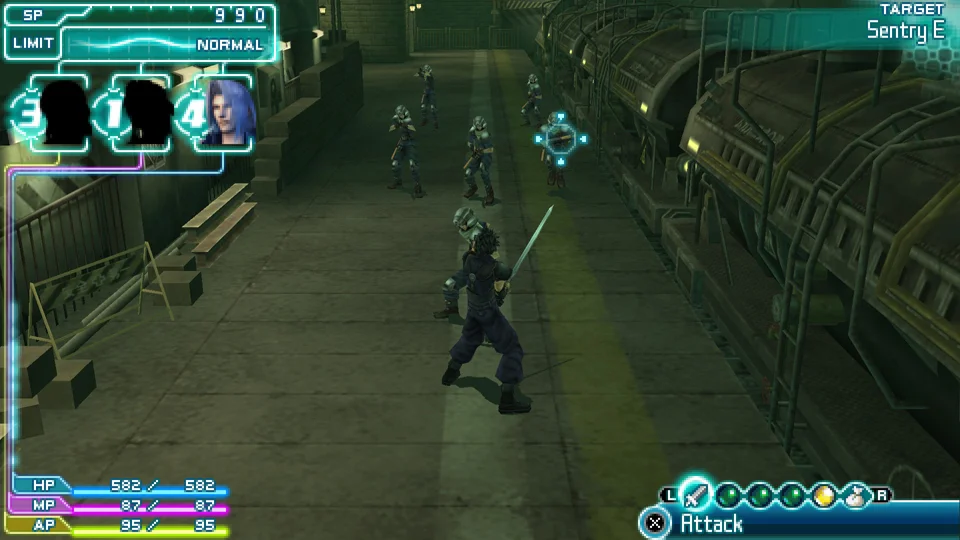
Zack’s direct attacks and equipped materia make battles more immediate than the party commands of Final Fantasy VII. The Digital Mind Wave adds bonuses and special attacks through its spinning reels, tying familiar faces to moments of chance. That interruption can make a fight feel less controllable, but it also gives the relationships an unusual place in the battle interface. The optional assignments are best taken selectively; repeating similar rooms can overwhelm the story they are meant to accompany.
Before Final Fantasy VII
The 2007 PSP game follows Zack before the events of Final Fantasy VII. Its action combat and mission structure give the prequel its own form. Square Enix’s later Reunion substantially changes the models, controls, camera, music arrangements and voice coverage; those improvements belong to that release, not to the original UMD.
Treat optional missions as ways to try a materia setup or obtain a useful reward. Return to the main story when the repeated layouts begin to dull it. Playing Final Fantasy VII first gives the familiar people and places more context.
Why we chose it for PSP
Follow Zack’s prequel through direct combat and the uncertainty of the Digital Mind Wave.
Explore this console’s game selection ↗Release record
Original worldwide release: 2007. Release records above identify the console editions covered by this collection.
Sources and further reading4 references
- Remember When... CRISIS CORE –FINAL FANTASY VII– ↗Square Enix · Accessed 2026-10-28
13 September 2020 anniversary records the 2007 first release; the original Japanese edition precedes the English-language release.
- A closer look at CRISIS CORE -FINAL FANTASY VII- REUNION ↗Square Enix · Accessed 2026-10-28
Publisher comparison explicitly distinguishes the 2007 PSP game from Reunion’s rebuilt models, combat/camera revisions, new arrangements and expanded voice acting.
- PSP™ Enters the Market on December 12, 2004 at 19,800 Yen in Japan ↗Sony Computer Entertainment · Accessed 2026-10-28
27 October 2004 announcement: Japanese launch and PSP-1000 specifications. Preferred over the later PlayStation history page’s conflicting 11 December date.
- PSP® Go PSP® (PlayStation®Portable) Evolves to Match the Digital Lifestyle ↗Sony Computer Entertainment · Accessed 2026-10-28
2009 PSP-N1000 announcement: no UMD drive, 16 GB flash storage and region-specific launches. Original storefront instructions are historical.