A different view of the race
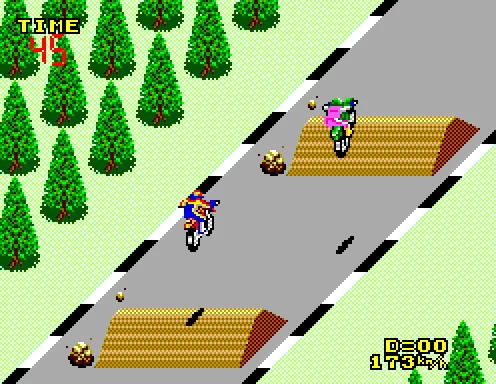
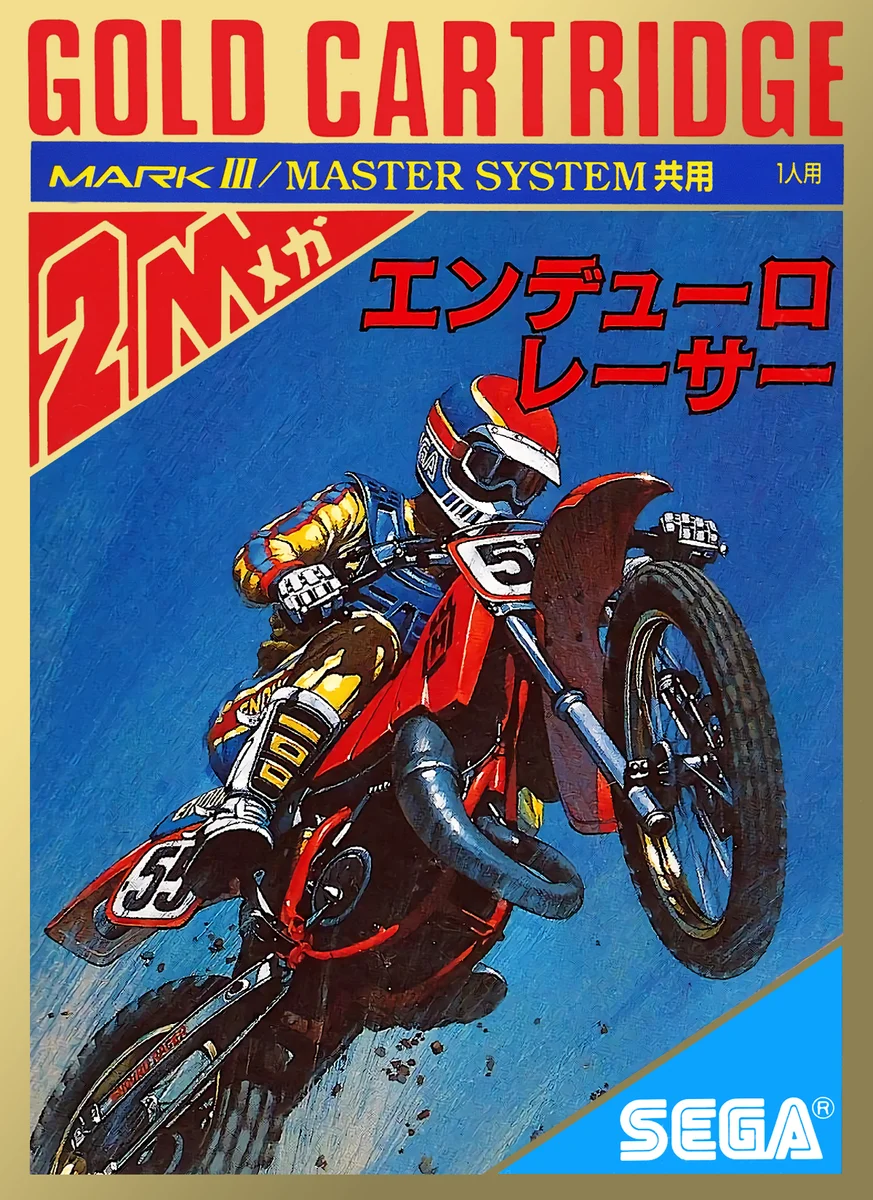
The arcade game dates to 1986; the Mark III adaptation followed in Japan in 1987. Sega describes the home version as a reworking of its arcade title, with a new viewpoint and tuning between stages. It belongs here as an example of adapting an arcade idea to different hardware rather than reproducing the cabinet’s presentation.
The diagonal view makes the bike seem small against the course, but the decisions come quickly. Line up a ramp, land clear of traffic and keep enough speed for the next stretch. Between-stage purchases give a successful run something to build on. The best moments come when a clean series of jumps lets you pass hazards that looked crowded a few seconds earlier.
Learn where to leave the ground
Spend a few runs learning take-off positions before chasing a clear. The Japanese and overseas course sets differ, so identify the edition before using a route guide. A smooth run is a better first target than treating every collision as a reason to restart.
Why we chose it for Master System
A racing selection that shows how a home conversion could rebuild an arcade premise around a different viewpoint.
Explore this console’s game selection ↗Release record
Original worldwide release: 1986. Release records above identify the console editions covered by this collection.
Sources and further reading3 references
- ソフトウェア一覧 | セガ・マークⅢ ↗SEGA · Accessed 2026-10-27
Japanese Mark III and Master System release catalogue. These dates are not worldwide launches.
- エンデューロレーサー ↗SEGA · Accessed 2026-10-27
Japanese home adaptation, jumps and between-stage tuning. Its 19 May date differs from the catalogue’s 18 May; this record uses 1987 only. The ten-stage description is Japanese-version specific.
- Enduro Racer sales flyer ↗SEGA; catalogued by the International Arcade Museum · Accessed 2026-10-27
Original European arcade sales flyer catalogued as 1986. Used for the arcade origin year, separate from the 1987 home conversion.