Time to choose
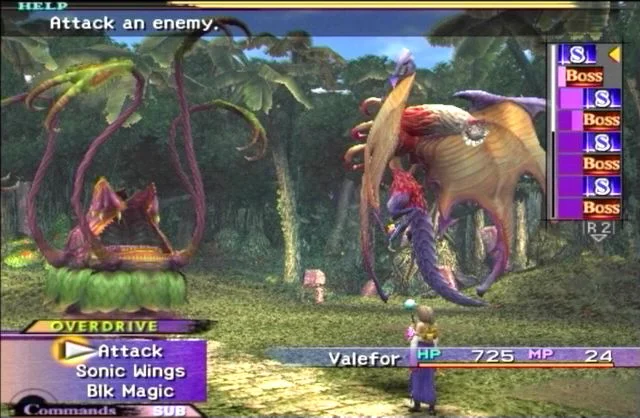
Battles make party roles easy to read, then let you bring the useful character forward without rebuilding the group outside combat. The turn display creates room to weigh an immediate hit against a spell or a change of status. The pilgrimage keeps travel directed, while the Sphere Grid makes character development a path you can inspect. Repeated battles and long scenes require patience, but the combat gives that patient pace a practical purpose.
Rotate the party during battles and pay attention to the next several turns. Save before long story sequences. A first playthrough benefits from following the intended roles on the Sphere Grid before experimenting with more elaborate builds.
Following the pilgrimage
Square’s official chronology places the Japanese PS2 release in July 2001 and lists International separately in January 2002. Its spoken performances and directed journey give the series a different narrative rhythm from its earlier world-map adventures. Regional and later editions should not be treated as one interchangeable release.
Why we chose it for PlayStation 2
Visible turn order and party changes make tactical decisions unusually easy to inspect.
Explore this console’s game selection ↗Release record
Original worldwide release: 2001. Release records above identify the console editions covered by this collection.
Sources and further reading2 references
- ファイナルファンタジーX ↗Square Enix · Accessed 2026-10-27
Official release table distinguishes the July 2001 Japanese PS2 original, International edition and later HD remasters.
- What’s so good about FINAL FANTASY X? ↗Square Enix / Duncan Heaney · Accessed 2026-10-27
Publisher retrospective describes turn-based combat and the Sphere Grid. Its praise is not treated as independent critical consensus.