A route with places to stop
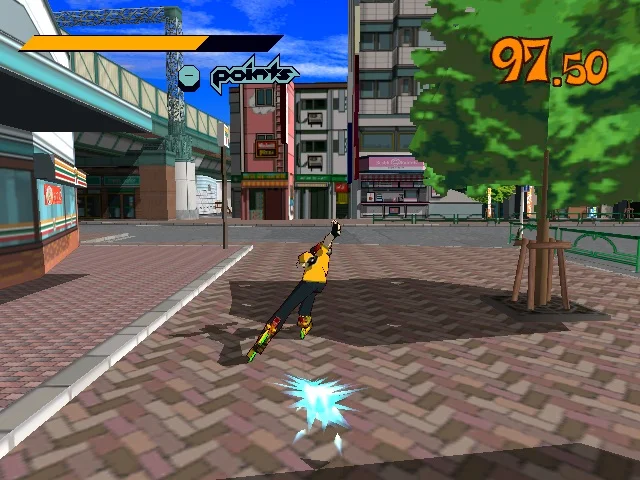
Grinding along a rail offers a clean line through an awkward street. Reaching a wall is only half the task: larger graffiti requires a sequence of stick movements while pursuit closes in. This gives a stage a practical order. Finish exposed tags early, learn a route through paint pickups and leave the quick marks for a hurried escape. The camera and abrupt changes of direction sometimes make the route harder to execute than to imagine.
Painting the city
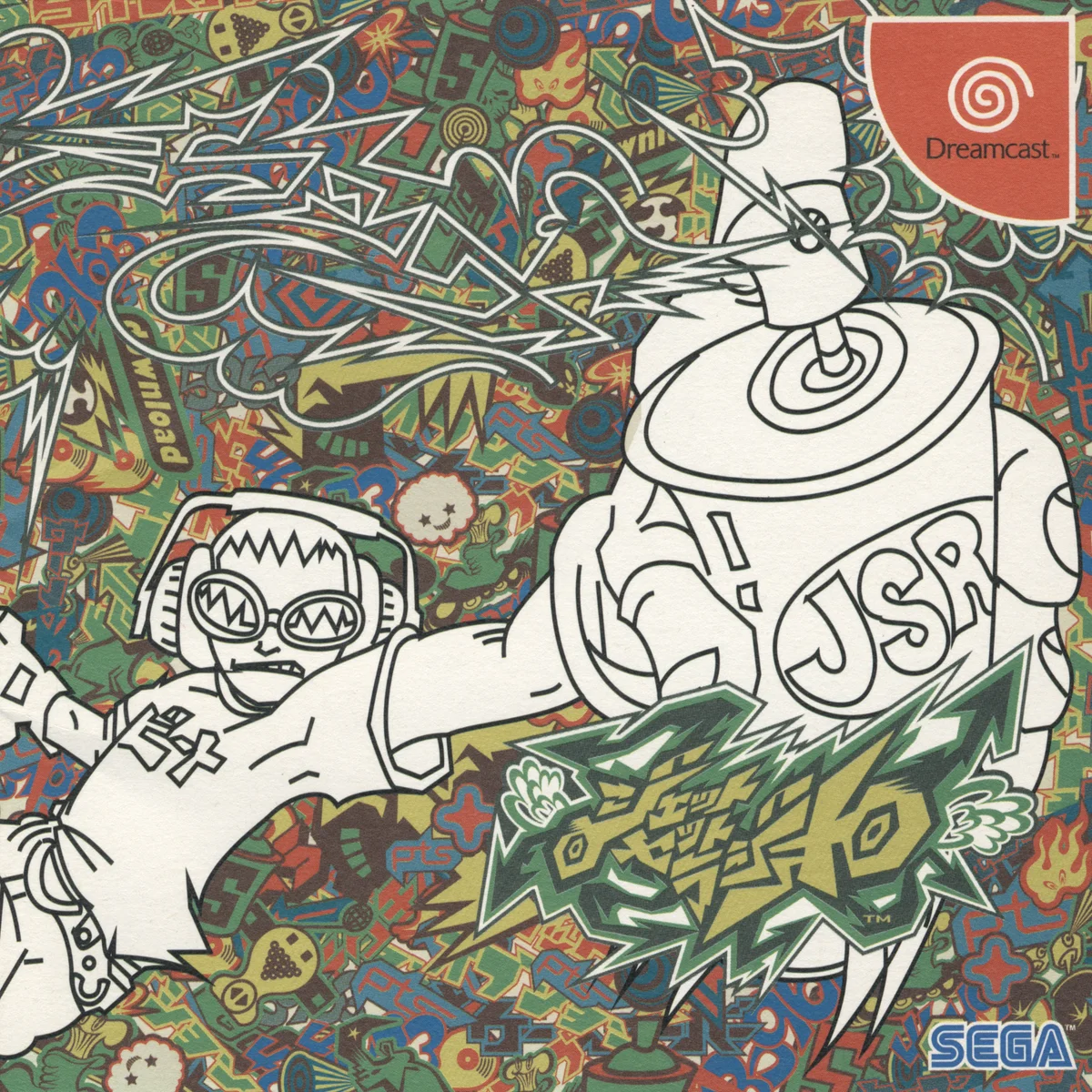
Sega’s Japanese catalogue separates the June 2000 original from De La Jet Set Radio in January 2001. The game’s flat colour, strong outlines and animated graffiti make its streets readable as illustrated spaces. Those visual choices also give the competing crews and their radio commentary a common identity.
Treat the first few stages as route learning. Smooth skating helps, but knowing where to stop is often more valuable than performing another trick. Jet Set Radio Future is a separate game with different movement and tagging rules.
Why we chose it for Dreamcast
Skating routes and vulnerable graffiti stops make a distinctive kind of pursuit.
Explore this console’s game selection ↗Release record
Original worldwide release: 2000. Release records above identify the console editions covered by this collection.
Sources and further reading2 references
- ソフトウェア一覧(セガ発売) | ドリームキャスト ↗Sega · Accessed 2026-10-27
Japanese GD-ROM catalogue; distinguishes the original Sonic Adventure, International revision, Jet Set Radio revision and original PSO from Ver.2. Historical download links are not current availability evidence.
- ドリームキャストの名作がよみがえる! ジェットセットラジオ ↗Sega · Accessed 2026-10-27
Publisher describes skating and graffiti, and the later HD version. The Japanese original and revised releases remain separate in the catalogue.