The space around a blade
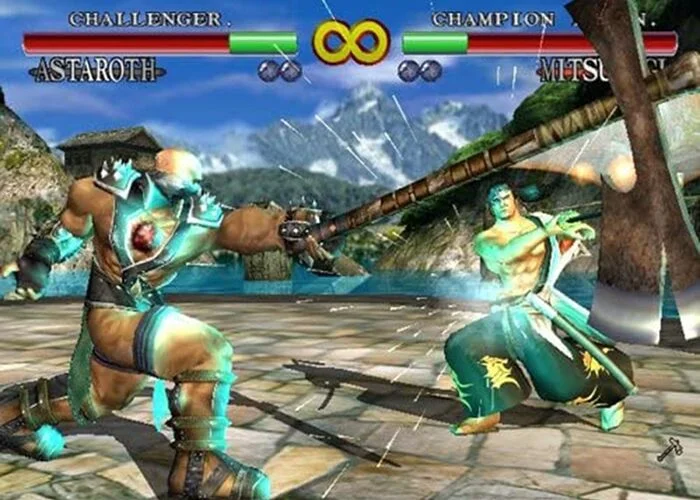
Soulcalibur makes distance unusually legible. Long weapons control approaches that a shorter blade must evade, while movement around an opponent changes which attacks are safe. A ring-out can end a round before a health bar is exhausted, so retreat has a physical limit. The controls give newcomers a useful attack quickly; learning when to stop attacking is the more rewarding lesson.
Begin with two characters whose weapons have different reach. Play short sets against another person if possible, then use Mission Battle to practise under unfamiliar restrictions. A pad is sufficient; an arcade stick is a preference.
What the home edition adds
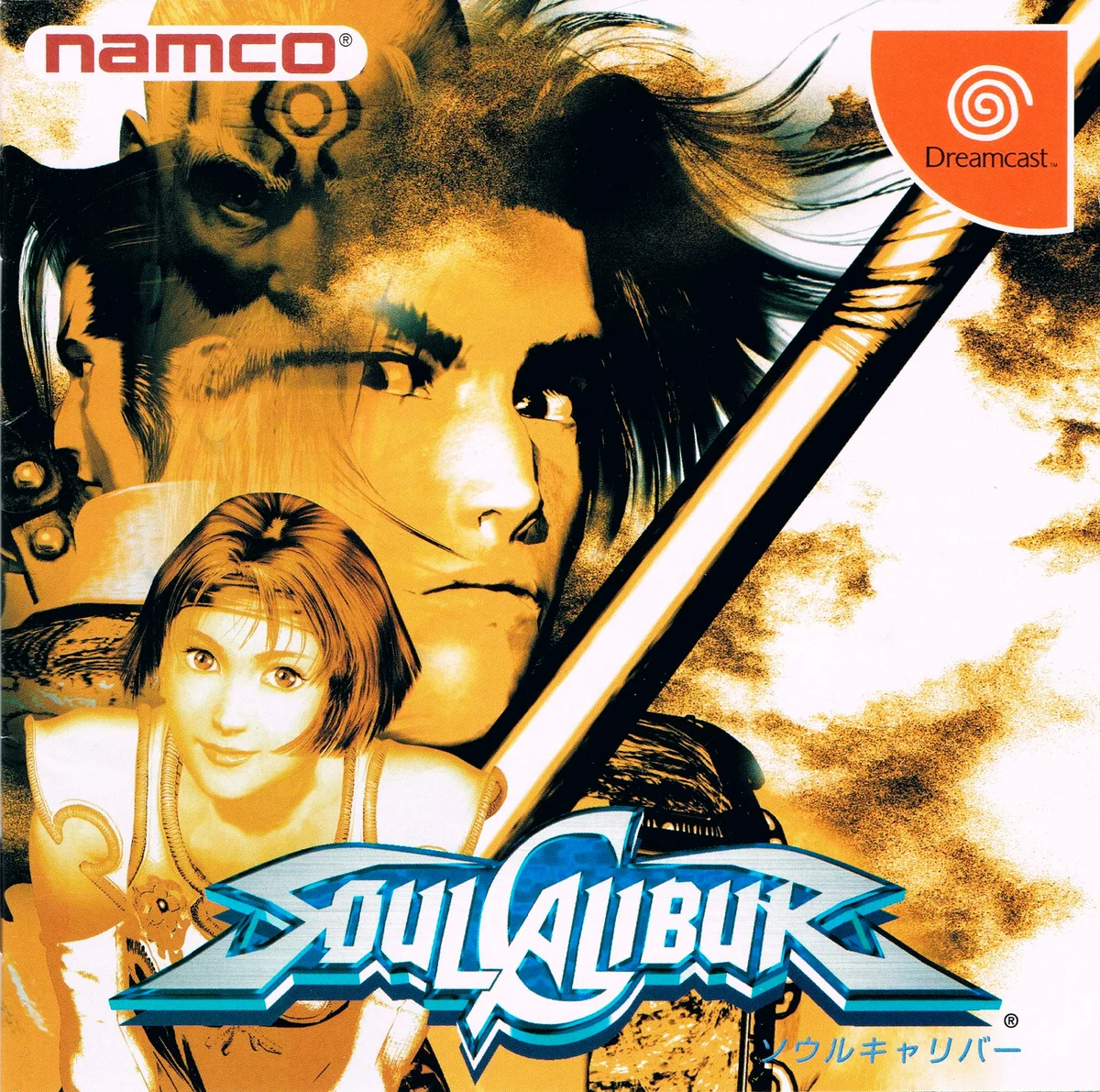
The arcade game appeared in 1998 and the Dreamcast conversion followed in 1999. Namco’s later Xbox 360 adaptation explicitly uses the Dreamcast version as its basis, but omits Mission Battle and other modes. That distinction matters when describing the substantial single-player framework surrounding the original home fights.
Why we chose it for Dreamcast
Reach, lateral movement and ring edges give short fights room for sustained learning.
Explore this console’s game selection ↗Release record
Original worldwide release: 1998. Release records above identify the console editions covered by this collection.
Sources and further reading2 references
- SOULCALIBUR ↗Bandai Namco Games · Accessed 2026-10-27
Publisher distinguishes the 1998 arcade original, 1999 Dreamcast conversion and 2008 adaptation; lists removed modes in the latter. This old Xbox 360 listing is not a verified purchase route.
- Bandai Namco Group’s History ↗Bandai Namco Holdings · Accessed 2026-10-27
Corporate history records the August 1999 Dreamcast release. Used for year-level chronology, not promotional quality judgements.