The space between two fighters
The limited set of buttons is an invitation to pay attention to the opponent. A blocked attack can leave an opening; a retreat can become dangerous near the edge of the ring. Learning a few dependable responses makes the exchanges clearer than memorising a long sequence immediately. Against another person, hesitation becomes something both players can recognise and exploit.
Begin with guard, a short attack and a throw, then learn the situations in which each fails. Short local sets work well. A player who wants spectacle without practising spacing may find the game less immediately accommodating than its uncluttered controls suggest.
Arcade first, Saturn later
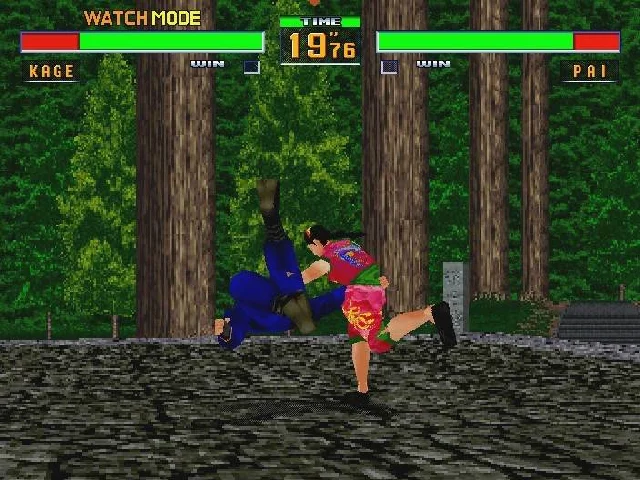
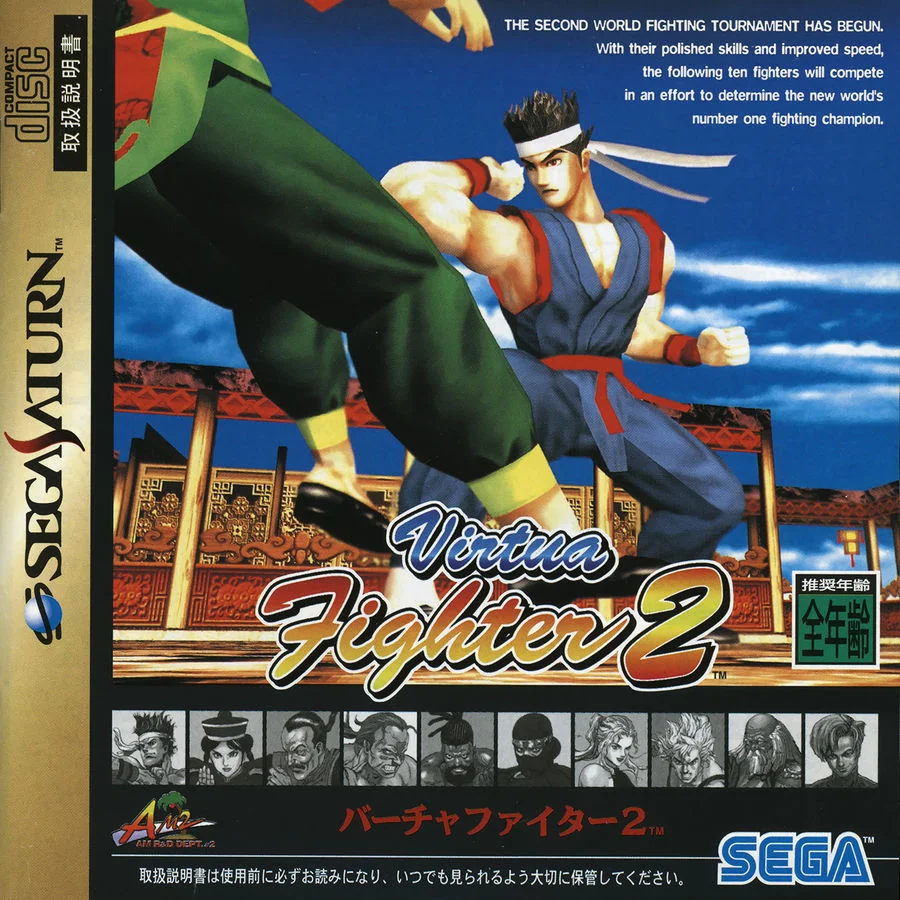
Sega dates the arcade sequel to 1994 and the Japanese Saturn conversion to December 1995. Keeping those records separate avoids assigning the arcade’s earlier arrival to the home console. The conversion is part of Saturn’s close relationship with Sega’s arcade catalogue, rather than a claim that the two machines produce identical results.
Why we chose it for Saturn
A Saturn conversion of a 1994 arcade game, built around readable spacing and consequential mistakes.
Explore this console’s game selection ↗Release record
Original worldwide release: 1994. Release records above identify the console editions covered by this collection.
Sources and further reading2 references
- ソフトウェア一覧(セガ発売) ↗Sega · Accessed 2026-10-27
Japanese Saturn release calendar and accessory symbols. VF2 and Sega Rally: 1995; Guardian Heroes, Zwei, Dragon Force and NiGHTS: 1996; Azel: Panzer Dragoon RPG: 1998. Old storefront links are not current-access evidence.
- HISTORY 1960-2020 ↗Sega · Accessed 2026-10-27
Dates the arcade Virtua Fighter 2 to 1994, separately from the Saturn conversion. Broad technological-first claims are not repeated.