After the first combination
The four attack buttons make the first exchanges approachable, then reveal how much depends on distance and recovery. A spectacular string is less useful than a reliable response to an unsafe attack. Sideways movement complicates the line between the fighters without making every decision obscure. The home modes give newcomers somewhere to experiment before a human opponent begins punishing the same mistake.
Pick one fighter and learn a safe short combination, a low attack and a way to stand up without immediately being hit again. Local matches become more rewarding when both players can recognise why an exchange went wrong.
The home conversion
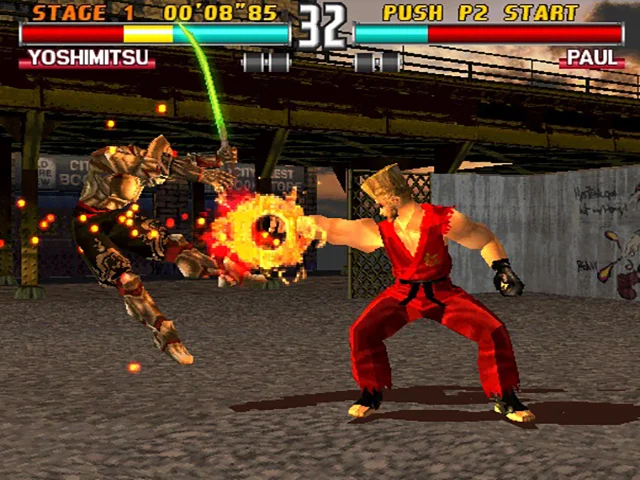
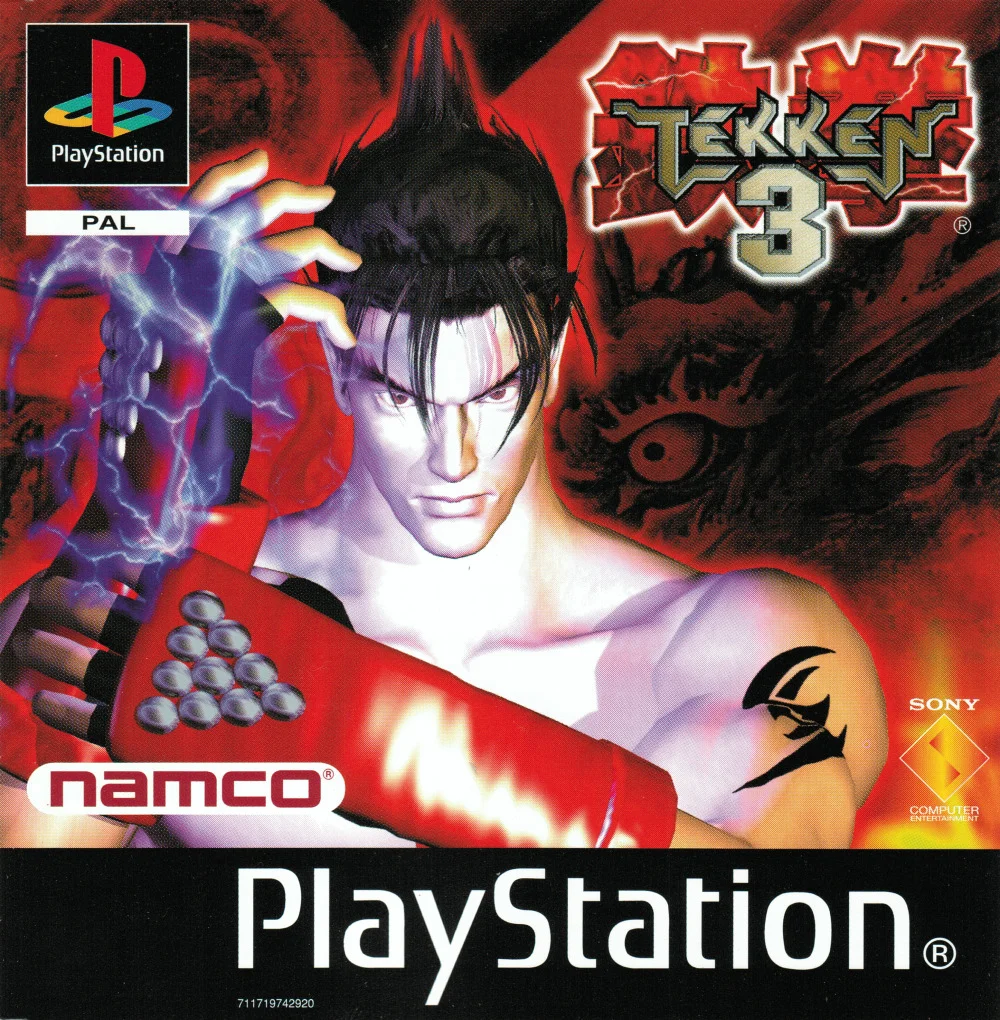
The arcade game appeared in 1997 and the PlayStation conversion followed in 1998. Harada’s retrospective describes the work of adapting it for home hardware. Tekken Force and Tekken Ball help make the disc a distinct home package, so its importance cannot be reduced to whether every visual detail matched the cabinet.
Why we chose it for PlayStation
The home conversion combines readable fighting with additional modes for experimenting away from a versus match.
Explore this console’s game selection ↗Release record
Original worldwide release: 1997. Release records above identify the console editions covered by this collection.
Sources and further reading2 references
- Extended Play: How Tekken 3 made everybody love kung-fu fighting ↗PlayStation Blog / Katsuhiro Harada interview · Accessed 2026-10-27
Participant interview on Namco’s home conversion. Introduction separates arcade 1997 and PlayStation 1998; a later passage conflates the 1996 test with release. No exact arcade day is inferred.
- TEKKEN 3 PS4 & PS5 ↗Bandai Namco / PlayStation Store UK · Accessed 2026-10-27
Live UK listing for the converted PlayStation game, including home modes. Available separately or through Premium at the access date; peripheral and emulation qualifications remain visible.