Getting back to the stage
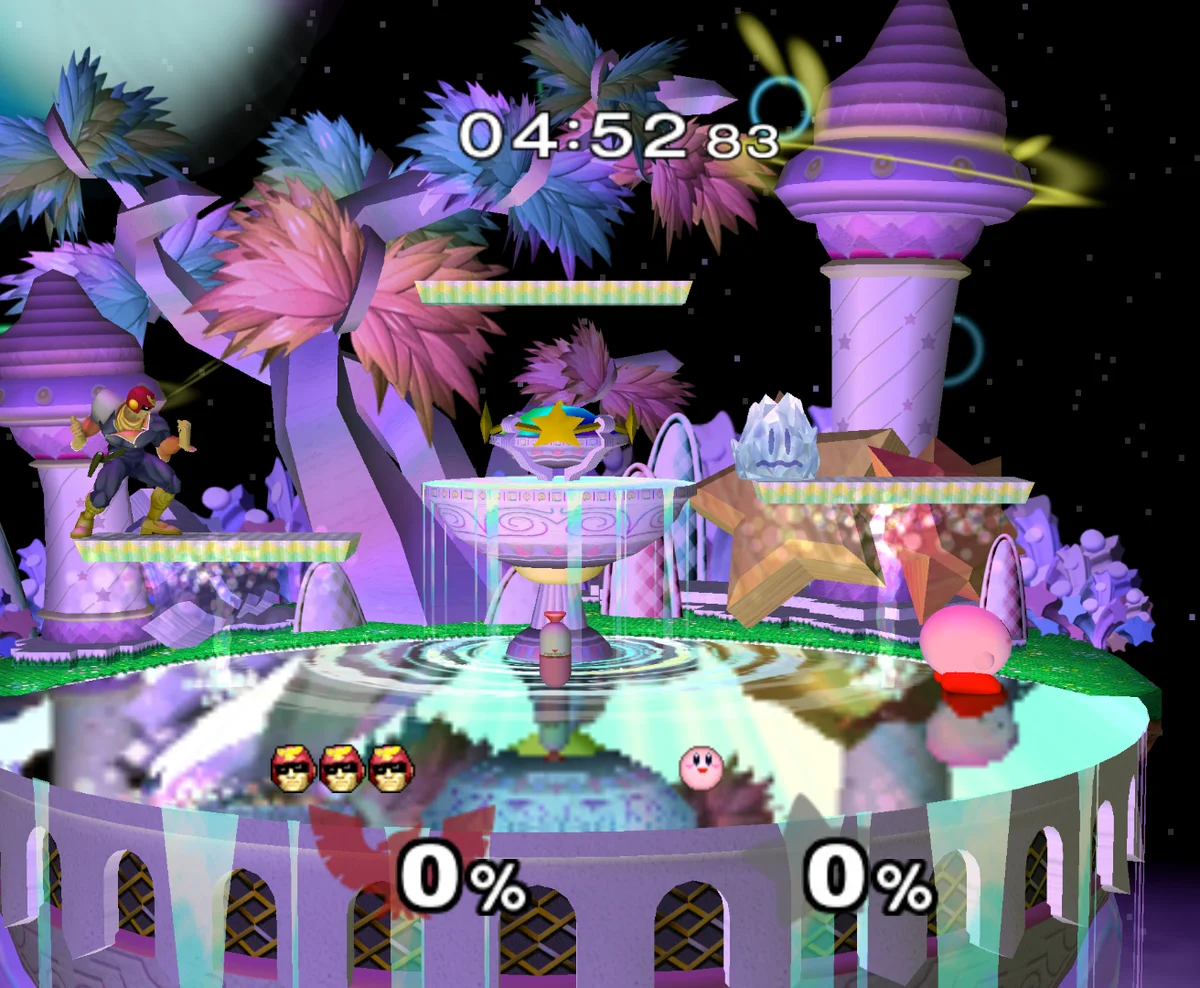
Every hit changes where a fighter can safely stand. Recovering from outside the stage can be more tense than the exchange that sent you there, because the opponent can intercept the return. Items and moving arenas produce a busy party game; removing those variables reveals demanding movement and timing. Both approaches belong to the package, and a newcomer need not begin with a competitive ruleset.
Start with short local matches and practise recovering to the stage. Agree the item and stage rules with the other players before treating the result as a test of skill.
A larger crossover
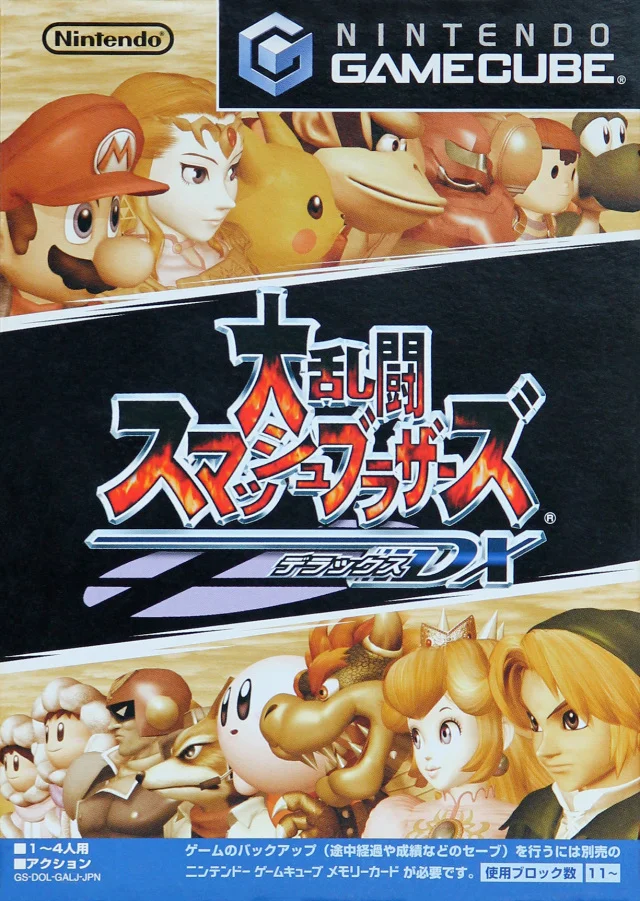
HAL’s portfolio dates the Japanese release to November 2001; Europe followed in 2002. Melee expands the Nintendo crossover with defensive options and substantial solo activities while retaining the goal of knocking opponents out of the arena.
Why we chose it for GameCube
Compare flexible party rules with precise movement and recovery.
Explore this console’s game selection ↗Release record
Original worldwide release: 2001. Release records above identify the console editions covered by this collection.
Sources and further reading2 references
- Super Smash Bros. Melee ↗Nintendo · Accessed 2026-10-27
European release, four-player modes and defensive techniques.
- 大乱闘スマッシュブラザーズDX/Super Smash Bros. Melee ↗HAL Laboratory · Accessed 2026-10-27
Developer portfolio confirms participation and Japanese release on 21 November 2001.