The game extended beyond the screen
An Odyssey game could begin with a sheet placed over the television. Printed scenery gave meaning to white marks on the display, while cards, counters and rules supplied things the circuitry could not. A player had to understand both the electronic movement and the activity arranged around it. The television was part of the game, alongside objects that would have looked familiar on a board-game table.
Magnavox introduced the Odyssey in the United States in 1972. The Smithsonian’s object record documents the overlays and other accessories. Its game cards selected connections within the machine; they did not contain software programs. Magnavox’s service manual makes that distinction tangible by showing which circuit functions each card enabled.
That matters when returning to the machine. Watching a recording of its moving marks does not show all the rules, handling or conversation needed to play. Preserving a complete set involves more than saving the image that appeared on the television.
A new game without a new console
Home Pong offered a more self-contained contest. Two players turned controls to meet a moving ball. Atari’s home version reached US customers through Sears in 1975, as the Smithsonian’s later Super-Pong record explains. Its dedicated circuitry provided a fixed game rather than a socket for a future software library. This profile follows that Atari/Sears family; it does not stand for every dedicated television game sold in the period.
Fairchild Channel F, released in 1976, let players change the software by inserting a Videocart. The Henry Ford’s account traces the work from Alpex’s Wallace Kirschner and Lawrence Haskel to a Fairchild team including Jerry Lawson, Ron Smith and Nick Talesfore. The change involved both an electronic design and a cartridge that a household could handle repeatedly.
The Atari Video Computer System followed in 1977, later becoming known as the 2600. The Computer History Museum’s chronology records its introduction. For a family building a library, a programmable console made each new cartridge a smaller commitment than another machine. For a publisher, it created a potential audience that already owned the equipment needed to play.
Who gets to make the cartridges?
The console maker did not have to produce every game. Four former Atari developers, David Crane, Larry Kaplan, Alan Miller and Bob Whitehead, joined Jim Levy to establish Activision in 1979. The Computer History Museum’s finding aid records that formation and the company’s emphasis on naming its designers. A compatible cartridge could give its publisher a direct relationship with the player, even when another company had sold the console.
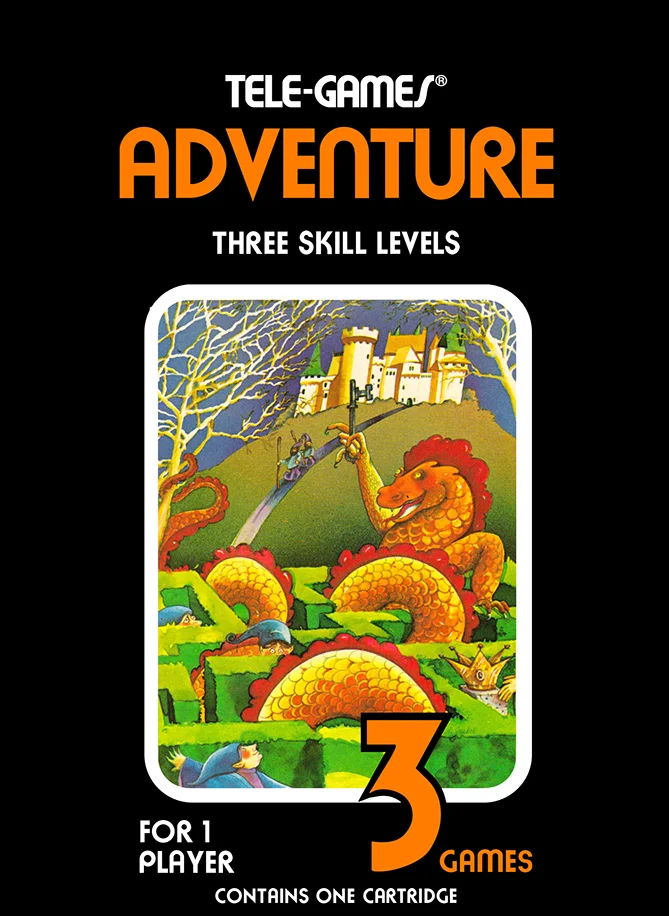
The games make that separation worth following. In River Raid, steering, speed and fuel compete for attention along the same narrowing river. Pitfall! makes repeated screens into a route to learn. Adventure, published by Atari, gives a small collection of objects different uses across connected rooms. The hardware’s constraints are shared, but they do not prescribe a single kind of game.
An expanding library also creates a selection problem. A familiar company name, an arcade licence or a picture on a box can help someone choose, but none describes every decision the game will ask them to make. Our recommendations explain those decisions and name the edition being discussed. They are editorial choices, not a ranking assembled from cartridge sales.
The controller changes the argument
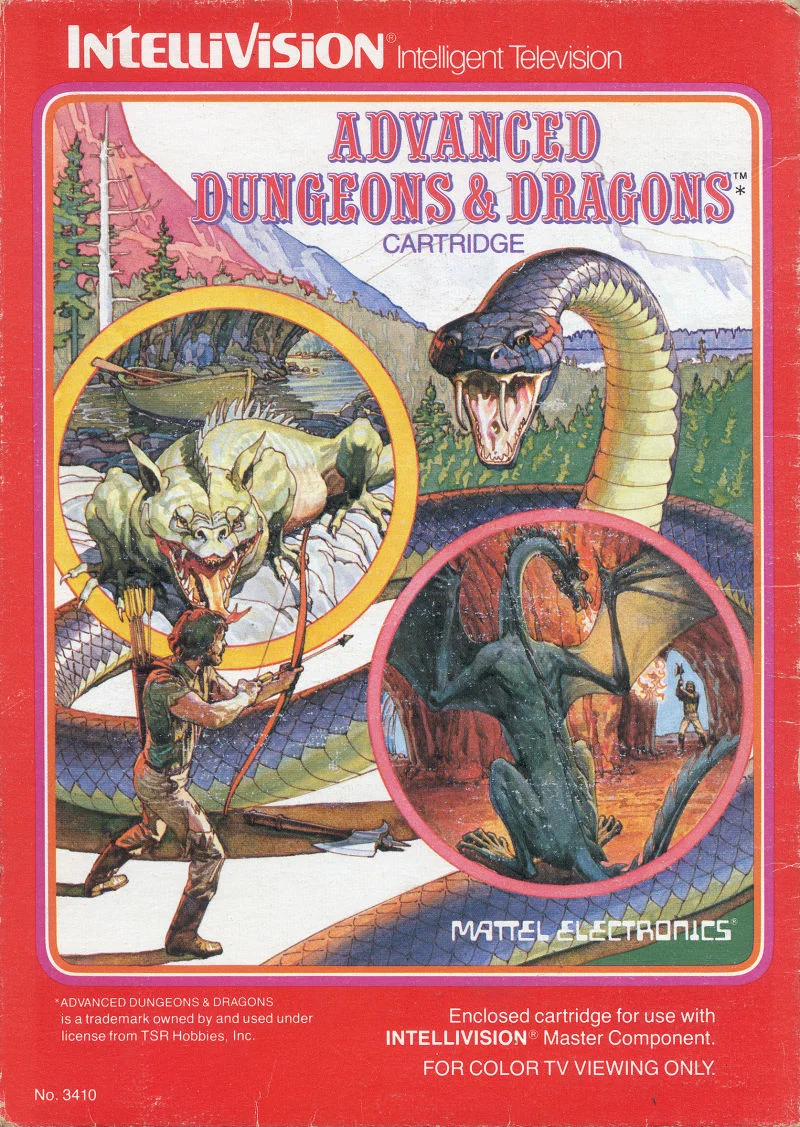
Intellivision put a direction disc, side buttons and a numbered keypad in each hand controller. Overlays could identify the keys for a particular game. In Night Stalker, movement and firing direction are separate tasks. Utopia uses its controls to place improvements on an island and manage competing demands with another player. A reader arriving from a single-button joystick needs the instructions as well as the cartridge.
The Blue Sky Rangers participant archive distinguishes Intellivision’s 1979 Fresno test from its wider US launch in 1980. Its Utopia record dates the game’s release to June 1982. Neither an early trial nor a date printed on a package should silently become the national retail date.
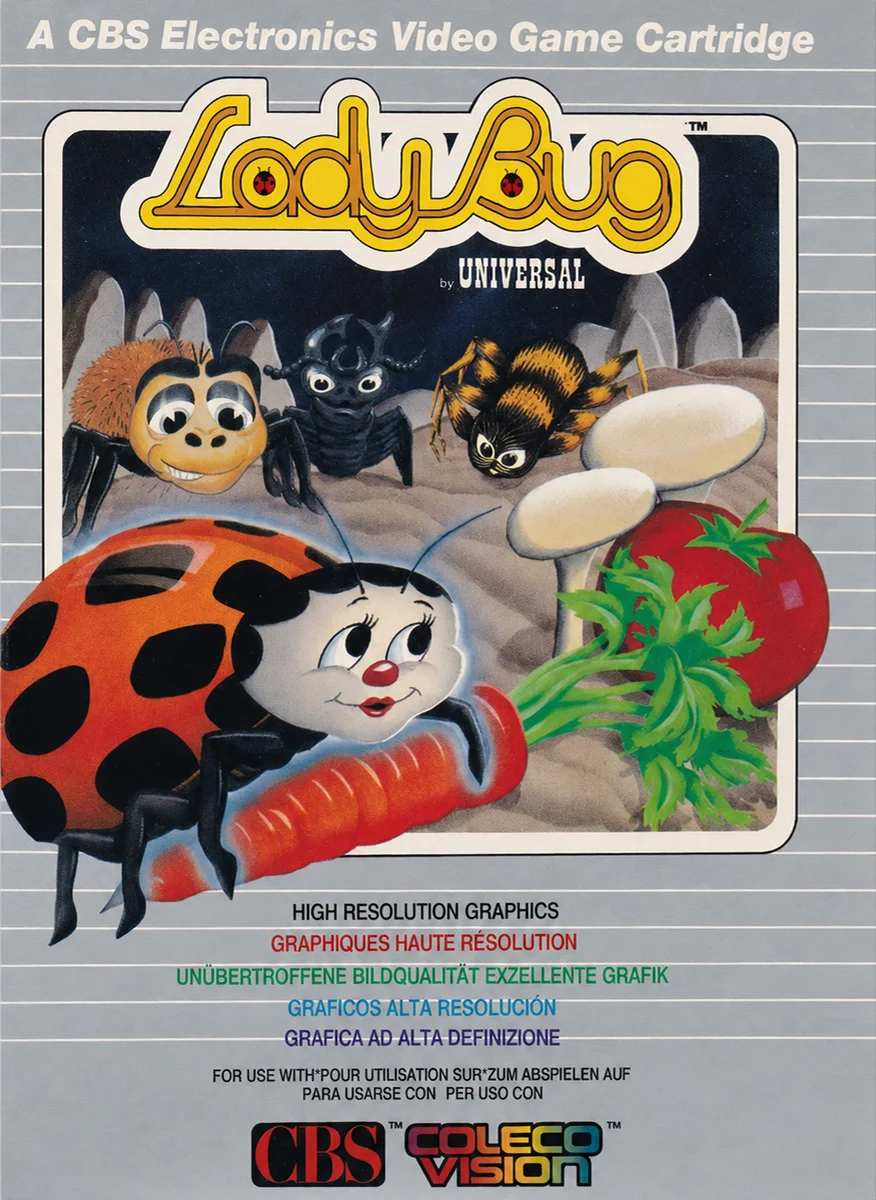
ColecoVision arrived in the United States in August 1982, according to Coleco’s annual report. Its arcade adaptations invite close comparisons. Donkey Kong makes climbing and timing readable in a small space. Lady Bug lets the player alter a maze through swinging gates, so an escape route can become a trap. A recognisable arcade title is the beginning of that comparison; the home conversion still has its own controls and omissions.
These six profiles leave other hardware to future features, including Odyssey² and Vectrex. Japan had dedicated machines too: Nintendo’s corporate history records TV Game 6 and TV Game 15 in 1977. Arcades and home computers belong alongside these consoles in a wider account of play.
A North American contraction
The business story darkened even while new games were appearing. In What Video Game Crash?, The Strong’s Eric Wheeler describes excess software supply, uneven quality and competition from computers as pressures on the North American console market. He also rejects an explanation centred on E.T. alone. This chapter treats 1983 as a point in a contraction, not an exact day on which the market stopped.
The consequences reached beyond manufacturers. The Computer History Museum’s history of Electronic Games magazine describes its move to the title Computer Entertainment in 1985 and closure later that year. The publishing business around games could suffer even as people continued to play what they already owned.
The region matters. Nintendo introduced Famicom in Japan in 1983; its US NES introduction came later. Calling both events a recovery from the same local crisis would erase the different starting points. The next chapter follows those calendars. Our early-console selections also include the 1984 H.E.R.O., because an editorial boundary should not cut a hardware library off mid-development.
Start with the right version
An arcade original and a home conversion can share a title while asking for different controls. The 2600 Missile Command uses a joystick-directed cursor and a single firing base. ColecoVision’s Donkey Kong has its own stage selection. A modern arcade release of either game is useful for comparison, but it does not supply the selected home edition.
The linked features identify original cartridges and dated modern routes where their catalogues have been checked. Some newly announced cartridges are still pre-orders. A product page does not prove that a copy has shipped, and a list of included games does not establish measured emulation accuracy. Controls and overlays matter particularly for Intellivision; having the title alone is not the whole setup.
The sixteen recommendations offer several starting points. Try Adventure when you want to learn a small world, River Raid when you want a route to improve, or Lady Bug when you want to reshape the space pursuing enemies must cross. Odyssey, Home Pong and Channel F have hardware-led features here. Their profiles explain why they have no ranked selection.